Introduction
If you search for passion fruit Papua New Guinea, the short answer is yes: passionfruit is grown in PNG, and several types have been recorded in the country. Agricultural material from the FAO has listed Passiflora edulis, yellow passionfruit under the older name P. flavicarpa, and P. mollissima among fruits found in Papua New Guinea.
The familiar commercial passionfruit, Passiflora edulis, is a climbing vine in the Passifloraceae family. Although it is cultivated far beyond its original range, it is not botanically native to Papua New Guinea. Kew’s Plants of the World Online records its native range as Brazil to northeastern Argentina. Modern taxonomy also treats the yellow form once called Passiflora edulis f. flavicarpa as a synonym of P. edulis, rather than a separate accepted species.
Papua New Guinea also has a Highlands passionfruit known as suga prut, or “sugar fruit,” associated with sweet granadilla (Passiflora ligularis). PNG agricultural literature identifies this fruit as a highland crop, while Kew places the species’ natural origin in tropical America rather than New Guinea.
These distinctions matter because “passionfruit” in PNG does not always refer to one identical fruit. Purple, yellow, sweet granadilla, and banana-shaped forms can differ in appearance, flavor, growing environment, and botanical identity. This guide explores those types, where they fit into Papua New Guinea’s agriculture, what they look and taste like, and how locally grown passionfruit differs from fruits that are genuinely native to New Guinea.
1. Does Passion Fruit Grow in Papua New Guinea?
Yes, passion fruit grows in Papua New Guinea. PNG agricultural records include several passionfruit types, including Passiflora edulis, yellow passionfruit forms, and banana passionfruit historically recorded as P. mollissima. Passionfruit can fit tropical and highland growing environments, although its presence and production are not necessarily the same across every part of the country.
In Papua New Guinea, passionfruit can be understood as a cultivated fruit crop rather than a single uniquely PNG variety. The plant grows as a climbing vine, so it fits garden and horticultural systems where the vine has suitable support. FAO crop information also notes that P. edulis can grow at higher elevations in tropical regions, which helps explain its relevance to PNG’s cooler highland environments.
Cultivation may take place in household gardens, small-scale farming, or fresh-produce systems. However, it is better to avoid assuming that passionfruit is produced equally throughout Papua New Guinea. Local climate, elevation, planting material, and access to markets can all influence where particular types are grown.
The important point is that passionfruit is an established fruit in Papua New Guinea, including in environments associated with the Highlands, even though the best-known cultivated species originated outside New Guinea. The next distinction is identifying which passionfruit types are actually found in PNG.
2. What Types of Passion Fruit Are Found in Papua New Guinea?
Papua New Guinea has more than one type of fruit described as passionfruit. FAO material on Passiflora includes common passionfruit, its yellow form, sweet granadilla, and banana passionfruit, while older agricultural naming sometimes differs from the botanical names accepted today.
The main types relevant to PNG can be summarized as follows:
| Type | Scientific Name | Typical Appearance | Flavor Profile |
| Purple passion fruit | Passiflora edulis | Round or oval fruit with purple skin | Aromatic and sweet-tart |
| Yellow passion fruit | Yellow form of P. edulis | Round fruit with yellow skin | Often more tart or acidic |
| Sugar fruit / sweet granadilla | Passiflora ligularis association | Round, usually yellow to orange | Generally sweeter and milder |
| Banana passionfruit | Historically P. mollissima | Elongated fruit | Aromatic, with sweetness and acidity varying by fruit |
2.1 Purple and Yellow Passion Fruit
Purple and yellow passionfruit are closely connected botanically. The familiar purple form belongs to Passiflora edulis, an accepted species according to Kew. Older references may identify yellow passionfruit as P. edulis f. flavicarpa or simply P. flavicarpa. Modern Kew taxonomy, however, treats P. edulis f. flavicarpa as a synonym of P. edulis.
This means purple and yellow fruits can look and taste noticeably different without necessarily being treated as separate species in current botanical classification.
2.2 Sugar Fruit and Sweet Granadilla
Another name worth recognizing in a PNG context is sugar fruit, which is associated with the sweeter passionfruit known as sweet granadilla. Its scientific name is Passiflora ligularis, an accepted species in the same genus as ordinary passionfruit. Kew records P. ligularis as native to an area extending from Panama to Venezuela and Peru, so its presence as a cultivated fruit outside that range does not make it native to New Guinea.
2.3 Banana Passionfruit and Older Botanical Names
FAO references also use Passiflora mollissima for banana passionfruit. This name remains useful when reading older PNG and agricultural sources, but modern Kew taxonomy treats P. mollissima as a synonym of Passiflora tripartita var. mollissima.
These naming differences are useful to keep in mind when identifying PNG passion fruit. A common name may describe the fruit’s color, shape, sweetness, or local usage, while the scientific name provides a clearer way to distinguish one Passiflora type from another.
3. Purple Passion Fruit in Papua New Guinea
Purple passion fruit is one of the most familiar forms of passionfruit and is represented by the species Passiflora edulis. It is relevant to Papua New Guinea as a cultivated fruit rather than as a plant that originated in the country.
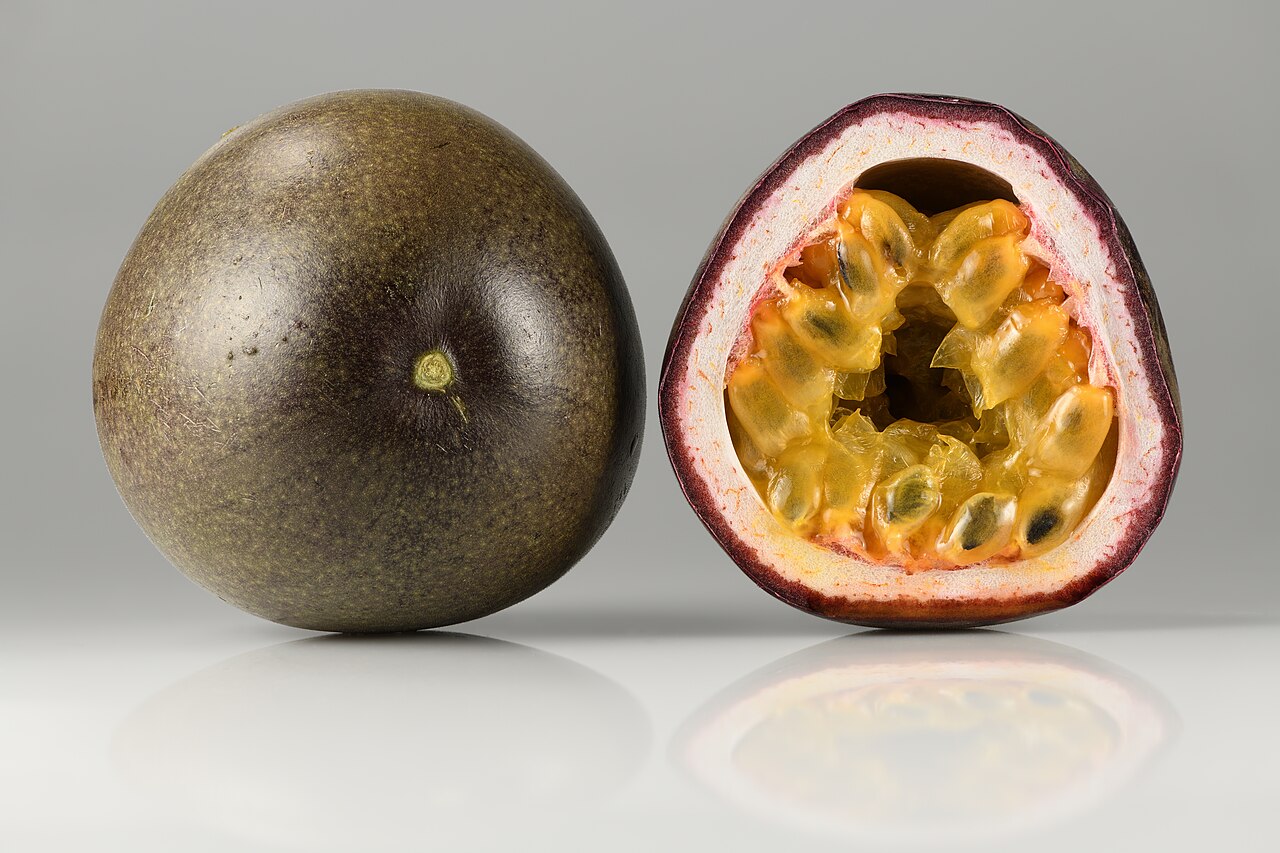
The fruit is generally round to oval, with a rind that develops a purple color as it matures. Inside, numerous seeds are surrounded by juicy pulp. Passionfruit pulp is known for its strong aroma and characteristic balance of sweetness and acidity, although the exact flavor can vary with cultivar, ripeness, and growing conditions.
3.1 Scientific Name: Passiflora edulis
The accepted scientific name for common passionfruit is Passiflora edulis Sims. Kew’s Plants of the World Online places it in the Passifloraceae family and the genus Passiflora. It describes the species as a liana, or climbing plant, rather than a conventional fruit tree.
This climbing habit is an important part of identifying the plant. Passionfruit vines grow upward or across available support, while their distinctive flowers eventually give way to fruit after successful pollination.
When the fruit is opened, its seed-filled interior makes it easy to distinguish from many other tropical fruits. The pulp surrounding the seeds is the portion commonly eaten. Botanical-garden material also describes Passiflora fruits as containing juicy, aromatic pulp around the seeds.
Purple passionfruit should not be confused with every other fruit sold or described as passionfruit in PNG. Yellow passionfruit, sweet granadilla, and banana passionfruit can differ in skin color, shape, flavor, and botanical classification.
3.2 Is Purple Passion Fruit Native to PNG?
No. Passiflora edulis is not native to Papua New Guinea.
Kew records the species’ native range as Brazil to northeastern Argentina, including Paraguay and several regions of Brazil. It has since been introduced and cultivated in many tropical and subtropical parts of the world.
This creates an important distinction when discussing Papua New Guinea passion fruit: a plant can be grown locally without being botanically native to the region.
Purple passionfruit can therefore be part of PNG horticulture and local food production while still having its original botanical home in South America. That distinction becomes especially useful when comparing passionfruit with indigenous New Guinea fruits later in this guide.
4. Yellow Passion Fruit in Papua New Guinea
Yellow passion fruit is another form recorded in Papua New Guinea agricultural literature. Older FAO material relating to PNG lists Passiflora flavicarpa alongside P. edulis and P. mollissima. Today, however, botanical classification handles the yellow form differently from some of these older agricultural references.
The fruit is typically round and develops a yellow rind when mature. Its interior follows the familiar passionfruit pattern, with numerous dark seeds surrounded by juicy, aromatic pulp. Compared with many purple forms, yellow passionfruit is often described as having a stronger acidic or tart character, although flavor can vary according to cultivar, maturity, and growing conditions.
For readers identifying passion fruit in PNG, skin color is therefore useful, but it should not automatically be treated as evidence of a completely separate species.
4.1 A Note on Its Scientific Name
You may encounter several botanical names for yellow passion fruit, particularly in older books and agricultural documents. Common examples include:
- Passiflora flavicarpa
- Passiflora edulis f. flavicarpa
- yellow form of Passiflora edulis
This difference mainly reflects changes in botanical classification over time.
Kew’s Plants of the World Online currently recognizes Passiflora edulis as an accepted species. It lists Passiflora edulis f. flavicarpa as a synonym of P. edulis rather than as a separate accepted species.
So, when an older PNG source lists P. flavicarpa separately from P. edulis, it is useful to read that entry in its historical context. Modern botanical references generally place the familiar yellow form within the broader Passiflora edulis species.
This does not mean purple and yellow passionfruit are identical in every practical sense. Their rind color, fruit characteristics, flavor, and cultivated forms can differ. The key point is simply that modern taxonomy does not require them to be treated as two separate accepted species.
For Papua New Guinea, this distinction helps connect older agricultural records with current botanical terminology without discarding the useful observations found in those earlier sources.
5. What Is Sugar Fruit in Papua New Guinea?
In Papua New Guinea, sugar fruit is a name associated with a particularly sweet member of the passionfruit group. PNG agricultural literature uses the spelling “suga prut” and identifies it as Passiflora ligularis. The same source places suga prut among fruit species associated with the Highlands, alongside purple passionfruit and banana passionfruit.
Passiflora ligularis is more widely known internationally as sweet granadilla. Like common passionfruit, it belongs to the genus Passiflora, but it is a different species from the familiar purple and yellow forms of Passiflora edulis.
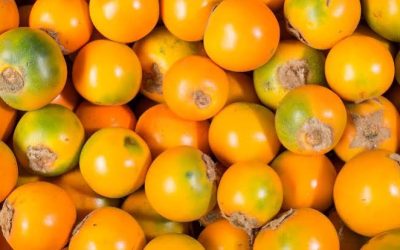
Sugar fruit typically has a round shape and a yellow to orange exterior. Inside, the seeds are surrounded by juicy pulp. Its common name reflects one of its most noticeable differences from ordinary passionfruit: sweet granadilla is generally valued for a milder, sweeter flavor rather than the stronger sweet-tart character often associated with P. edulis.
For readers exploring sugar fruit Papua New Guinea, the term therefore refers to a passionfruit relative rather than a completely unrelated tropical fruit.
5.1 Is Sugar Fruit the Same as Passion Fruit?
Yes, in a broad sense, but they are not necessarily the same species.
Sugar fruit belongs to the Passiflora genus, so it is part of the wider group commonly called passionfruit. However, ordinary purple passionfruit is usually Passiflora edulis, while PNG agricultural literature identifies suga prut as Passiflora ligularis.
The distinction can be simplified as follows:
- Common purple passionfruit: Passiflora edulis
- Yellow passionfruit: a yellow form generally included within P. edulis in modern taxonomy
- Sugar fruit / suga prut: Passiflora ligularis
- Common international name for P. ligularis: sweet granadilla
This is why the terms passion fruit and sugar fruit should not automatically be used as exact synonyms. They describe closely related fruits, but the names can point to different Passiflora species.
5.2 Sweet Granadilla — Passiflora ligularis
Kew recognizes Passiflora ligularis Juss. as an accepted species in the Passifloraceae family. It is a climbing plant, consistent with the vine-like growth habit seen across many Passiflora species.
Sweet granadilla can generally be recognized by several features:
- round fruit;
- yellow to orange skin at maturity;
- a relatively firm outer rind;
- numerous seeds surrounded by juicy pulp;
- a generally mild and sweet flavor;
- a climbing growth habit.
Its presence in Papua New Guinea does not mean the species originated there. Kew records the native range of P. ligularis as Panama through Venezuela and Peru, including parts of the tropical Andes.
This follows the same pattern seen with common passionfruit: sugar fruit can be locally grown and familiar in Papua New Guinea while still being botanically introduced from another part of the world.
The Highlands connection is especially useful when trying to understand the term in a PNG setting. A peer-reviewed chapter on introduced fruits in Papua New Guinea specifically groups suga prut (Passiflora ligularis) with fruit species suited to highland environments.
So, when someone refers to PNG sugar fruit, the most useful botanical association is sweet granadilla, Passiflora ligularis. It belongs to the passionfruit family of commonly recognized fruits, yet it remains distinct from the purple and yellow forms of P. edulis.
6. Banana Passionfruit in Papua New Guinea
Banana passionfruit is another Passiflora type with a documented connection to Papua New Guinea. Older FAO material lists it under the scientific name Passiflora mollissima alongside common and yellow passionfruit. Historical herbarium records also document plants identified as P. mollissima from highland locations in PNG, including specimens collected near Goroka–Kundiawa and Mount Wilhelm.
Unlike the round fruit of Passiflora edulis, banana passionfruit has a noticeably elongated shape. The mature fruit is generally yellowish, while the plant itself grows as a climbing vine. Kew describes the taxon historically called P. mollissima as a perennial climber with ellipsoid fruits that can reach several centimeters in length.
Its common name therefore refers mainly to the fruit’s long form rather than to a botanical relationship with bananas. The pulp has the aromatic character associated with passionfruit, although sweetness and acidity can vary.
Banana passionfruit is particularly associated with cooler tropical highland conditions. This makes it different in growing preference from passionfruit types better associated with warmer environments. Its occurrence in PNG’s elevated areas also helps explain why it appears in discussions of Highlands fruit crops.
6.1 An Important Taxonomy Note
The name Passiflora mollissima remains useful when reading older Papua New Guinea agricultural records, but it is no longer the accepted name in Kew’s current classification.
Kew now treats Passiflora mollissima (Kunth) L.H.Bailey as a synonym of the accepted Passiflora tripartita var. mollissima. The accepted variety is native to tropical America, from Panama through parts of Venezuela, Colombia, Ecuador, and Peru.
This is another example of why historical and modern names need to be read together when discussing passion fruit in Papua New Guinea. A PNG source using P. mollissima is not necessarily describing a completely different plant from a modern source using P. tripartita var. mollissima; the botanical classification has changed.
For practical identification, banana passionfruit can be distinguished from common purple or yellow passionfruit most easily by its elongated fruit shape and its association with cooler, higher-elevation environments.
7. Is Passion Fruit Native to Papua New Guinea?
The commonly cultivated passion fruit, Passiflora edulis, is not native to Papua New Guinea. Kew’s Plants of the World Online records the natural range of this species as Brazil to northeastern Argentina, including Paraguay. It has since become widely cultivated beyond its original South American range.
The same distinction applies to sweet granadilla (Passiflora ligularis), the species associated with PNG’s sugar fruit or suga prut. Kew records its native range as Panama through Venezuela and Peru rather than New Guinea.
This means a fruit can be familiar in PNG gardens, farming systems, or local produce without being indigenous to the country.
7.1 Native
A native plant occurs naturally in a geographic region rather than arriving there through human introduction.
For example, Passiflora edulis may grow successfully in Papua New Guinea, but its documented South American origin means it should not be described as a native PNG fruit.
There is an interesting botanical detail here: the wider Passiflora genus is not completely foreign to New Guinea. Kew records the natural distribution of the genus across the New World as well as parts of tropical and subtropical Asia and the southwest Pacific, including New Guinea.
However, that does not make every Passiflora species native to PNG. Botanical origin needs to be considered at the species level. In particular, the familiar commercial species P. edulis still originates in South America.
7.2 Introduced
An introduced plant is one that occurs outside its original natural range because people have moved, planted, or cultivated it in another region.
Passionfruit illustrates why this term can be useful. P. edulis originated in South America, yet FAO material describes its cultivation extending to many other regions, including New Guinea.
Over time, an introduced fruit may become familiar enough that people closely associate it with local gardens, markets, and food. Its botanical origin, however, does not change.
7.3 Cultivated or Local Crop
A locally cultivated crop simply means that people grow it in that place. The term does not imply that the plant evolved or originated there.
This distinction is particularly important when discussing Papua New Guinea fruits:
- Native refers to botanical origin.
- Introduced describes a plant brought beyond its original range.
- Locally cultivated describes where people currently grow it.
Therefore, passion fruit is a locally grown crop in Papua New Guinea, but familiar cultivated passionfruit species originated in the Americas.
Keeping these terms separate avoids an easy misconception: a fruit does not become botanically native to PNG simply because it has been cultivated there for years or has developed familiar local names.
8. Where Is Passion Fruit Grown in Papua New Guinea?
Passionfruit is especially associated with Papua New Guinea’s Highlands, where cooler tropical conditions suit several Passiflora types. A peer-reviewed PNG fruit review identifies purple passionfruit, banana passionfruit, and suga prut (Passiflora ligularis) among fruit species grown in highland environments.
The Highlands should not be understood as one uniform growing zone, however. Elevation, rainfall, local soils, access to planting material, and market connections vary considerably from one location to another. As a result, the types grown and their importance can differ between communities.
Historical records provide some useful geographic context. Passionfruit was once produced around Goroka, Mount Hagen, and Chimbu for processing, showing that cultivation has a long-established connection with PNG’s central highland areas. This historical evidence should not be read as a description of today’s production levels in those places.
A separate agricultural assessment also recorded passionfruit growing well at Purosa in the Highlands, while noting that market conditions were uncertain. Such records reinforce the crop’s suitability to particular highland settings without suggesting that it is grown commercially throughout the entire region.
8.1 Household and Smallholder Growing
Fruit production in Papua New Guinea frequently takes place at village and smallholder scale. Research on introduced fruits in PNG notes that villagers are important fruit growers and often produce relatively small quantities of individual species for household use or sale.
For passionfruit, this means production can occur in:
- household and village gardens;
- smallholder horticultural plots;
- mixed farming areas;
- fresh-produce systems supplying local markets.
Some passionfruit types are also suited to lower elevations. Older PNG food-production references distinguish lowland yellow passionfruit from the types more strongly associated with the Highlands. This is another reason to avoid describing passionfruit as exclusively a highland crop.
Overall, passionfruit is particularly relevant to certain highland environments in Papua New Guinea, while individual types can occupy different elevation and farming settings. Its distribution is better understood as locally variable rather than uniform across PNG.
9. Why Papua New Guinea’s Highlands Suit Passion Fruit
Papua New Guinea’s Highlands offer conditions that can suit several passionfruit types. Elevation creates cooler tropical environments than those found in many coastal lowlands, which is especially relevant to purple passionfruit and other Passiflora forms adapted to elevated areas.
FAO’s Ecocrop information describes purple Passiflora edulis as suitable for tropical cultivation at higher elevations and notes that the plant performs in humid conditions. The same database identifies well-drained soil as an important environmental feature for the species.
These characteristics help explain why passionfruit appears in PNG Highlands agriculture. Several factors work together:
- Elevation can create milder temperatures within a tropical climate.
- Regular rainfall can support vigorous vine growth where drainage is adequate.
- Well-drained ground is preferable to locations where water remains around the root zone.
- Open garden spaces can provide the light and physical room required by a spreading vine.
- Existing garden structures or trellises can provide support for climbing stems.
However, the different passionfruit types should not be treated as having exactly the same environmental preferences. FAO Ecocrop material, for example, describes the yellow form of P. edulis as particularly well adapted to tropical lowland situations, while purple passionfruit can occur at considerably higher tropical elevations.
This difference helps explain how both highland and lower-elevation passionfruit can occur within Papua New Guinea. The country’s varied landscapes create multiple growing environments rather than one standard climate for every passionfruit vine.
9.1 Passion Fruit Is a Climbing Vine
Passionfruit does not grow on a conventional fruit tree. Passiflora edulis is a perennial climbing vine that uses tendrils to hold onto nearby support as it grows. FAO describes the plant as a vigorous, woody or semi-woody climber capable of producing long stems.
This growth habit affects how the plant fits into a garden or farming area. Instead of forming a self-supporting trunk and canopy, the vine spreads along structures such as trellises, fences, or other suitable supports.
The basic growth pattern is easy to recognize:
- New shoots extend from the vine.
- Tendrils curl around available support.
- Flowers develop along the growing stems.
- After successful pollination, fruit forms and matures on the vine.
Purple and yellow passionfruit share this general climbing habit. FAO’s crop descriptions characterize both forms as vigorous vines that climb using tendrils.
For PNG growers and anyone trying to identify the plant, this is an important clue. Passionfruit is a vine crop, and its climbing structure is just as characteristic as the round purple or yellow fruit it produces.
10. What Does Papua New Guinea Passion Fruit Look Like?
There is no single appearance that defines Papua New Guinea passion fruit. The fruit can be purple, yellow, orange-toned, round, oval, or elongated depending on the Passiflora species or cultivated form.
The vine itself is another useful clue. Passionfruit plants climb using tendrils and produce distinctive flowers before the fruit develops. Once mature, the fruit contains numerous seeds surrounded by juicy pulp.
10.1 Purple Passion Fruit
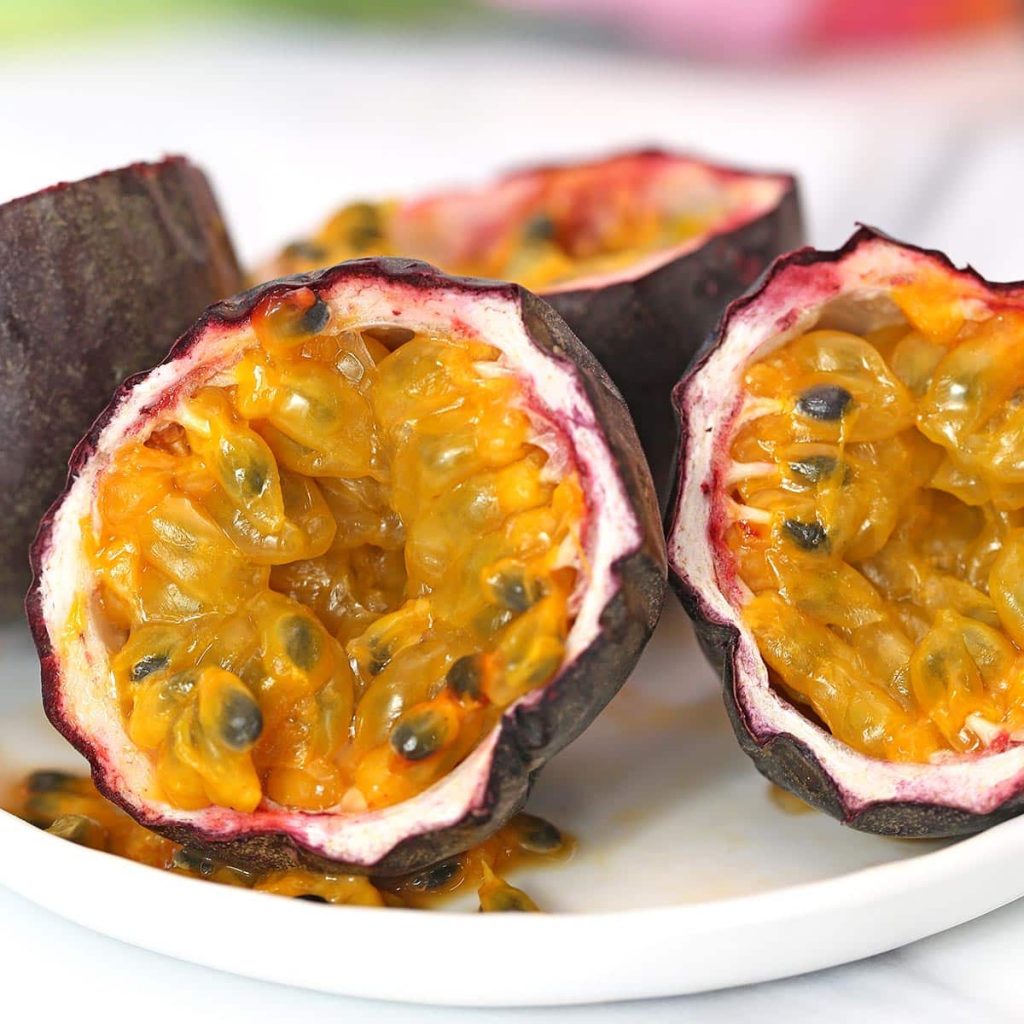
Purple passionfruit, Passiflora edulis, is usually round to oval. As the fruit matures, its rind changes to a deep purple color.
Inside, it typically contains:
- yellow to orange pulp;
- numerous dark seeds;
- a jelly-like layer surrounding each seed;
- a strong passionfruit aroma.
The rind may become slightly wrinkled as the fruit ripens or loses moisture. Wrinkling alone does not identify the species, however, because fruit condition varies after harvest and during storage.
10.2 Yellow Passion Fruit
Yellow passionfruit has a similar basic structure but develops a yellow exterior rather than a purple one. The fruit is generally round and may be larger than some purple forms.
When opened, it contains the familiar seed-filled pulp associated with Passiflora edulis. Its appearance can therefore be quite similar to purple passionfruit on the inside even though the rind color is clearly different.
Color is useful for everyday identification, but purple and yellow forms should not automatically be treated as separate species. As discussed earlier, modern botanical classification generally includes the familiar yellow form within Passiflora edulis.
10.3 Sweet Granadilla or Sugar Fruit
The fruit associated with PNG sugar fruit, Passiflora ligularis, generally has a round shape and a yellow to orange exterior.
Compared with common passionfruit, its rind often appears smoother and relatively firm. Inside are many seeds surrounded by translucent or pale juicy pulp.
This can make sugar fruit easy to confuse with yellow passionfruit at first glance. Looking at several features together—rind texture, internal pulp, flavor, and the plant itself—is more useful than relying on color alone.
10.4 Banana Passionfruit
Banana passionfruit stands out because of its shape. Instead of being round, it is elongated, giving the fruit the banana-like appearance behind its common name.
Its length and narrow form make it visually distinct from purple passionfruit, yellow passionfruit, and sweet granadilla. Despite that different shape, it is still a member of the wider Passiflora group.
These visual differences are useful when encountering passionfruit in PNG gardens or fresh-produce settings. “Passion fruit” can describe several related fruits, so rind color and shape provide practical first clues, while scientific names offer a more reliable way to distinguish them.
11. What Does PNG Passion Fruit Taste Like?
The taste of PNG passion fruit varies by type. There is no single flavor that represents every passionfruit grown in Papua New Guinea. Purple and yellow Passiflora edulis, sugar fruit, and banana passionfruit each have their own balance of sweetness, acidity, and aroma.
Ripeness, cultivar, and growing conditions can create further differences. For this reason, identifying the type of passionfruit is more useful than simply describing all PNG passionfruit as either sweet or sour.
11.1 Purple Passion Fruit
Purple passionfruit is generally aromatic and sweet-tart. Its pulp has a noticeable tropical fragrance together with a clear acidic character.
The University of California Cooperative Extension describes Passiflora edulis pulp as juicy, orange-colored, highly fragrant, and ranging from sub-acid to acidic.
A ripe purple fruit can therefore combine sweetness with a sharp tang rather than tasting purely sugary. The intensity varies between individual fruits and cultivated forms.
11.2 Yellow Passion Fruit
Yellow passionfruit generally keeps the recognizable passionfruit aroma but can have a stronger acidic or tart character.
University of California Cooperative Extension notes that the yellow form of P. edulis is more acidic than the purple form.
This difference is useful when comparing purple and yellow passionfruit, but it should not be treated as an absolute rule for every fruit. Cultivars and maturity can influence the final balance of sweetness and acidity.
11.3 Sugar Fruit or Sweet Granadilla
Sugar fruit is the sweeter option among the passionfruit types discussed in a PNG context. The fruit associated with this local name, Passiflora ligularis or sweet granadilla, generally has a mild sweetness and relatively low acidity.
Agricultural information on P. ligularis describes its pulp as sweet, low in acidity, and lightly aromatic.
This makes its sensory profile noticeably different from the sharper flavor of common P. edulis. Its sweeter character also helps explain why the name “sugar fruit” is useful for distinguishing it in Papua New Guinea.
11.4 Banana Passionfruit
Banana passionfruit has an aromatic flavor with noticeable acidity, although sweetness can also be present.
Scientific literature describing Passiflora tripartita var. mollissima notes the fruit’s aromatic character and acidic juice. Flora of New Zealand also describes the pulp as sweet and edible, illustrating how the balance can vary among fruits and growing conditions.
Its flavor should therefore not be assumed to match either ordinary round passionfruit or the much sweeter granadilla.
Several factors can influence what an individual PNG passionfruit tastes like:
- the Passiflora species;
- the particular cultivar or planting material;
- fruit maturity when harvested;
- growing environment;
- storage after harvest.
A simple comparison is that purple passionfruit is commonly fragrant and sweet-tart, yellow passionfruit often has stronger acidity, sugar fruit is generally milder and sweeter, and banana passionfruit combines aroma with varying sweetness and tartness. These differences are one reason common names alone do not always tell the full story of passionfruit in Papua New Guinea.
12. Passion Fruit vs Sugar Fruit in Papua New Guinea
In Papua New Guinea, passion fruit and sugar fruit are closely related, but the names should not automatically be treated as referring to the same species. Common purple passionfruit is generally Passiflora edulis, while PNG’s sugar fruit, or suga prut, is associated with sweet granadilla, Passiflora ligularis.
Both belong to the genus Passiflora and grow as climbing plants. Their fruit also shares a familiar structure: a rind surrounding numerous seeds covered in juicy pulp. The main differences are found in botanical identity, appearance, and flavor.
| Feature | Common Passion Fruit | Sugar Fruit |
| Common species association | Passiflora edulis | Passiflora ligularis |
| Common international name | Passionfruit | Sweet granadilla |
| Shape | Round to oval | Usually round |
| Typical skin color | Purple or yellow, depending on form | Yellow to orange |
| Flavor | Usually aromatic and sweet-tart | Generally milder and sweeter |
| Growth habit | Climbing vine | Climbing plant |
| PNG terminology | Passionfruit | Sugar fruit / suga prut |
12.1 Botanical Difference
Passiflora edulis and Passiflora ligularis are separate accepted species. Kew classifies both within the Passifloraceae family and the genus Passiflora. P. edulis is native to Brazil through northeastern Argentina, whereas P. ligularis originates from Panama through Venezuela and Peru.
Their shared genus explains why the fruits have several features in common without making them botanically identical.
The word passionfruit can also be used broadly for edible fruits from several Passiflora species. In everyday conversation, sugar fruit may therefore be described as a type of passionfruit even though it is different from ordinary P. edulis.
12.2 Appearance and Flavor
Common P. edulis is most easily recognized in its familiar purple or yellow forms. Purple passionfruit typically develops a dark purple rind, while the yellow form becomes yellow at maturity. Both contain aromatic pulp surrounding numerous seeds.
Sugar fruit generally has a yellow to orange exterior and is associated with a sweeter, milder flavor. That sensory difference is particularly useful because the name “sugar fruit” points to sweetness rather than to a separate botanical family.
Appearance alone may still cause confusion. A yellow P. edulis fruit and a sweet granadilla can both have yellowish skins, so color is not enough to identify them reliably.
12.3 Why the Names Can Be Confusing in PNG
Local fruit names often develop from practical characteristics such as flavor, shape, or appearance rather than formal taxonomy. A person using the term sugar fruit may be emphasizing the noticeably sweet character of the fruit, while “passionfruit” can refer more broadly to related fruits from Passiflora.
The useful distinction is therefore straightforward: common passionfruit and sugar fruit belong to the same botanical genus, but they are usually associated with different species—P. edulis and P. ligularis, respectively. Kew recognizes both species as accepted Passiflora taxa.
13. Purple vs Yellow Passion Fruit
Purple and yellow passion fruit are two familiar forms of Passiflora edulis. They share the same basic fruit structure and climbing growth habit, but they can differ in rind color, size, acidity, and other cultivated characteristics.
For Papua New Guinea, the comparison is especially useful because older agricultural literature sometimes lists yellow passionfruit separately from P. edulis. Current botanical classification provides a clearer way to interpret those records.
13.1 Skin and Appearance
The most obvious difference is the color of the mature rind.
- Purple passion fruit develops a purple to dark-purple exterior.
- Yellow passion fruit develops a yellow exterior.
Both are generally round to oval and contain numerous dark seeds surrounded by juicy pulp. Individual fruit size and appearance can vary among cultivated forms, so rind color is a convenient everyday distinction rather than a complete botanical identification.
13.2 Flavor
Purple passionfruit is commonly described as aromatic and sweet-tart, combining noticeable acidity with sweetness when ripe.
Yellow passionfruit can have a more pronounced acidic or tart character. University of California Cooperative Extension material distinguishes the yellow form as more acidic than the purple form. (ucanr.edu)
These descriptions are general rather than absolute. Ripeness, cultivar, and growing environment can all affect the flavor of an individual fruit.
13.3 Botanical Identity
From a modern botanical perspective, the two forms are closely connected.
Kew recognizes Passiflora edulis Sims as an accepted species. It lists Passiflora edulis f. flavicarpa, a name historically applied to yellow passionfruit, as a synonym of Passiflora edulis.
This means the familiar comparison can be summarized simply:
Purple passion fruit → Passiflora edulis
Yellow passion fruit → yellow form generally treated within Passiflora edulis
Older PNG agricultural documents may still use P. flavicarpa or a similar name as a separate entry. That terminology reflects historical classification rather than necessarily indicating a separate species under today’s Kew treatment.
13.4 Culinary Uses
Both forms contain edible, aromatic pulp surrounding the seeds. They can be opened and eaten fresh or used as ingredients in juices, drinks, and other food preparations.
The practical choice between purple and yellow fruit may therefore depend on availability and preferred flavor rather than on completely different culinary roles.
For identifying passion fruit in Papua New Guinea, the main point is that purple and yellow passionfruit can look and taste different while still belonging to the same accepted species. Their contrasting rind colors make them easy to distinguish in everyday use, while the scientific name Passiflora edulis connects them botanically.
14. How Is Passion Fruit Eaten in Papua New Guinea?
Passion fruit is usually eaten for its soft, seed-filled pulp rather than its rind. Once ripe, the fruit can be cut or opened and the pulp scooped out with a spoon.
The seeds are commonly eaten together with the surrounding pulp. Their slight crunch contrasts with the juicy texture around them, while the fruit’s aroma and acidity give passionfruit its distinctive character.
In Papua New Guinea, passionfruit can be used in several simple ways:
- eaten fresh directly from the fruit;
- mixed into fruit drinks or juices;
- added to homemade beverages;
- combined with other fresh fruit;
- sold as whole fresh produce for household use.
Purple and yellow passionfruit are especially suited to uses where a strong, tangy flavor is welcome. Sugar fruit or sweet granadilla can be eaten in much the same way, although its milder sweetness gives it a different taste.
Local use can vary from one household or region to another, so there is no single preparation method that defines passion fruit in Papua New Guinea. In many cases, the simplest approach is also the most common: open the ripe fruit and eat the pulp and seeds fresh.
The fruit’s role in PNG is therefore best understood as part of the broader fresh-produce landscape rather than as a highly standardized national dish or recipe.
15. Passion Fruit in Papua New Guinea Agriculture
Passionfruit has a place in Papua New Guinea horticulture, particularly within smallholder and village-based farming systems. Historical agricultural sources show that the crop has been grown both for household use and as a cash crop, especially in the Highlands.
Purple passionfruit was promoted as a smallholder crop in Papua New Guinea during earlier agricultural diversification programs. A regional review of Pacific agroforestry notes that Passiflora edulis was grown on small plots and within existing farming areas as part of efforts to broaden the range of crops available to farmers. Results varied, showing that growing a suitable fruit does not automatically create a stable commercial industry.
PNG records also show that passionfruit has had a commercial role in the past. Research on village food production reports that purple passionfruit was once grown as a Highlands cash crop, with fruit collected around Goroka and Mount Hagen for processing. Production later declined after that marketing system ended.
Today, passionfruit is better viewed as one component of PNG’s diverse fresh-fruit and horticultural landscape rather than as a uniformly important national crop.
15.1 A Crop for Smallholder Diversification
Passionfruit has several characteristics that make it relevant to diversified garden systems. It is a climbing crop rather than a large fruit tree, and it can be incorporated into relatively small growing areas where suitable support is available.
In a mixed smallholder setting, farmers may grow fruit alongside vegetables, staple crops, or other horticultural plants. FAO documentation of home gardens in Port Moresby, for example, records passionfruit among the many supplementary food plants cultivated in household gardens.
This type of production differs from large, specialized orchards. A household may maintain only a few vines, while another grower may produce fruit specifically for sale.
15.2 Fresh Produce and Market Opportunities
Passionfruit can also enter local fresh-produce systems. Research on PNG fruits notes that Highland growers have sold passionfruit relatives such as banana passionfruit and suga prut into markets beyond their immediate growing areas.
Moving fresh fruit from farms to buyers, however, involves more than production alone. Older PNG agricultural assessments identify transport, post-harvest handling, and reliable market connections as important considerations for horticultural crops. One assessment specifically observed passionfruit growing well at Purosa while remaining cautious about the available market.
This helps explain why agricultural potential and actual commercial production are different questions. A vine may grow successfully in a particular PNG environment, yet market access, transport, planting material, labor, and buyer demand can still determine whether growing it commercially is practical.
Passionfruit also remains a recognized tropical-fruit commodity in FAO statistical systems. FAO’s tropical-fruit data collection includes passion fruit among the fruits monitored for areas such as production, trade, processing, and consumption.
For Papua New Guinea, passionfruit is therefore best understood as a versatile horticultural crop with a history in smallholder agriculture, fresh produce, and crop diversification, rather than as a fruit produced at the same scale or in the same way throughout the country.
16. Is Passion Fruit Common in PNG Local Markets?
Passionfruit can appear in Papua New Guinea’s fresh-produce markets, but it is better to describe its availability as variable rather than assume that it is common everywhere. Supply can differ according to growing area, season, transport conditions, and the types of fruit produced locally.
PNG has active fresh-produce networks connecting rural growers with town and city markets. Recent research using Fresh Produce Development Agency data shows substantial movement of fresh produce from production areas to urban centers, with Port Moresby serving as an important terminal market. The study also found clear seasonal variation in fresh-produce prices and supply patterns.
Highlands produce also travels well beyond the places where it is grown. Research on PNG marketplaces describes Mount Hagen as an important collection point for produce moving toward destinations including Port Moresby, Lae, and Madang. Goroka, meanwhile, has a strong local marketplace where much of the produce is sold directly by growers.
These broader supply routes provide useful context for passionfruit. A vine grown in a Highlands garden may be consumed locally, sold by the grower, or enter a longer fresh-produce chain. Commercial fresh-produce businesses also collect fruit and vegetables from Highlands growers for customers elsewhere in PNG, illustrating how produce can move from small farming areas into larger markets.
However, this does not mean passionfruit will always be available in every PNG market. Fresh-produce supply can change because of:
- seasonal production;
- weather conditions;
- distance from growing areas;
- transport and storage;
- local consumer demand;
- the amount harvested by smallholders.
Recent PNG market research confirms that seasonality and supply-chain conditions can significantly influence fresh-produce flows and prices.
For that reason, it is more accurate to say that passionfruit forms part of PNG’s local fresh-produce trade, especially where suitable growing areas connect with local or urban markets, but its availability is not uniform across the country. Precise prices or year-round availability should be checked locally rather than treated as fixed characteristics of the PNG passionfruit market.
17. Passion Fruit vs Native Papua New Guinea Fruits
Passionfruit may be familiar in Papua New Guinea, but locally grown does not necessarily mean native. The common commercial passionfruit, Passiflora edulis, originated in South America. Kew records its native range from Brazil to northeastern Argentina.
This separates passionfruit from plants that occur naturally in New Guinea and have a deeper botanical connection with the region.
Two useful examples are:
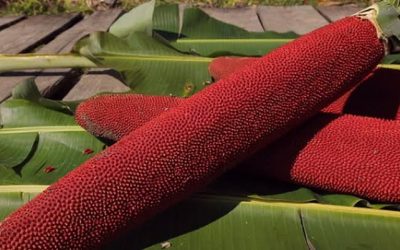
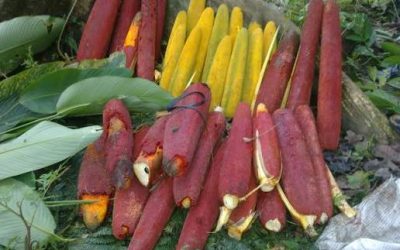
- Buah merah or marita — Pandanus conoideus. Kew lists New Guinea within the native range of this Pandanus species, along with several neighboring parts of the western Pacific.
- Matoa — Pometia pinnata. This tropical tree has a much broader natural distribution from parts of Asia into the South Pacific, but New Guinea is specifically included within its native range. Kew’s Trees of New Guinea material also records P. pinnata as occurring naturally on the island.
The contrast is therefore botanical rather than simply cultural or agricultural. A passionfruit vine growing in a PNG garden is a local crop, but that does not give P. edulis a New Guinean botanical origin.
17.1 A Useful Detail About the Passiflora Genus
There is an important nuance. Although Passiflora edulis itself is not native to New Guinea, the entire Passiflora genus should not be described as foreign to the island.
Kew records the natural range of the genus Passiflora across the Americas as well as parts of tropical and subtropical Asia and the southwest Pacific, including New Guinea.
This illustrates why scientific names matter. A genus can contain species native to a region alongside other species that arrived through cultivation.
For readers comparing Papua New Guinea fruits, the distinction can be summarized simply:
Passionfruit (Passiflora edulis) → cultivated in PNG, but native to South America
Buah merah (Pandanus conoideus) → native to New Guinea and surrounding western Pacific regions
Matoa (Pometia pinnata) → naturally occurs across a broad Asia-Pacific range that includes New Guinea
Passionfruit can therefore be an established part of PNG gardens and fresh-produce systems without being classified alongside indigenous New Guinea fruits solely because it grows locally.
18. Passion Fruit vs Papua Red Fruit
Passion fruit and Papua red fruit, also called buah merah, are completely different plants. Although both can be found in Papua New Guinea, they belong to separate botanical families, have very different growth habits, and produce fruits that look nothing alike.
Common passionfruit is Passiflora edulis, a member of the Passifloraceae family. Kew describes it as a climbing plant native to Brazil through northeastern Argentina.
Papua red fruit is Pandanus conoideus, which belongs to the Pandanaceae family. Kew records this species as a tree native to an area extending from Maluku into the western Pacific, including New Guinea.
The basic differences are easy to see:
| Feature | Passion Fruit | Papua Red Fruit |
| Scientific name | Passiflora edulis | Pandanus conoideus |
| Family | Passifloraceae | Pandanaceae |
| Plant form | Climbing vine | Tree |
| Typical fruit form | Round or oval | Large, elongated compound fruit |
| Familiar color | Purple or yellow rind | Red to reddish-orange when mature |
| Botanical origin | South America | Native range includes New Guinea |
| PNG status | Introduced and cultivated | Botanically associated with New Guinea |
18.1 Different Plant Structures
Passionfruit grows on a vine. Its stems climb using tendrils, and individual passion fruits develop after flowering. A mature P. edulis fruit contains many seeds surrounded by juicy pulp.
Papua red fruit grows quite differently. Pandanus conoideus is a tree belonging to the same wider plant family as other Pandanus species. Its large fruit is a compound structure made up of many tightly packed individual units, giving it a long, dense appearance rather than the round shape of passionfruit.
This structural difference alone makes the two fruits relatively easy to distinguish.
18.2 Different Botanical Origins
Their relationship with Papua New Guinea also differs.
Passiflora edulis is cultivated in PNG, but Kew places its original natural distribution in South America.
Pandanus conoideus, by contrast, has New Guinea within its native range. Kew also records the species naturally in the Bismarck Archipelago, Maluku, Solomon Islands, Caroline Islands, and Vanuatu.
This makes red fruit a useful example of the distinction discussed throughout this guide: a fruit can be important in Papua New Guinea agriculture without being native to the country.
Passionfruit represents the cultivated, introduced side of that comparison, while Pandanus conoideus has a much deeper botanical association with New Guinea.
For readers exploring red fruit Papua, buah merah Papua, or Pandanus conoideus, it is therefore important not to confuse these plants with passionfruit. Despite sharing a place in Papua New Guinea’s diverse fruit landscape, passionfruit and Papua red fruit are botanically unrelated.
19. Why Scientific Names Matter for PNG Passion Fruit
Common fruit names are useful in everyday conversation, but they can become confusing when several related plants share similar names. This is especially true for passion fruit in Papua New Guinea, where terms such as passionfruit, yellow passionfruit, sugar fruit, sweet granadilla, and banana passionfruit may refer to different forms or species.
Scientific names provide a more precise way to identify the plant being discussed.
For example:
- Common purple passionfruit → Passiflora edulis
- Yellow passionfruit → generally treated as a yellow form of Passiflora edulis
- Sweet granadilla → Passiflora ligularis
- Sugar fruit / suga prut → a PNG name associated with Passiflora ligularis
- Banana passionfruit → historically recorded as Passiflora mollissima in PNG literature
These distinctions become particularly important when older agricultural documents are compared with modern botanical databases.
19.1 Scientific Names Can Change Over Time
Botanical classification is revised as researchers compare plants and update their understanding of relationships between species.
Yellow passionfruit is a good example. Older sources may use Passiflora edulis f. flavicarpa or related forms of the name. Kew currently lists P. edulis f. flavicarpa as a synonym under the accepted species Passiflora edulis.
Banana passionfruit provides another example. Papua New Guinea literature has historically used Passiflora mollissima, but Kew now treats that name as a synonym of the accepted Passiflora tripartita var. mollissima.
This does not mean older PNG records are useless or necessarily incorrect. Instead, the scientific terminology used to describe the same plant group has changed.
19.2 Common Names Can Refer to Different Fruits
Common names often develop from appearance, flavor, or local usage rather than formal botanical classification.
The term sugar fruit, for instance, describes a particularly sweet passionfruit associated in PNG with sweet granadilla. Someone unfamiliar with the local name might assume it is simply another name for ordinary purple passionfruit, even though the two are generally associated with different species.
Likewise, “banana passionfruit” describes an elongated passionfruit rather than a fruit botanically related to bananas.
Using scientific names makes these relationships easier to understand. It helps distinguish species, cultivated forms, local terminology, and historical names, while allowing older Papua New Guinea agricultural records to be compared more accurately with current botanical references.
20. Is Passion Fruit the Same Across Papua New Guinea?
No. Passion fruit is not necessarily the same across Papua New Guinea. Different Passiflora species, cultivated forms, local growing conditions, and regional terminology can all affect what people recognize as passionfruit.
One area may be more familiar with purple Passiflora edulis, while another may have yellow passionfruit, sugar fruit, or banana passionfruit. This variation means it is misleading to speak of a single standard “PNG passionfruit variety.”
Several factors can create differences between fruits grown in different places:
- Species — P. edulis, P. ligularis, and banana-passionfruit types are botanically distinct.
- Cultivar or planting material — vines propagated from different sources can produce fruit with different characteristics.
- Elevation — cooler highland environments may favor different passionfruit types from warmer areas.
- Local climate — rainfall, temperature, and drainage can influence vine growth and fruit development.
- Propagation practices — household and smallholder growers may maintain locally preferred planting material over time.
- Terminology — names such as passionfruit, yellow passionfruit, suga prut, and banana passionfruit may vary between communities.
- Market preference — growers may favor types that suit local buyers, household use, or available growing conditions.
These differences can affect fruit size, skin color, acidity, sweetness, and appearance. Even two fruits belonging to the same species may not taste exactly alike because cultivar, ripeness, and growing environment can influence their final characteristics.
The safest way to describe passionfruit in PNG is therefore as a group of locally cultivated Passiflora fruits rather than one uniquely Papua New Guinean variety.
This distinction also helps explain why scientific names are useful. A common name may change from place to place, while names such as Passiflora edulis or Passiflora ligularis provide a more consistent reference when comparing passionfruit across Papua New Guinea.
21. Interesting Facts About Passion Fruit in Papua New Guinea
Several details make passionfruit in Papua New Guinea more interesting than a simple question of whether the fruit grows there.
- Passionfruit is cultivated in Papua New Guinea. Agricultural references have recorded several Passiflora types in the country, including common passionfruit and other related forms.
- More than one passionfruit type occurs in PNG. Purple passionfruit, yellow forms, sweet granadilla or sugar fruit, and banana passionfruit are all relevant to discussions of PNG fruit cultivation.
- The familiar commercial passionfruit is Passiflora edulis. This species produces the well-known round or oval fruit with seed-filled aromatic pulp.
- Passiflora edulis did not originate in Papua New Guinea. Kew records its native range from Brazil to northeastern Argentina, meaning it is cultivated in PNG outside its natural origin.
- Purple and yellow passionfruit are closely related botanically. Modern Kew taxonomy treats the yellow-form name Passiflora edulis f. flavicarpa as a synonym of P. edulis rather than as a separate accepted species.
- PNG sugar fruit is associated with sweet granadilla. The local term suga prut has been linked in PNG agricultural literature with Passiflora ligularis, a sweeter member of the passionfruit group.
- Sweet granadilla is also an introduced fruit. P. ligularis is native to tropical America rather than New Guinea, even though it can be cultivated in PNG.
- Passionfruit plants are vines, not fruit trees. They climb using tendrils and usually need nearby structures or other support as their stems spread.
Together, these facts show why passion fruit Papua New Guinea is best understood as a group of cultivated Passiflora fruits with different appearances, flavors, local names, and botanical origins.
If you’re looking for Papua herbal products, start with a trusted source. Experience authentic, high-quality red fruit products at Cahya Red Fruit Papua New Guinea! We offer a wide variety of items besides Red Fruit Papua New Guinea — including Papua ant nest and Papua kebar grass. Check out our herbal wellness product in our website!