Lulo, also known as naranjilla, is the fruit of Solanum quitoense, a tropical plant in the Solanaceae, or nightshade, family. Despite searches connecting lulo fruit Papua New Guinea with PNG, lulo is not native to Papua New Guinea. Kew Science recognizes Solanum quitoense as an accepted species and records its native range from Costa Rica through Venezuela and Peru, including Colombia, Ecuador, Panama, and the Galápagos.
The Papua New Guinea connection therefore needs some clarification. A tropical fruit can sometimes be cultivated far outside its natural range, but introduced cultivation does not make it indigenous to that location. Lulo should be understood primarily as a tropical American fruit, rather than a traditional PNG fruit.
Still, the comparison is interesting. Lulo has a round, orange-colored exterior, juicy greenish pulp, and a tart, aromatic character. It can look slightly citrus-like, yet botanically it belongs to the same genus as several familiar nightshade crops. This article will explore what lulo is, where it comes from, how lulo and naranjilla relate, what the fruit looks and tastes like, and why Papua New Guinea sometimes enters the discussion.
1. What Is Lulo Fruit?
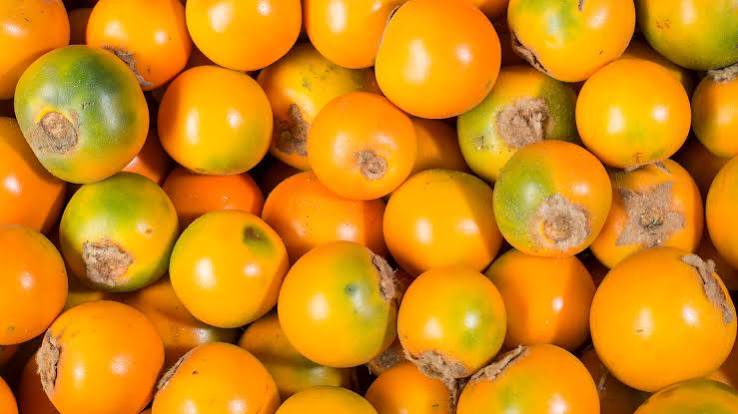
Lulo is a tropical fruit produced by Solanum quitoense, a shrub in the Solanaceae, or nightshade, family. It is also widely known as naranjilla. The fruit is generally round, with orange to yellow-orange skin when ripe and a juicy, greenish interior containing many small seeds. Its flavor is commonly described as tart, aromatic, and mildly sweet when fully ripe.
Despite its orange-like appearance, lulo is not a citrus fruit. Botanically, it belongs to Solanum, the same genus that includes several familiar food crops such as tomatoes, eggplants, and potatoes.
1.1 Scientific Name of Lulo
The accepted scientific name of lulo is Solanum quitoense Lam. Kew Science currently recognizes it as an accepted species within the genus Solanum and the family Solanaceae.
The basic botanical classification is:
- Scientific name: Solanum quitoense Lam.
- Genus: Solanum
- Family: Solanaceae
- Common names: lulo and naranjilla
- Plant form: shrub or subshrub
Using the scientific name is useful because common fruit names can change between countries and languages. In this case, Solanum quitoense provides a clear identity for the fruit regardless of whether it is called lulo or naranjilla.
2. Is Lulo the Same as Naranjilla?
Yes. Lulo and naranjilla generally refer to the same fruit, Solanum quitoense. The difference is mainly regional terminology rather than a botanical distinction.
The name lulo is especially familiar in Colombia, while naranjilla is widely used in other parts of Latin America, including Ecuador. In Spanish, naranjilla means “little orange,” a reference to the fruit’s round shape and orange-colored skin.
This naming can cause confusion because someone may assume lulo and naranjilla are two separate fruits. In most everyday and botanical contexts, however, both names point to the same species.
The fruit may also be described using names such as:
- lulo;
- naranjilla;
- naranjilla de Quito;
- Solanum quitoense fruit.
Regional names can vary, but the scientific name provides the clearest identification. If a fruit is correctly identified as Solanum quitoense, calling it either lulo or naranjilla does not make it a different species.
This distinction is especially useful when researching lulo Papua New Guinea, because different common names can make geographic information harder to interpret. Using Solanum quitoense helps separate the plant’s true botanical identity from local naming conventions.
3. Is Lulo Native to Papua New Guinea?
No. Lulo is a tropical American fruit, not an indigenous fruit of Papua New Guinea.
Kew Science records the native range of Solanum quitoense from Costa Rica to Venezuela and Peru, including the Galápagos. Its listed native areas include Colombia, Costa Rica, Ecuador, Panama, Peru, Venezuela, and the Galápagos. Papua New Guinea and New Guinea are not included in the species’ native distribution.
This distinction matters because tropical fruits are often grown far beyond the regions where they first occurred naturally. A plant may be introduced to another country through gardens, agriculture, or private cultivation, but that does not change its botanical origin.
Kew, for example, also records S. quitoense as introduced in several places outside its native range, including Java and Sumatra in Indonesia. This shows that lulo can occur beyond tropical America. However, introduced presence and native status are two different things.
For searches involving lulo fruit Papua New Guinea, the clearest way to understand the relationship is:
- Lulo: Solanum quitoense
- Native region: tropical America
- Papua New Guinea: outside its documented native range
- PNG native fruit: no
Papua New Guinea has its own diverse tropical flora, including many fruit-bearing plants, but lulo should not be placed among its indigenous species simply because some PNG environments are tropical.
4. Does Lulo Grow in Papua New Guinea?
There is documented evidence that lulo, or naranjilla, has been grown in parts of Papua New Guinea, particularly in highland areas. However, this does not make it a native PNG fruit or establish it as a major crop across the country.
A Papua New Guinea food-plant publication by Bruce R. French identifies Solanum quitoense as a South American plant and records it growing in parts of the PNG Highlands. The source specifically mentions cultivation near Mele village in the Pangia District of the Southern Highlands and describes the plant as probably introduced relatively recently at the time the information was compiled.
That evidence gives the Papua New Guinea connection more context. Lulo can be separated into two geographic ideas:
- Native range: tropical America, according to Kew Science.
- Introduced cultivation: documented historically in some PNG highland locations.
The available PNG documentation is relatively limited and historical, so it would be misleading to describe lulo as a widespread or characteristic Papua New Guinea fruit crop today without newer, location-specific evidence.
In other words, lulo has been grown in PNG, but growing somewhere and originating there are not the same thing. Its botanical origin remains firmly in tropical America.
5. Where Does Lulo Originally Come From?
Lulo originates in tropical America, rather than Papua New Guinea or the wider New Guinea region. Kew Science records the native range of Solanum quitoense from Costa Rica to Venezuela and Peru, including the Galápagos. More specifically, its native distribution includes Colombia, Costa Rica, Ecuador, Panama, Peru, Venezuela, and the Galápagos.
Colombia and Ecuador are especially important when discussing lulo because the fruit is strongly associated with these countries through cultivation and everyday food use. In Colombia, for example, Kew-linked botanical records describe S. quitoense as both native and cultivated across several regions.
Its wider natural distribution is worth keeping in mind. Describing lulo simply as a “South American fruit” misses part of the picture because its native fruit range reaches into Central America, including Costa Rica and Panama. “Tropical American fruit” is therefore a more accurate general description.
5.1 Why Lulo Is Often Called an Andean Fruit
Lulo is frequently described as an Andean fruit because of its close association with countries such as Colombia and Ecuador and its occurrence in elevated tropical areas. Botanical information compiled by Kew records S. quitoense in Colombia at elevations ranging from about 100 to 2,600 meters and lists the Andes among its Colombian regions of occurrence.
The term “Andean” is useful for explaining part of lulo’s geographic and cultural identity, but it should not be interpreted as its complete natural distribution. The species also occurs naturally outside strictly Andean areas.
For someone researching lulo fruit Papua New Guinea, this wider context makes the distinction clearer: lulo has established botanical roots in tropical America, while any occurrence in Papua New Guinea represents cultivation outside its original native range.
6. What Does Lulo Fruit Look Like?
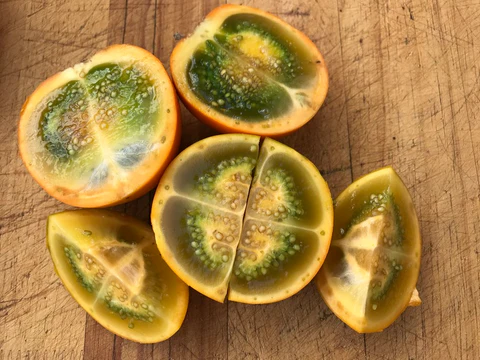
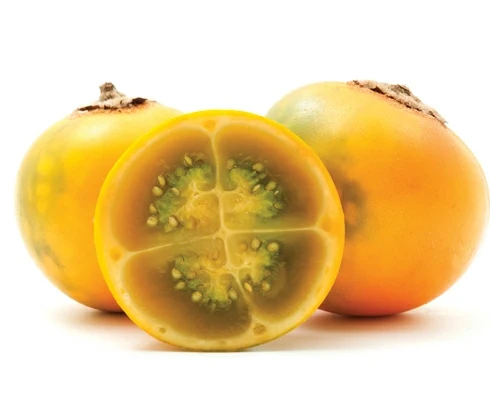
Lulo has a distinctive appearance that can be misleading at first glance. From the outside, the ripe fruit may resemble a small orange, but cutting it open reveals a very different interior. Its greenish, seed-filled pulp is one of the easiest ways to recognize it.
6.1 Exterior of Lulo Fruit
Lulo fruits are generally round or slightly oval. As they ripen, the skin develops an orange to yellow-orange color, which helps explain the Spanish name naranjilla, meaning “little orange.”
The surface can also carry fine hairs, or trichomes, especially during earlier stages of fruit development. Depending on maturity and the particular plant, these hairs may become less noticeable as the fruit ripens.
Although its color and shape create a citrus-like impression, the resemblance is only superficial. Lulo belongs to the genus Solanum, rather than the citrus genus Citrus.
6.2 Inside a Lulo Fruit
Cutting a ripe lulo open reveals a juicy interior that contrasts sharply with its orange exterior. Common characteristics include:
- green to yellow-green pulp;
- numerous small seeds;
- a soft, juicy texture;
- visible internal sections containing pulp and seeds.
This combination of orange skin and greenish flesh makes lulo visually quite different from an orange, despite the similarity of their outer appearance.
6.3 What Does the Lulo Plant Look Like?
Lulo grows as a bushy shrub rather than a conventional fruit tree. It belongs to the Solanaceae family and typically develops broad leaves on branching stems. Like many members of Solanum, parts of the plant can have noticeable hairs, and some forms may also have prickles.
This plant structure is another clue to lulo’s botanical identity. The fruit may look somewhat like a small orange, but the plant itself has much more in common botanically with other Solanum species than with citrus trees. Kew places Solanum quitoense within the genus Solanum and the family Solanaceae.
7. What Does Lulo Taste Like?
Lulo is generally described as tart, aromatic, juicy, and refreshing. Its flavor has a noticeable acidity, while fully ripe fruit can also develop a mild sweetness. Research on lulo describes its sensory character using terms such as fruity, citrus-like, tropical, fresh, and acidic.
Some people compare parts of the flavor to citrus, pineapple, or other tangy tropical fruits. These comparisons are useful for giving a general impression, but taste is subjective and can change with ripeness, variety, and preparation. A study of the Castilla variety, for example, described lulo as having an aromatic, bittersweet character.
The juicy pulp also contributes strongly to the experience. FAO material describing Castilla lulo notes its greenish-yellow pulp and pleasant aroma, characteristics that help explain why the fruit is commonly associated with beverages and other fruit preparations.
It is important to remember that terms such as “citrus-like” describe flavor rather than botanical identity. Lulo may have a bright, acidic taste reminiscent of citrus fruits, but it is not related to oranges, lemons, or limes at the family level.
8. Is Lulo a Citrus Fruit?
No. Lulo is not a citrus fruit, even though its round shape and orange-colored skin can make it look like a small orange.
Botanically, lulo is Solanum quitoense, a member of the Solanaceae, or nightshade, family. Kew Science places it within the genus Solanum. Citrus fruits, by comparison, belong to the genus Citrus and the Rutaceae family.
The difference can be summarized simply:
- Lulo: Solanum quitoense — Solanaceae
- Orange and other citrus fruits: Citrus species — Rutaceae
The confusion mainly comes from appearance and flavor. Ripe lulo can have orange or yellow-orange skin, while its tart, aromatic taste may remind some people of citrus. Neither characteristic makes it botanically related to oranges, lemons, or limes.
In fact, lulo belongs to the same large genus as several familiar food plants. This means its botanical connections are much closer to other Solanum crops than to citrus fruits.
So, when identifying lulo fruit Papua New Guinea or comparing unfamiliar tropical fruits, appearance alone can be misleading. The scientific name Solanum quitoense provides a much clearer guide to what the fruit actually is.
9. Is Lulo Related to Tomatoes and Eggplants?
Yes. Lulo is botanically related to tomatoes and eggplants because all of these plants belong to the Solanaceae, or nightshade, family. Lulo is classified as Solanum quitoense, placing it within the large genus Solanum. Kew Science confirms both its genus and family classification.
Several familiar food crops are also members of Solanum, including:
- tomato — Solanum lycopersicum;
- eggplant — Solanum melongena;
- potato — Solanum tuberosum;
- tamarillo — Solanum betaceum.
This relationship is useful when identifying lulo because its appearance can suggest something quite different. The ripe fruit has orange-colored skin and a tart flavor that may remind people of citrus, yet its botanical classification places it much closer to tomatoes and eggplants than to oranges.
Being in the same genus does not mean these fruits are interchangeable. Each is a separate species with its own plant structure, fruit characteristics, culinary uses, and geographic history. Still, the shared Solanum classification provides a clearer picture of where lulo fits in the plant kingdom.
For anyone unfamiliar with lulo fruit, this is one of its more surprising features: the small orange-looking fruit is actually a member of the same botanical group as several everyday vegetables and fruits found in kitchens around the world.
10. Lulo vs Passion Fruit
Lulo and passion fruit can both have a tart, aromatic tropical flavor, which may lead to comparisons between them. Botanically, however, they are very different fruits.
Lulo is Solanum quitoense, a shrub in the Solanaceae family. Common passion fruit is generally identified as Passiflora edulis, a climbing plant in the Passifloraceae family. Kew Science recognizes both as accepted species and places them in separate plant families and genera.
| Feature | Lulo | Passion Fruit |
| Scientific group | Solanum quitoense | Passiflora edulis and other Passiflora species |
| Family | Solanaceae | Passifloraceae |
| Plant form | Shrub or subshrub | Climbing vine |
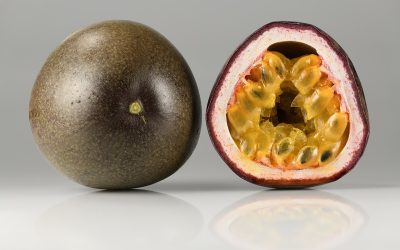
| Exterior | Usually orange to yellow-orange when ripe | Common types may be purple or yellow |
| Interior | Greenish, juicy pulp with many seeds | Juicy, seed-filled pulp |
| General flavor | Tart and aromatic | Tart to sweet-tart and aromatic |
| Broad origin | Tropical America | Tropical and subtropical Americas, depending on species |
| Same fruit? | No | No |
Their growth habits make the difference especially easy to see. Kew describes Solanum quitoense as a shrub or subshrub, while Passiflora edulis is a climbing plant.
The two fruits also have different botanical backgrounds. Lulo belongs to Solanum, connecting it with plants such as tomatoes and eggplants. Passion fruit belongs to Passiflora, a large genus of climbing plants.
So, although lulo and passion fruit can share a tangy tropical character, they are not the same fruit and are not closely related botanically. Flavor alone is therefore not a reliable way to identify an unfamiliar tropical fruit.
11. Lulo vs Sugar Fruit Papua New Guinea
In Papua New Guinea, the name “sugar fruit” is associated with a type of sweet passionfruit rather than lulo. Sources discussing PNG food plants connect this local name with sweet granadilla, Passiflora ligularis, a member of the Passifloraceae family. A survey of introduced plants along the Kokoda Track also records sweet granadilla as an introduced species cultivated in Papua New Guinea.
This makes sugar fruit quite different from lulo:
- Lulo: Solanum quitoense
- Family: Solanaceae
- Plant form: shrub
- Typical flavor: tart and aromatic
By comparison:
- PNG sugar fruit / sweet granadilla: Passiflora ligularis
- Family: Passifloraceae
- Plant form: climbing vine
- Common character: sweet, seed-filled passionfruit pulp
The two fruits can create confusion because both are tropical American species that have been cultivated beyond their native ranges. Both have also been documented in Papua New Guinea, particularly in discussions of highland fruit crops. Historical agricultural literature from PNG has listed sweet granadilla and naranjilla among fruits grown or considered in the country.
Their scientific names make the distinction straightforward. Lulo is Solanum quitoense, while PNG sugar fruit is associated with Passiflora ligularis. They are separate fruits from different botanical families.
So, if someone in Papua New Guinea refers to sugar fruit, the name should not automatically be interpreted as another term for lulo or naranjilla.
12. Lulo vs Tamarillo
Lulo and tamarillo are different fruits, but their botanical relationship is much closer than the resemblance between lulo and citrus. Both belong to the Solanaceae family and the genus Solanum.
Lulo is Solanum quitoense, while tamarillo is Solanum betaceum. Kew Science currently recognizes both as accepted species within Solanum.
The main differences are easy to recognize:
- Lulo: Solanum quitoense
- Tamarillo: Solanum betaceum
- Lulo plant form: shrub or subshrub
- Tamarillo plant form: small tree or tree-like plant
- Lulo fruit: generally round, with orange-colored skin and greenish juicy pulp
- Tamarillo fruit: typically more elongated or egg-shaped
- Same species: no
Their geographic histories also overlap broadly. Kew places lulo’s native range in tropical America from Costa Rica to Venezuela and Peru, including the Galápagos. Tamarillo is likewise associated botanically with tropical America, although it has been introduced to many other regions, including New Guinea.
This last point is useful when discussing tropical fruits in Papua New Guinea. Kew records tamarillo as introduced in New Guinea, while its distribution data does not list New Guinea for lulo. That does not mean lulo has never been cultivated in PNG, as discussed earlier, but it shows why scientific distribution records and local cultivation reports need to be interpreted separately.
So, lulo and tamarillo are botanical relatives rather than alternative names for the same fruit. Their shared Solanum classification explains the connection, while their different species, fruit shapes, and growth forms make them straightforward to distinguish.
13. Lulo vs Cocona
Lulo and cocona are closely related tropical fruits, so comparing them makes more botanical sense than comparing lulo with citrus or passion fruit. Both belong to the genus Solanum and the Solanaceae family, but they are separate species.
The basic distinction is:
- Lulo: Solanum quitoense
- Cocona: Solanum sessiliflorum
- Family: Solanaceae
- Same species: no
Kew Science recognizes Solanum sessiliflorum as an accepted species. Its recorded native range extends from Nicaragua into southern tropical America, including countries such as Colombia, Ecuador, Peru, Venezuela, and parts of northern South America.
This distribution overlaps considerably with the broader tropical American setting associated with lulo. The two fruits also share their membership in Solanum, which connects them botanically with tomatoes, eggplants, potatoes, and tamarillo.
They should still be identified separately. Lulo is S. quitoense, while cocona is S. sessiliflorum. Their fruits can differ in appearance, flavor, and culinary use, even though both are edible tropical Solanum fruits.
Cocona also provides a useful example of why common appearance is less reliable than botanical classification. Two tropical fruits may seem similar because they are juicy, acidic, or grown in comparable regions, but their scientific names show whether they are actually the same species.
For someone researching lulo fruit Papua New Guinea, neither the similarity to cocona nor their shared genus changes lulo’s geographic origin. Both are fundamentally tropical American species rather than native New Guinea fruits.
14. What Climate Does Lulo Grow In?
Lulo is commonly associated with cooler tropical and subtropical environments, particularly tropical uplands rather than extremely hot lowland conditions. Research on lulo cultivation in Colombia describes the crop as growing under moderate temperatures, substantial rainfall, relatively high humidity, and often some degree of shade.
A review of lulo cultivation in Colombia reports common production conditions around 1,900–2,200 meters above sea level, temperatures of roughly 15–24°C, annual rainfall of about 1,500–2,500 mm, and relative humidity near 80%. These figures describe documented Colombian growing environments rather than universal requirements for every lulo plant.
More broadly, FAO material describes Solanum quitoense as occurring in tropical environments at elevations of roughly 600–2,300 meters, usually where rainfall is substantial and intense sunlight is limited. Good soil drainage is also considered important.
This helps explain why lulo is often described as a tropical highland fruit. Its typical environment combines several general features:
- moderate temperatures for a tropical region;
- humid conditions;
- regular rainfall;
- well-drained soil;
- upland or mountainous settings;
- some protection from intense sunlight.
These characteristics should be treated as general growing patterns rather than a simple checklist. Elevation, rainfall, temperature, soil, local plant varieties, and farming practices interact, so two places with similar average temperatures may still provide quite different growing conditions.
14.1 Could Papua New Guinea’s Highlands Suit Lulo?
Some environments in the Papua New Guinea Highlands could appear broadly comparable to tropical upland areas where lulo is grown elsewhere. The Highlands include elevated, relatively cool tropical environments, and earlier PNG agricultural records have documented Solanum quitoense being grown in at least some highland locations.
This makes cultivation in suitable PNG environments biologically plausible. However, climatic similarity does not prove that lulo is widespread, commercially important, or naturally occurring there.
That distinction is important:
A suitable climate can allow an introduced plant to grow, but it does not change the plant’s place of origin.
Lulo remains a tropical American species. Papua New Guinea may provide suitable conditions in certain locations, but any lulo grown there should be understood as introduced cultivation rather than evidence of a native PNG fruit.
15. How Is Lulo Commonly Used?
Lulo is mainly used as a culinary fruit, especially in drinks and fruit-based preparations. Its juicy pulp, noticeable acidity, and aromatic character make it well suited to recipes where a bright tropical flavor is useful.
Common uses include:
- fresh fruit pulp;
- juices and blended drinks;
- desserts;
- fruit sauces;
- preserves;
- other sweet fruit preparations.
In places where lulo is familiar, beverages are among its best-known uses. The pulp can be separated from the skin and blended or strained depending on the recipe. Because the flavor is naturally tart, preparation methods often balance the acidity according to personal preference.
Lulo can also be combined with other fruits, but its distinctive aroma means it can stand on its own in simple preparations. How it is served varies by region, household, and ripeness.
15.1 Lulo Juice
Lulo juice, sometimes associated with the name naranjilla juice, is one of the most recognizable ways to use the fruit. Its greenish pulp contains plenty of juice and many small seeds, while the flavor brings together tartness, fruitiness, and a fresh aroma.
The exact taste of a lulo drink can vary depending on the fruit’s maturity and how it is prepared. Riper fruit may taste somewhat sweeter, while less-ripe fruit can produce a sharper result.
This culinary use also helps explain why lulo is sometimes compared with passion fruit or citrus. All can provide an acidic, aromatic character in beverages, but the similarity is sensory rather than botanical. Lulo remains Solanum quitoense, a member of the nightshade family.
16. Why Might Someone Search for Lulo Fruit in Papua New Guinea?
The phrase “lulo fruit Papua New Guinea” can be confusing because it seems to suggest that lulo is a Papuan fruit. In reality, people may use this search for several different reasons.
Someone might be:
- trying to identify an unfamiliar tropical fruit;
- checking whether lulo grows in Papua New Guinea;
- wondering if lulo is native to PNG;
- comparing lulo with another fruit found in the Highlands;
- researching crops that can grow in cool tropical environments;
- confusing lulo with passion fruit, tamarillo, sugar fruit, or another locally known fruit;
- looking for information about introduced fruit plants.
The geographic connection is understandable. Papua New Guinea has tropical lowlands as well as cooler highland environments, and many fruit plants from other parts of the world have been introduced there. A fruit found in cultivation, however, does not necessarily originate in the same country.
This is why scientific identification is especially useful for unusual searches like this one. Lulo is Solanum quitoense, a tropical American species. If the same plant is encountered in Papua New Guinea, its presence would represent cultivation outside its native range rather than evidence that it originated there.
So, the phrase “lulo fruit Papua New Guinea” is best treated as an identification and geography question: what is the fruit, does it occur in PNG, and where does it actually come from?
17. Which Fruits Are Actually Associated with Papua New Guinea?
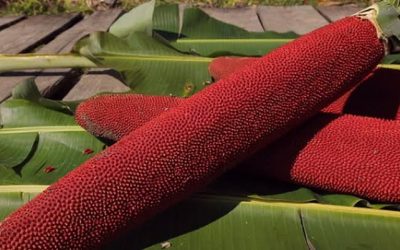
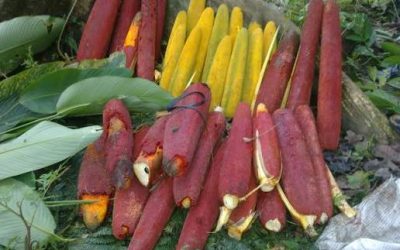
Papua New Guinea has many fruit-bearing plants with a much clearer botanical connection to New Guinea than lulo. Two useful examples are buah merah or red fruit (Pandanus conoideus) and ton or matoa (Pometia pinnata).
17.1 Papua Red Fruit
Pandanus conoideus is a pandanus species native to a region extending from Maluku into the western Pacific. Kew Science specifically includes New Guinea in its native distribution, along with the Bismarck Archipelago, Solomon Islands, and several neighboring island groups.
The plant is commonly associated with the broader New Guinea region and produces a large, elongated compound fruit that looks very different from lulo.
The contrast is straightforward:
- Papua red fruit: Pandanus conoideus
- Family: Pandanaceae
- Native range: includes New Guinea
- Fruit form: large, elongated compound fruit
Lulo, by comparison, is a round berry from the nightshade family whose natural range lies in tropical America.
17.2 Ton or Matoa
Another relevant fruit is Pometia pinnata, commonly known in parts of its range as matoa. Kew records this tree as native across a broad region from South and Southeast Asia into the South Pacific, with New Guinea specifically included in its native distribution.
This makes matoa a more appropriate example when discussing fruits botanically associated with New Guinea. Its range is much wider than PNG alone, so it should not be described as exclusive to Papua New Guinea.
17.3 New Guinea Has Its Own Distinctive Fruit Flora
New Guinea’s native flora also includes numerous Pandanus, fig, and other fruit-bearing species adapted to environments ranging from humid lowlands to mountainous areas. Local names, uses, and distributions can differ considerably between communities and regions.
For identification purposes, the important point is geographic: a tropical appearance does not mean two fruits share the same origin.
Unlike lulo, which comes from tropical America, fruits such as Pandanus conoideus and Pometia pinnata have documented native ranges that include New Guinea. This makes them more suitable reference points for topics such as Papua New Guinea native fruits, red fruit Papua, and matoa Papua.
18. Lulo vs Papua Red Fruit
Lulo and Papua red fruit, also known as buah merah, are both tropical fruits, but they are very different botanically and geographically.
Lulo is Solanum quitoense, a member of the Solanaceae family. Papua red fruit is Pandanus conoideus, which belongs to the Pandanaceae family. Kew Science recognizes both as accepted species, but their natural distributions are clearly different.
The main differences include:
- Lulo: Solanum quitoense
- Family: Solanaceae
- Plant form: shrub or subshrub
- Fruit appearance: generally round with orange-colored skin
- Native range: tropical America
In comparison:
- Papua red fruit: Pandanus conoideus
- Family: Pandanaceae
- Plant form: tree
- Fruit appearance: large, elongated compound fruit
- Native range: includes New Guinea
Kew records Pandanus conoideus as native from Maluku to the western Pacific, specifically including New Guinea, the Bismarck Archipelago, Solomon Islands, Caroline Islands, and Vanuatu. It primarily grows in wet tropical environments.
The contrast with lulo is clear. Kew places the natural range of Solanum quitoense in Costa Rica, Panama, Colombia, Ecuador, Venezuela, Peru, and the Galápagos. New Guinea is not part of that native distribution.
These two fruits also belong to completely separate botanical groups. Lulo is connected to other Solanum plants such as tomatoes and eggplants, while Papua red fruit belongs to Pandanus, a genus well represented in New Guinea.
Therefore, lulo and Papua red fruit are different in species, plant family, appearance, and geographic origin. For someone looking for a fruit with a genuine botanical connection to New Guinea, Pandanus conoideus provides a much clearer example than lulo.
19. Why Scientific Names Matter When Identifying Lulo
Common fruit names can vary between countries, languages, and local communities. Scientific names provide a more reliable way to identify a plant without depending on regional terminology.
For lulo, the relationship is straightforward:
- Lulo → Solanum quitoense
- Naranjilla → Solanum quitoense
- Genus → Solanum
- Family → Solanaceae
Kew Science recognizes Solanum quitoense Lam. as the accepted scientific name. It also records Solanum quitense as a synonym rather than a separate accepted species.
Using the scientific name becomes especially useful with an unusual search such as “lulo fruit Papua New Guinea.” A common name alone might lead someone to confuse lulo with a local PNG fruit, an orange-like fruit, passion fruit, tamarillo, or another tropical species.
Scientific identification clears up those similarities. An orange-looking exterior does not make lulo a citrus fruit, and a tart flavor does not make it passion fruit. Likewise, finding a plant in Papua New Guinea would not make it native to that country.
In this case, the name Solanum quitoense connects the fruit to a specific botanical species whose documented native range is in tropical America.
20. Interesting Facts About Lulo Fruit
Lulo has several characteristics that make it easy to confuse with other tropical fruits. These quick facts summarize its identity and geographic background:
- Lulo and naranjilla generally refer to the same fruit. Both common names are used for Solanum quitoense.
- Its scientific name is Solanum quitoense Lam. The species belongs to the genus Solanum and the family Solanaceae.
- Lulo is a member of the nightshade family. This places it in the same botanical family as tomatoes, eggplants, potatoes, and tamarillo.
- It is not a citrus fruit. Although ripe lulo can have orange-colored skin and a citrus-like tartness, it belongs to a completely different plant family from oranges and lemons.
- Its native range is in tropical America. The documented natural distribution extends from Central America into northern South America and includes the Galápagos.
- Lulo is not native to Papua New Guinea. Historical records indicate that it has been cultivated in some PNG highland locations, but this represents introduction outside its original range.
- The inside looks very different from the outside. Beneath the orange or yellow-orange skin is typically greenish, juicy pulp containing many small seeds.
- Lulo is especially associated with beverages. Its tart, aromatic pulp is commonly used for juices and other fruit-based drinks.
Together, these details explain why scientific identification matters. A fruit can resemble an orange, grow in a tropical highland environment, or be cultivated far from its place of origin without being botanically related to citrus or native to the region where it is found.
21. Frequently Asked Questions About Lulo Fruit Papua New Guinea
21.1 What Is Lulo Fruit?
Lulo is a tropical fruit produced by Solanum quitoense, a shrub in the Solanaceae or nightshade family. It usually has orange to yellow-orange skin, greenish juicy pulp, and many small seeds. The fruit is known for its tart, aromatic character.
21.2 Is Lulo the Same as Naranjilla?
Yes. Lulo and naranjilla generally refer to the same species, Solanum quitoense. The preferred common name varies by region. Lulo is especially familiar in Colombia, while naranjilla is widely used elsewhere in Latin America.
21.3 Is Lulo Native to Papua New Guinea?
No. Lulo is not native to Papua New Guinea. Its documented natural range is in tropical America, extending from Costa Rica through parts of northern South America to Peru, along with the Galápagos.
21.4 Does Lulo Grow in Papua New Guinea?
Lulo has been documented in cultivation in parts of the Papua New Guinea Highlands. However, this represents cultivation outside its native range. Available evidence does not support describing lulo as a widespread, characteristic, or indigenous PNG fruit crop.
21.5 Where Does Lulo Come From?
Lulo originates in tropical America. It is strongly associated with countries such as Colombia and Ecuador, although its native range extends beyond the Andes into other parts of Central and South America.
21.6 What Does Lulo Taste Like?
Lulo is generally described as tart, aromatic, juicy, and mildly sweet when ripe. Some people notice citrus-like or other tropical flavor notes, but these descriptions are subjective and do not indicate a botanical relationship.
21.7 Is Lulo an Orange?
No. Lulo may resemble a small orange from the outside, but it is not a citrus fruit. Lulo belongs to the Solanaceae family, while oranges belong to the Rutaceae family.
21.8 Is Lulo Related to Tomatoes?
Yes. Lulo belongs to the genus Solanum, which also includes tomatoes, eggplants, and potatoes. This makes lulo botanically much closer to these familiar crops than to oranges.
21.9 Is Lulo the Same as Passion Fruit?
No. Lulo and passion fruit are separate fruits from different botanical families. Lulo is Solanum quitoense in the Solanaceae family, while common passion fruit belongs to Passiflora in the Passifloraceae family.
21.10 Is Lulo the Same as Sugar Fruit in Papua New Guinea?
No. The term sugar fruit in Papua New Guinea is associated with sweet granadilla, a type of passionfruit, rather than lulo. Lulo is Solanum quitoense, so the two fruits differ in species, family, plant form, and appearance.
These distinctions are useful whenever unfamiliar tropical fruits are identified by local names. Scientific names provide a clearer way to separate fruits that may share similar colors, flavors, or growing environments.
If you’re looking for Papua herbal products, start with a trusted source. Experience authentic, high-quality red fruit products at Cahya Red Fruit Papua New Guinea! We offer a wide variety of items besides Red Fruit Papua New Guinea — including Papua ant nest and Papua kebar grass. Check out our herbal wellness product in our website!