What Is Papua New Guinea Food
Overview of cuisine
Papua New Guinea food refers to the everyday meals and traditional dishes prepared across the diverse regions of Papua New Guinea. Rather than being defined by a single national dish, the cuisine is shaped by the land, climate, and local customs of its many communities.
At its core, this cuisine is built around natural, locally sourced ingredients. People rely heavily on what they can grow, gather, or catch nearby. Root crops, leafy greens, fruits, fish, and occasionally meat form the foundation of most meals. Because of this close connection to the environment, food often reflects what is available in a particular season or region.
Simplicity is a defining feature. Meals are typically prepared with minimal processing and straightforward techniques. Ingredients are not heavily altered, allowing their natural textures and flavors to remain central to the dish. This approach is not about complexity but about making the most of what the land provides.
Food also carries deep cultural meaning. It is more than daily nourishment—it is part of social life, tradition, and identity. Meals are often shared, and cooking itself can be a communal activity, especially in rural areas where families and neighbors gather to prepare food together.
Why food is unique
Papua New Guinea food stands out for several reasons, many of which are tied to geography and tradition.
First, the country’s geographic diversity plays a major role. From highland valleys to coastal shores and small islands, each area produces different ingredients. This creates a wide variety of local diets, even within relatively short distances.
Second, the cuisine relies heavily on root crops and tropical plants. Foods like sweet potato, taro, yam, and sago are essential staples. These ingredients are filling, widely available, and adaptable to different cooking methods.
Another distinctive element is the use of traditional cooking techniques. Methods such as earth oven cooking—often called “mumu”—are still widely practiced. These techniques are not only practical but also tied to social gatherings and cultural traditions.
Altogether, Papua New Guinea food is unique because it remains closely connected to nature, community, and long-standing practices. It reflects a way of life where food is grown, prepared, and shared with a strong sense of place.
Staple Foods in Papua New Guinea
Root crops and carbohydrates
In many parts of Papua New Guinea, staple foods are built around root crops and other carbohydrate-rich plants. These ingredients form the base of daily meals and are valued for their availability and ability to grow in local conditions, from mountain highlands to lowland plains.
One of the most important staples is kaukau, or sweet potato. In the highlands especially, it is eaten daily—boiled, roasted, or cooked in traditional ovens. Its versatility makes it a reliable part of meals, often paired with greens or small portions of meat.
Taro is another widely used root crop. It has a slightly firmer texture and is commonly boiled or steamed. In some regions, taro holds cultural significance and may appear in both everyday meals and special occasions.
Yam is also grown in certain areas and is often associated with seasonal harvests. Its preparation is similar to other root crops, but it can carry symbolic meaning in local traditions, particularly where yam cultivation is tied to community identity.
Sago is quite different from the other staples. Instead of being a root, it is a starch extracted from the trunk of the sago palm. Once processed, it becomes a dough-like substance that can be cooked into various forms. In lowland and swampy regions, sago is a primary source of carbohydrates and plays a central role in daily eating.
Together, these staples show how people adapt their diets to the land around them. Whether grown in gardens or harvested from natural resources, they provide the foundation for most meals.
Fruits and plant based foods
Alongside root crops, a wide range of fruits and plant-based foods contribute to everyday eating. These ingredients add variety in texture and flavor while still reflecting the natural environment.
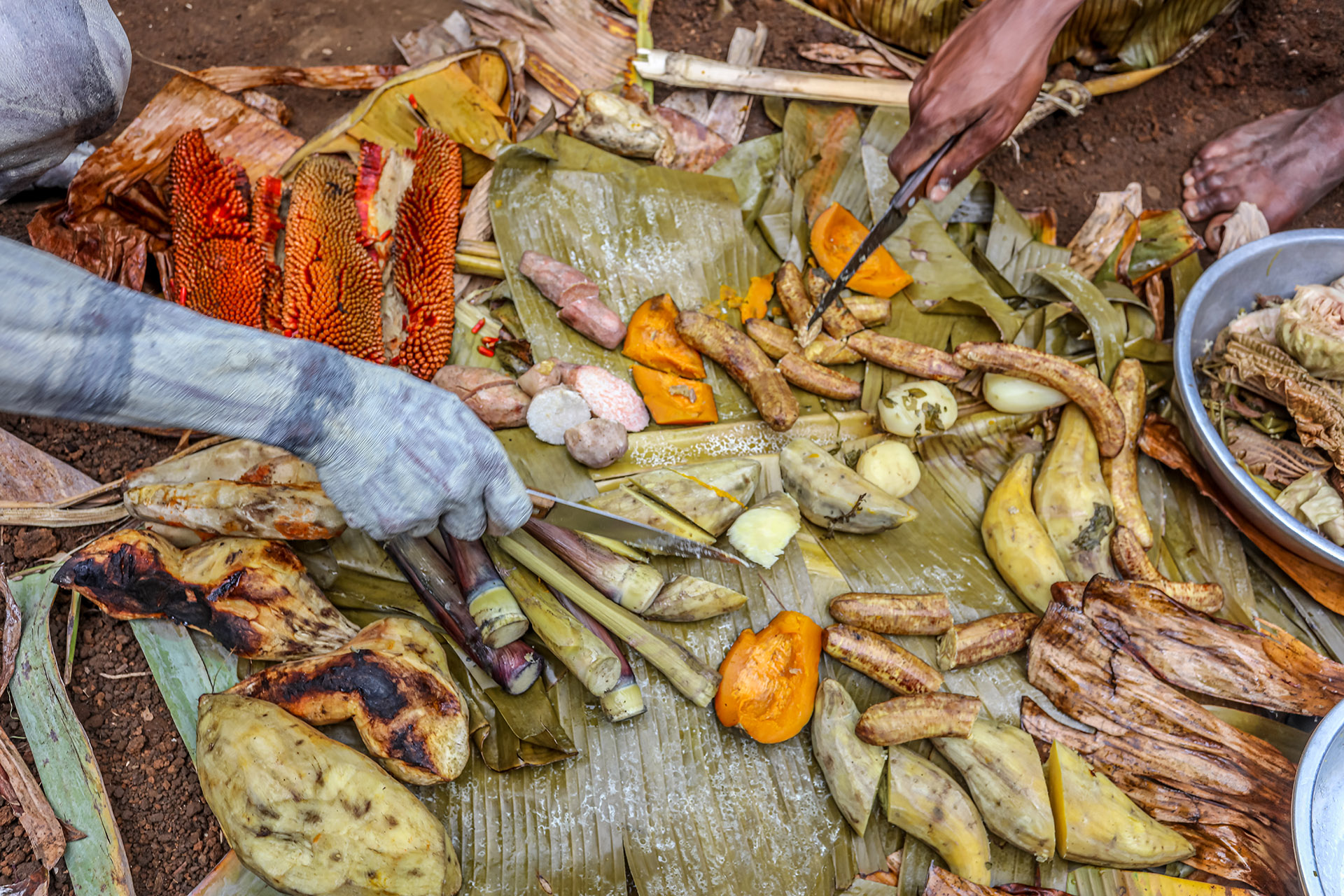
Bananas are a common part of meals, and not all are eaten ripe. In many cases, green bananas are cooked—boiled or roasted—much like root crops. They can be served as a side dish or combined with other ingredients in larger meals.
Coconut is widely used, especially in coastal and island areas. The flesh can be eaten fresh, while coconut milk is often added to dishes for richness. It plays an important role in shaping the texture of many traditional recipes.
Breadfruit is another staple in certain regions. When cooked, it becomes soft and filling, making it a practical substitute for other carbohydrates. It is typically roasted or baked and shared among family members.
Leafy greens grow abundantly and are commonly included in meals. These greens are usually lightly cooked and served alongside root crops or fish. Their preparation is simple, allowing their natural qualities to remain intact.
Overall, plant-based foods in Papua New Guinea are not just side ingredients—they are essential parts of daily life. They reflect a way of eating that is closely tied to the land, where meals are built from what is grown nearby and prepared with care.
Traditional Cooking Methods
Mumu cooking method
One of the most well-known cooking traditions in Papua New Guinea is the mumu, an earth oven technique that brings together food, community, and ritual in a single process.
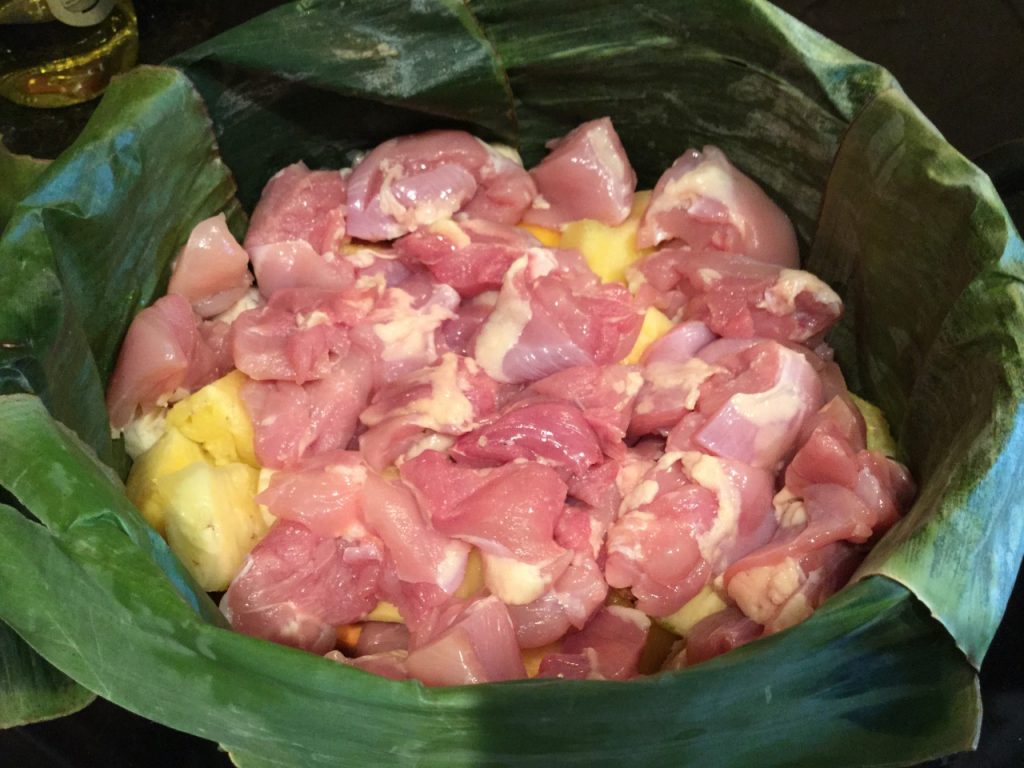
The process begins by heating stones over an open fire until they become extremely hot. Meanwhile, ingredients such as root crops, greens, and meat—often pork—are prepared and wrapped in leaves. Once everything is ready, the hot stones are placed in a pit, and the food is layered on top, sometimes with additional stones in between.
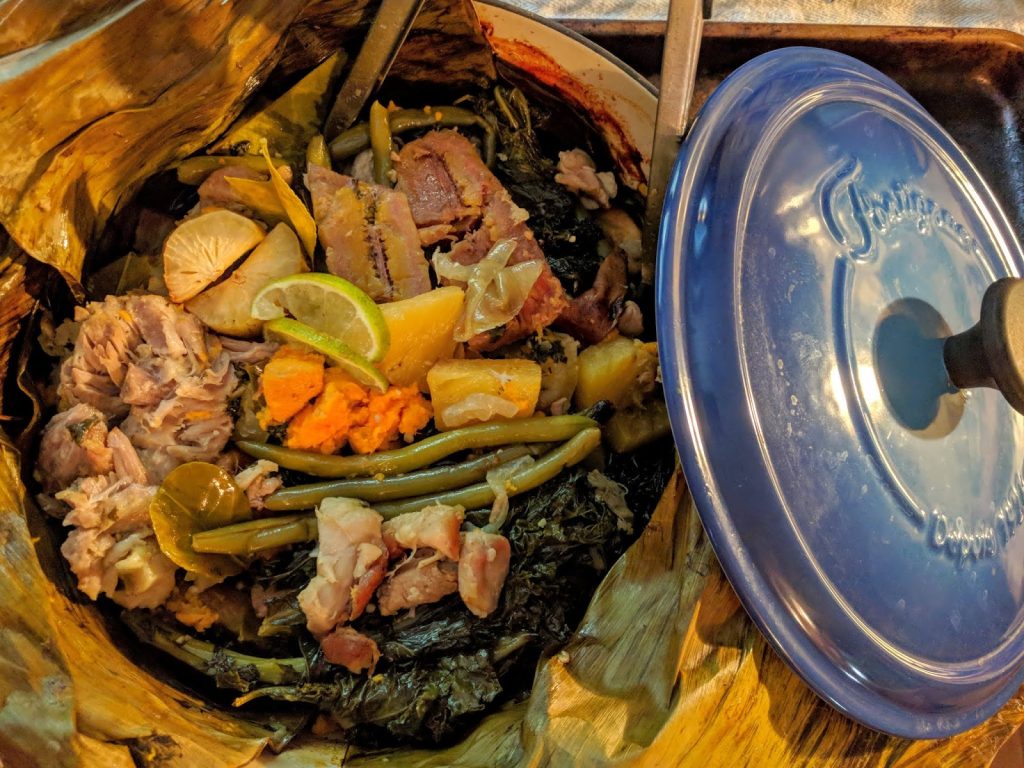
The entire arrangement is then covered with leaves and soil to trap the heat. Inside this enclosed space, the food slowly cooks using steam and retained warmth from the stones. This method can take several hours, depending on the quantity and type of ingredients.
What makes mumu especially meaningful is its communal nature. Preparing a mumu is rarely done alone. Families and neighbors often gather to contribute ingredients, help with the cooking process, and share the final meal. It is commonly used during gatherings, celebrations, and important social events.
Beyond the cooking itself, mumu reflects a deeper connection between people and their environment. It uses natural materials—stones, leaves, and earth—and transforms them into a functional cooking system that has been passed down through generations.
Other cooking techniques
While mumu is perhaps the most iconic method, everyday cooking in Papua New Guinea also includes simpler techniques that fit daily routines.
Roasting is widely used, especially for root crops like sweet potatoes and for fish or meat. Food is placed directly over hot coals or near an open flame, giving it a slightly smoky flavor.
Boiling is another common method. Ingredients such as taro, greens, or bananas are cooked in pots over a fire with water. This approach is practical and quick, making it suitable for daily meals.
Steaming with leaves is also practiced in various forms. Food is wrapped in banana or other large leaves and placed over heat, allowing it to cook gently while retaining moisture. This technique is often used when preparing smaller portions or when an earth oven is not practical.
These methods share a common theme: they are simple, resourceful, and closely tied to the surrounding environment. Cooking does not rely on complex tools or equipment but instead uses what is readily available.
Together, these traditional cooking methods highlight how food preparation in Papua New Guinea is both practical and deeply cultural, blending everyday needs with long-standing traditions.
Popular Traditional Dishes
Common village dishes
Across Papua New Guinea, many traditional dishes come from village life, where meals are prepared using what is available nearby and cooked in shared spaces. These dishes are not always named in a formal way but are recognized through their ingredients and preparation style.
One of the most familiar meals is food prepared in a mumu. A typical mumu meal might include pork, sweet potatoes, taro, bananas, and leafy greens, all cooked together in the earth oven. The slow cooking process blends the flavors naturally, without the need for added seasonings. The result is a meal that feels both simple and rich, often shared during gatherings or community events.
Sago-based dishes are also widely known, especially in lowland regions. One example is saksak, made from sago starch combined with ingredients like banana and coconut. It is usually wrapped and cooked, resulting in a soft, slightly dense texture. Saksak is often prepared for sharing and can appear during both everyday meals and special occasions.
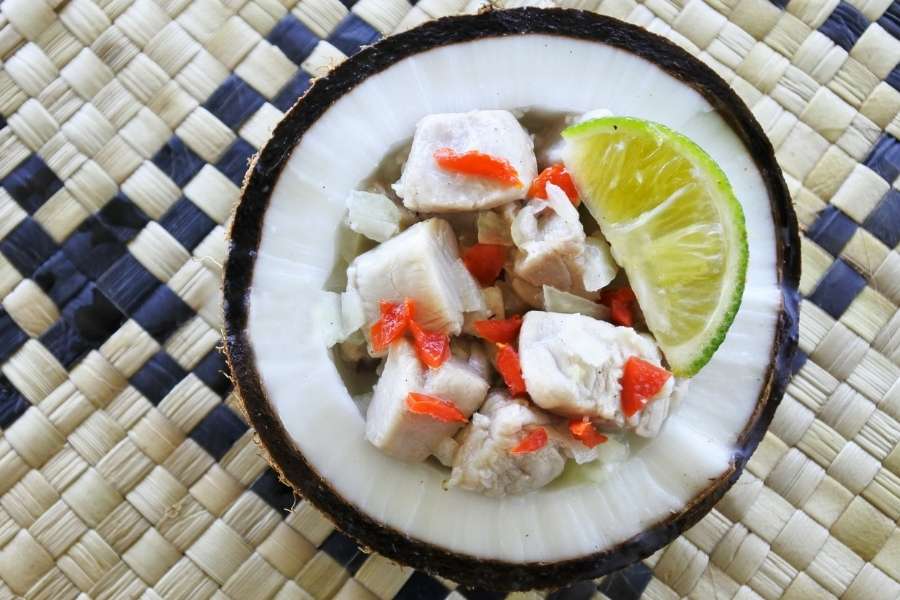
Fish cooked with coconut is another common preparation, particularly in coastal areas. Fresh fish is combined with coconut milk and gently cooked, creating a dish that highlights the natural taste of the ingredients. It is typically served with root crops or sago on the side.
These village dishes reflect a way of cooking that is flexible rather than fixed. Recipes are not always written down but are passed through experience, adapting to what is available and who is being fed.
Everyday meals
While special dishes are important, everyday meals in Papua New Guinea are often much simpler and follow a familiar pattern.
A typical daily meal might consist of boiled or roasted root crops such as sweet potato or taro, served with leafy greens. In some cases, a small portion of fish or meat is added, depending on availability. The focus is on creating a filling and balanced plate using a few key ingredients.
Seasoning is usually minimal. Instead of relying on spices or sauces, the natural flavor of each ingredient is allowed to stand out. Coconut milk may be added in some regions, but even then, the overall taste remains gentle and grounded.
Meals are often eaten at home or in small groups, and the preparation is practical rather than elaborate. Cooking is part of the daily routine, and the same ingredients may appear in different forms throughout the week.
Even in their simplicity, these everyday meals reflect the broader character of Papua New Guinea food—rooted in the land, shaped by tradition, and centered around sharing.
Regional Food Differences
Highlands cuisine
The highland regions of Papua New Guinea offer a distinct food culture shaped by cooler climates, mountainous terrain, and inland living. Here, agriculture plays a central role, and meals are built around crops that grow well at higher elevations.
Sweet potato, often called kaukau, is the dominant staple in the highlands. It is grown in abundance and appears in most meals, whether boiled, roasted, or cooked in a mumu. Its reliability makes it a cornerstone of daily life.
Pork is also especially important in highland communities. While it may not be eaten every day, it carries strong cultural value and is often prepared for gatherings, exchanges, or celebrations. When cooked in a mumu, pork is typically combined with root crops and greens, creating meals that are shared among many people.
Because these regions are far from the coast, seafood is rarely part of the diet. Instead, protein sources are more limited and often reserved for special occasions. This shapes a cuisine that leans heavily on plant-based staples, with meat used more selectively.
Highland cuisine reflects a lifestyle closely tied to farming and land management, where food is grown locally and prepared within the rhythms of village life.
Coastal and island cuisine
In contrast, coastal and island areas of Papua New Guinea have a different set of ingredients and food traditions, influenced by the surrounding ocean and tropical environment.
Fish and seafood are central to daily meals in these regions. Fresh catches are often cooked shortly after being brought ashore, using simple methods like roasting, boiling, or simmering with coconut milk. This creates dishes that highlight freshness and natural flavor.
Coconut is another key ingredient, used in many forms—from fresh flesh to coconut milk. It adds richness to dishes and is commonly paired with fish, greens, or sago-based foods.
Sago plays a major role as a staple carbohydrate, particularly in lowland and swampy coastal areas where root crops may be less dominant. It is processed from the sago palm and prepared in various ways, forming a base for many meals.
Compared to the highlands, coastal cuisine tends to feel lighter in texture but still filling, with a strong emphasis on seafood and tropical ingredients.
These regional differences show that Papua New Guinea food is not a single, uniform cuisine. Instead, it changes from place to place, shaped by geography, environment, and local traditions.
Ingredients and Flavors
Key ingredients
The foundation of food in Papua New Guinea lies in a small but meaningful group of ingredients that appear again and again across regions. These are not complex or heavily processed items, but rather foods that come directly from the land and sea.
Coconut is one of the most widely used ingredients, especially in coastal areas. It can be eaten fresh, but more often it is grated and pressed into coconut milk. This liquid is then added to dishes, giving them a smooth texture and a gentle richness.
Fresh fish is another essential component, particularly for communities near rivers, lakes, and the ocean. Fish is usually cooked soon after it is caught, which helps preserve its natural qualities. It may be roasted, boiled, or combined with coconut milk and greens.
Root vegetables such as sweet potato, taro, and yam remain central to most meals. These ingredients provide the base of the dish, offering substance and balance. They are typically prepared in simple ways that highlight their natural texture.
Leafy greens are also widely used and often cooked alongside root crops or fish. They add variety to meals without changing the overall simplicity of the cuisine.
These ingredients are not chosen for complexity but for their reliability and connection to the environment. They reflect a way of cooking that depends on what is available locally rather than imported or processed foods.
Flavor profile
The flavor of Papua New Guinea food is often described as mild, natural, and grounded in the ingredients themselves.
Seasoning is usually minimal. Unlike cuisines that rely heavily on spices, sauces, or strong flavorings, dishes here tend to use little more than what is naturally present in the ingredients. This allows the taste of each component—whether it is the sweetness of a root crop or the richness of coconut—to stand on its own.
Cooking methods also influence flavor. Roasting over an open fire can add a subtle smokiness, while steaming or boiling keeps the taste clean and soft. In mumu cooking, the combination of heat, leaves, and time gently blends flavors together without overpowering them.
The result is a cuisine that feels balanced and straightforward. Instead of bold contrasts, the flavors are steady and familiar, shaped more by the freshness of ingredients than by added elements.
This approach to flavor reflects a broader cultural perspective: food is appreciated for what it is, not transformed into something entirely different. It is this simplicity that gives Papua New Guinea cuisine its distinct identity.
Food and Culture
Communal eating
In Papua New Guinea, food is closely tied to social life. Meals are rarely just about eating—they are moments where people come together, share time, and reinforce relationships within families and communities.
Communal eating is a common practice, especially in rural areas. Food is often prepared in shared spaces and served in a way that allows everyone to take part. Instead of individual portions, dishes may be placed in the center, and people gather around to eat together.
This style of eating reflects cooperation and connection. Preparing food—whether it involves harvesting, cooking, or serving—is often a group effort. Each person may contribute something, even in small ways, creating a sense of participation and shared responsibility.
Meals can also be flexible in structure. They are not always tied to strict schedules or formal settings. Instead, they happen naturally throughout the day, depending on when food is prepared and who is present. This creates a relaxed and inclusive atmosphere around eating.
In many communities, offering food to others is a sign of respect and hospitality. Sharing what is available, no matter how simple, is an important social gesture.
Food in ceremonies
Food also plays a central role in ceremonies and larger gatherings across Papua New Guinea. These events highlight how deeply food is connected to tradition and cultural expression.
During celebrations, feasts are often prepared using traditional methods such as mumu. Larger quantities of food are cooked, and a wider variety of ingredients may be included. Pork, in particular, is commonly associated with these occasions and is prepared to be shared among many people.
These gatherings may mark important life events, seasonal changes, or community milestones. Food becomes a way to bring people together, strengthen bonds, and express cultural identity.
The preparation of ceremonial meals can take time and coordination. It is not only about the final dish but also about the process—people gathering, working together, and contributing to something shared.
In this context, food carries meaning beyond the plate. It represents cooperation, tradition, and the continuity of cultural practices passed from one generation to the next.
Daily Life and Food Habits
Village food routines
In many parts of Papua New Guinea, daily food habits are shaped by village life, where people rely on what they grow, gather, or catch themselves. Meals follow a natural rhythm that connects closely to the land and the pace of everyday activities.
Homegrown food plays a central role. Families often maintain small gardens where they cultivate crops like sweet potato, taro, bananas, and leafy greens. These gardens are not just sources of food but part of daily routines, with planting, tending, and harvesting woven into everyday life.
Cooking is usually done in simple settings, often outdoors or in open kitchens. Fires are commonly used, and the methods remain straightforward—boiling, roasting, or steaming. Meals are prepared as needed rather than in large, stored quantities, reflecting a focus on freshness.
Food routines can vary depending on the day’s activities. Some days may involve more preparation, especially if a larger meal is planned, while other days rely on quick and familiar combinations of staple foods. The approach is flexible and adapts to what is available at the time.
This way of eating reflects a close relationship between people and their surroundings, where food is not separated from daily life but fully integrated into it.
Market and local food access
Alongside homegrown food, local markets play an important role in how people access ingredients in Papua New Guinea.
Markets are often small, open-air spaces where vendors sell fresh produce, fish, and other locally sourced items. The selection usually reflects what is in season and what has been harvested or caught recently.
For many people, these markets provide access to foods they may not grow themselves. They also serve as social spaces where people meet, exchange goods, and stay connected with the community.
In urban areas, markets can be busier and may include a wider range of items, including some packaged or imported foods. However, fresh, locally sourced ingredients still remain a strong presence.
The connection between markets and village life highlights how food systems remain local and community-based. Whether through gardening or buying from nearby vendors, the focus stays on accessible, familiar ingredients.
Modern Influences on Papua New Guinea Food
Urban food changes
As towns and cities grow in Papua New Guinea, daily eating habits are gradually shifting. While traditional foods remain important, urban life introduces new options and different routines.
In urban areas, people often have less time for farming and food preparation. As a result, store-bought and processed foods have become more common. Items like packaged snacks, canned goods, and instant meals are now part of everyday life for many city residents.
Restaurants and small food stalls are also more visible in towns. These places may serve a mix of traditional dishes and newer styles of cooking. Some meals are adapted to be quicker to prepare or easier to serve in busy environments.
Even with these changes, familiar ingredients like rice, root crops, fish, and greens still appear in many meals. The difference is often in how they are prepared or where they are eaten.
Urban food culture reflects a balance between convenience and tradition, shaped by changing lifestyles and access to different types of food.
Fusion of traditional and modern
Alongside these changes, there is also a growing blend of traditional ingredients with newer cooking styles in Papua New Guinea.
Many people continue to value local ingredients such as coconut, sweet potato, and fresh fish, but they may prepare them in different ways. For example, traditional foods might be cooked using modern kitchen tools instead of open fires, or combined with ingredients that were not commonly used in the past.
This blending of old and new does not replace tradition but adapts it. It allows people to maintain a connection to familiar foods while responding to modern influences and changing environments.
In some cases, younger generations explore creative ways to present traditional meals, especially in urban settings. This can lead to new interpretations of familiar dishes while still respecting their origins.
Overall, modern influences are shaping Papua New Guinea food in subtle ways. The core elements remain the same, but the context—how food is prepared, shared, and experienced—continues to evolve.
Common Misconceptions
Food is not limited or basic
A common assumption about food in Papua New Guinea is that it is limited or overly simple. At a glance, the reliance on root crops, greens, and locally sourced ingredients might seem repetitive. But this view overlooks the depth and variation found in everyday meals.
In reality, there is a wide range of ingredients and combinations used across different regions. The same staple—like sweet potato or sago—can be prepared in multiple ways depending on local preferences and cooking methods. Ingredients are mixed and matched with greens, coconut, fish, or meat, creating meals that feel varied even when built from familiar components.
The diversity also comes from the environment. What grows in one area may not be available in another, leading to different food traditions and meal patterns. This means that variety is not always about complexity, but about adaptation and creativity within local conditions.
Even simple cooking methods can produce distinct results. Roasting, boiling, steaming, or cooking in a mumu each brings out different textures and flavors, adding another layer of diversity to the cuisine.
Not all food is the same across regions
Another misconception is that food across Papua New Guinea is uniform. In reality, there are strong regional differences that shape what people eat and how they prepare it.
Highland communities tend to rely more on sweet potatoes, taro, and occasional pork, while coastal and island areas focus on fish, coconut, and sago. These differences are influenced by geography, climate, and access to natural resources.
Even within these broad regions, smaller local variations exist. Neighboring communities may have their own preferences, traditions, or ways of preparing similar ingredients. Food is shaped not only by what is available, but also by cultural habits passed down over time.
Understanding these regional differences helps paint a clearer picture of Papua New Guinea cuisine. It is not a single, fixed style of cooking, but a collection of food traditions that reflect the country’s diversity.
Conclusion
Key takeaway
Food in Papua New Guinea is best understood as a reflection of place, culture, and community rather than a fixed set of recipes.
Across the country, meals are built from ingredients that are locally available—root crops, greens, coconut, fish, and occasionally meat. These foods are prepared using methods that have been passed down through generations, from simple boiling and roasting to the communal earth oven known as mumu.
What stands out is not complexity, but connection. Food is closely tied to daily routines, seasonal availability, and social relationships. Whether in a highland village or a coastal community, meals are shaped by the surrounding environment and shared among family and neighbors.
There is also clear diversity. Different regions rely on different staples, and even similar ingredients are prepared in varied ways. This creates a wide range of food traditions across the country, each reflecting its own landscape and cultural habits.
At the same time, change is part of the picture. Urban living and modern influences are gradually introducing new ingredients and cooking styles. Even so, traditional foods and practices remain an important part of everyday life.
In the end, Papua New Guinea food is not just about what is eaten—it is about how people live, gather, and maintain their connection to the land and to each other.