Who Are Papua New Guinea Native People
Definition and overview
When people search for papua new guinea native people, they are usually trying to understand who the original inhabitants of this island nation are. In simple terms, native people refers to the indigenous populations who have lived in Papua New Guinea for thousands of years, long before modern national borders were formed.
What makes this topic especially interesting is that there is no single “Papua New Guinean tribe” or unified cultural identity in the way some might expect. Instead, the country is home to hundreds of distinct ethnic communities, each with its own language, traditions, and way of life. These communities are often deeply connected to their land, their ancestors, and their local environment.
Broadly speaking, most indigenous people of Papua New Guinea are part of the wider Melanesian cultural region. The term refers to a group of island populations in the southwestern Pacific Ocean who share some historical and physical traits, but even within this category, diversity remains the defining feature. Being Melanesian does not mean having a single shared culture—it simply provides a regional context for understanding the people.
In daily life, identity is usually much more local. People often identify first with their clan, village, or language group rather than with the country as a whole. This strong local identity shapes everything from social relationships to cultural practices.
Why Papua New Guinea is culturally unique
Papua New Guinea is often described as one of the most culturally diverse places on Earth, and that is not an exaggeration. Several factors have contributed to this remarkable diversity.
One of the main reasons is geography. The country’s landscape includes rugged mountains, dense rainforests, winding rivers, and scattered islands. Many communities developed in relative isolation from one another, sometimes separated by natural barriers like mountain ranges or thick jungle. Over generations, this isolation allowed languages, customs, and traditions to evolve in very different ways.
Another important factor is the strong continuity of traditional life. In many parts of Papua New Guinea, especially rural areas, communities still practice customs that have been passed down through generations. These include traditional farming methods, ceremonies, storytelling, and forms of artistic expression.
This does not mean life is unchanged or disconnected from the modern world. Rather, many communities balance tradition with contemporary influences in their own way. The result is a living, evolving culture that remains rooted in local identity.
Because of this combination of geographic isolation and cultural continuity, Papua New Guinea stands out globally. It is a place where diversity is not just a feature—it is the foundation of society itself.
Ethnic Diversity and Groups
Hundreds of ethnic groups
One of the most defining features of papua new guinea native people is the sheer number of ethnic groups that exist across the country. Papua New Guinea is home to over 800 distinct ethnic communities, each with its own identity shaped by language, environment, and history.
These groups are not just different in name. They often have unique ways of speaking, dressing, building homes, organizing families, and expressing cultural values. Even neighboring communities can have very different traditions, despite living only a short distance apart.
For example, clothing styles can vary from elaborate ceremonial adornments made with feathers and shells to more simple, practical attire suited for daily village life. Social systems may also differ, with some communities placing strong emphasis on clan leadership, while others organize themselves through more fluid family networks.
This diversity developed over thousands of years, influenced by geography and limited interaction between distant groups. As a result, each community formed its own distinct cultural patterns. Rather than blending into a single identity, these differences remain visible and meaningful today.
Understanding this helps avoid a common misconception: there is no single way to describe all indigenous people in Papua New Guinea. Any accurate description must recognize the wide range of cultures that exist side by side.
Major regional groupings
While the diversity is vast, it can be helpful to look at broader regional groupings to understand general patterns. These groupings are based on geography and lifestyle, rather than strict cultural boundaries.
Highlands communities live in the mountainous interior of the country. The Highlands region is known for its cooler climate and fertile land, which supports farming. Communities here often grow crops like sweet potatoes and raise pigs, which hold social and cultural importance. Life in the Highlands is typically centered around village networks, clan relationships, and agricultural cycles.
In contrast, Sepik River communities live along one of the country’s major river systems. The Sepik region is widely known for its artistic traditions, especially wood carving and ceremonial structures. The river plays a central role in daily life, providing food, transportation, and cultural meaning. Villages are often built along the riverbanks, and social life is closely tied to the rhythms of the water.
Meanwhile, coastal and island populations live along the shores and across smaller islands. These communities often rely more on fishing and marine resources. Canoes, navigation skills, and knowledge of tides are important parts of life. Cultural practices may include sea-based traditions, trade networks, and connections between island groups.
Although these regional categories help provide a general picture, they do not capture the full complexity. Within each region, there are still many distinct communities with their own identities and customs.
This layered diversity—local, regional, and cultural—is what makes Papua New Guinea such a unique place to explore and understand.
Languages and Communication
Linguistic diversity
Language is one of the clearest ways to understand the richness of papua new guinea native people. Across the country, there are hundreds of indigenous languages, making Papua New Guinea one of the most linguistically diverse places in the world.
Each language is closely tied to a specific community, and in many cases, it reflects how people see their environment, relationships, and traditions. Words, expressions, and storytelling styles often carry meanings that are deeply rooted in local culture. Because of this, language is not just a tool for communication—it is also a key part of identity.
In some areas, people grow up speaking several languages. For example, a person might use one language at home, another with neighboring communities, and a different one in school or town. This multilingual way of life is common and reflects the need to connect across diverse groups.
Despite the large number of languages, many are spoken by relatively small populations. This makes them important to preserve, as they carry unique cultural knowledge, oral histories, and ways of understanding the world.
Tok Pisin, English, and Hiri Motu
To communicate across different language groups, Papua New Guinea uses a few widely understood languages alongside local ones.
One of the most commonly used is Tok Pisin. It developed over time as a bridge language, combining elements from English and local languages. Today, Tok Pisin is widely spoken in markets, towns, and even in many rural areas. It allows people from different linguistic backgrounds to communicate more easily.
Another important language is English, which is used in education, government, and formal settings. While not everyone speaks English fluently, it plays a role in connecting Papua New Guinea to the wider world.
In some regions, particularly around the southern coast, Hiri Motu is also used. Like Tok Pisin, it serves as a shared language for communication between groups, although its use is more regionally concentrated.
Together, these languages create a layered system of communication:
- Local languages for community and cultural identity
- Tok Pisin for everyday interaction across groups
- English for formal and national communication
- Hiri Motu in specific areas
This multilingual environment is a natural part of life in Papua New Guinea. Rather than replacing local languages, shared languages exist alongside them, helping people stay connected while maintaining their cultural roots.
Social Structure and Community Life
Clan and family systems
For many papua new guinea native people, social life is built around family and clan relationships. These connections shape daily responsibilities, identity, and a person’s place within the community.
A clan system is commonly used to organize society. A clan is a group of people who share a common ancestor, whether remembered through stories, lineage, or tradition. Belonging to a clan is important because it influences social roles, marriage connections, and community responsibilities.
Families are often extended rather than nuclear. This means that relatives such as grandparents, cousins, and in-laws all play active roles in daily life. Children grow up surrounded by a wider support network, and responsibilities are shared among many members.
Elders are usually respected as sources of knowledge and guidance. They may help resolve conflicts, pass down stories, and maintain cultural practices. Younger members learn by observing and participating in community life rather than through formal instruction alone.
In many communities, cooperation is a key value. Activities such as building houses, preparing food, or organizing events are often done together. This shared effort strengthens social bonds and reinforces a sense of belonging.
Customary land ownership
Land holds deep meaning for indigenous communities in Papua New Guinea. Rather than being owned by individuals in a modern legal sense, land is often held collectively through customary ownership systems.
In this system, land belongs to a clan or community, and its use is guided by tradition. People have rights to use the land—such as farming, building, or gathering resources—based on their membership in the group. These rights are usually passed down through generations.
Land is not only important for livelihood but also for identity. Many communities have strong ancestral ties to specific areas, and stories, history, and cultural meaning are connected to the land itself.
Because of this, decisions about land use are often made collectively. Discussions may involve elders and clan members, ensuring that choices reflect both present needs and respect for tradition.
This approach to land highlights a broader way of thinking—where community, history, and environment are closely connected rather than treated as separate elements.
Traditions and Cultural Practices
Ceremonies and rituals
Traditions are an essential part of life for many papua new guinea native people, and they are often expressed through ceremonies and rituals that bring communities together. These events mark important moments such as births, coming-of-age stages, marriages, and collective gatherings.
Rather than being separate from everyday life, ceremonies are woven into the social fabric. They often involve music, dance, storytelling, and symbolic actions that reflect shared values and history. Each community has its own way of organizing these events, shaped by local customs and beliefs.
Elders play an important role in guiding these practices. They help preserve knowledge by passing down stories, songs, and meanings behind rituals. In many cases, learning happens through participation—young people observe, assist, and gradually take on more responsibility over time.
These ceremonies are not only about the present moment but also about maintaining a connection with the past. They reflect how communities remember their ancestors and continue long-standing traditions in ways that remain meaningful today.
Exchange systems
Another important cultural feature is the presence of traditional exchange systems, which help build relationships between individuals and groups. These systems are not simply about trade—they carry social and ceremonial meaning.
One well-known example is the moka exchange, practiced in parts of the Highlands. In this system, individuals or groups give goods—often including pigs or other valuable items—to others. The act of giving creates social ties and may be followed by a return exchange in the future. It is less about immediate balance and more about building long-term relationships and reputation within the community.
In coastal and island regions, the idea of exchange can also be seen in systems similar to the kula ring, where items are passed between communities across distances. These exchanges often follow established routes and traditions, reinforcing connections between different groups.
What stands out in these practices is the emphasis on relationships over transactions. Giving, receiving, and reciprocating are part of a larger social system that values trust, cooperation, and mutual respect.
Through ceremonies and exchange systems, traditions remain active and visible in everyday life. They continue to shape how communities interact, celebrate, and maintain their cultural identity.
Festivals and Cultural Expression
Sing sing gatherings
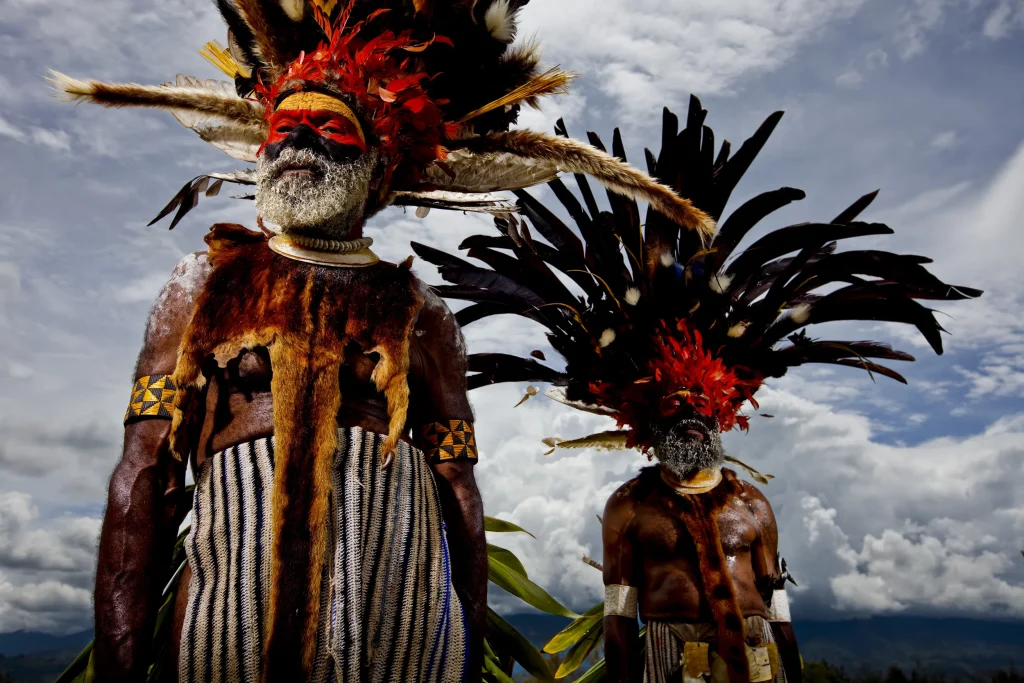
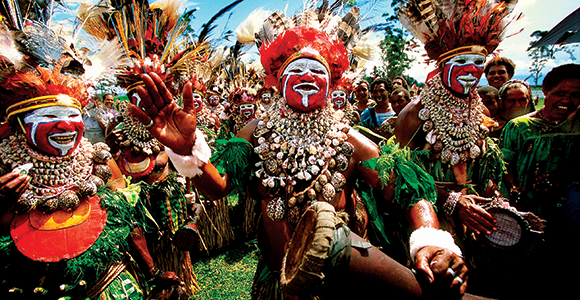
One of the most vibrant ways papua new guinea native people express their identity is through gatherings known as sing sings. These are large cultural events where different communities come together to share dances, songs, and visual traditions.
A sing sing is not just a performance—it is a celebration of identity. Each group presents its own style of dress, movement, and music, often passed down through generations. The goal is not competition in a modern sense, but rather the opportunity to represent one’s heritage with pride.
Participants often spend significant time preparing for these events. This includes creating traditional adornments, practicing dances, and organizing group participation. The result is a rich display of color, rhythm, and symbolism.
Sing sings also provide a space for connection. Communities that may live far apart can meet, interact, and share cultural knowledge. In this way, the gathering becomes both a celebration and a form of cultural exchange.
Major festivals
In addition to local sing sings, there are several well-known festivals that bring together groups from across the country. These events are often held annually and have become important cultural highlights.
One of the most recognized is the Goroka Show, held in the Eastern Highlands. It gathers numerous groups who perform in traditional dress, offering a wide view of the country’s diversity in one place.
Another major event is the Mount Hagen Show, which takes place in the Highlands region. Similar to Goroka, it features large-scale participation and is known for its energetic atmosphere and variety of performances.
In coastal areas, the Hiri Moale Festival highlights maritime traditions and historical journeys. It reflects the importance of sea travel and trade in certain communities, adding another layer to the country’s cultural landscape.
These festivals do more than entertain. They serve as spaces where traditions are practiced, shared, and adapted. They also help younger generations stay connected to cultural knowledge, even as society continues to change.
Through sing sings and larger festivals, cultural expression in Papua New Guinea remains dynamic and visible—rooted in tradition, yet open to new forms of participation.
Traditional Dress and Identity
Bilas and adornment
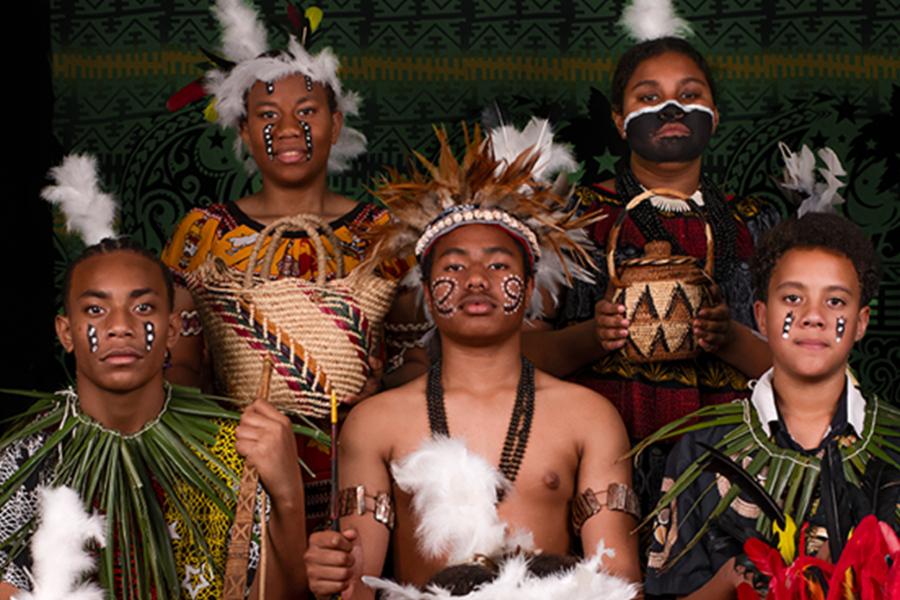
Traditional dress among papua new guinea native people is often described using the word bilas, a term commonly used in Tok Pisin to refer to decoration, adornment, or personal presentation. Bilas is not only about appearance—it reflects identity, heritage, and connection to community.
In many cultural gatherings and ceremonies, people wear detailed adornments that may include feathers, shells, leaves, fibers, and natural pigments. These materials are often sourced from the local environment, giving each region its own distinctive style.
Body decoration is also an important part of bilas. Patterns painted on the skin can carry symbolic meaning, represent clan identity, or simply reflect artistic expression. The designs vary widely between communities, showing once again how diverse cultural practices are across the country.
Adornment is often prepared with care and intention. People may spend hours or even days assembling their attire for special occasions. Through this process, bilas becomes a way of honoring tradition and expressing pride in one’s cultural background.
Bilum and everyday items
While ceremonial dress can be elaborate, everyday cultural identity is also expressed through practical items—one of the most well-known being the bilum.
A bilum is a handwoven bag made using natural or modern fibers. It is widely used across Papua New Guinea and serves many purposes in daily life. People carry food, tools, personal belongings, and even infants in bilums, often slung over the head or shoulder.
Beyond its practical use, the bilum also carries cultural meaning. The designs, colors, and weaving styles can vary between regions, sometimes reflecting local identity or personal creativity. Making a bilum is often a learned skill passed down through generations, especially among women.
In this way, traditional dress in Papua New Guinea is not limited to special events. It is present in both ceremonial expression and everyday life, linking people to their culture in visible and meaningful ways.
Daily Life of Native People
Village life
For many papua new guinea native people, daily life is centered around the village. While towns and cities exist, a large part of the population continues to live in rural communities where traditions and social connections remain strong.
Village life is often shaped by the natural environment. In the Highlands, people may focus on gardening and raising animals, while in coastal areas, fishing plays a larger role. Despite these differences, one common thread is self-sufficiency—families and communities produce much of what they need.
Subsistence farming is a key part of daily routines. Crops such as sweet potatoes, taro, bananas, and yams are commonly grown. People work their gardens regularly, often in cooperation with family members. Tasks like planting, harvesting, and maintaining land are shared responsibilities.
Hunting and fishing may also contribute to daily food sources, depending on the region. Rivers, forests, and coastal waters provide additional resources that support community life.
Cooperation is essential. Whether it’s building a house, preparing a garden, or organizing an event, people often work together. This shared effort strengthens relationships and reinforces the importance of community.
Food and lifestyle
Food in Papua New Guinea is closely connected to local resources and traditions. Meals are typically made from fresh, locally grown or gathered ingredients. Rather than relying on processed foods, many communities continue to use traditional cooking methods.
Common staple foods include root crops like sweet potatoes and taro, along with greens, fruits, and sometimes fish or meat. The exact combination depends on what is available in each region.
One well-known cooking method is the mumu, an earth oven where food is wrapped in leaves and cooked with heated stones underground. This method is often used for both everyday meals and special gatherings.
Meals are not just about eating—they are also social moments. Families and community members gather, share food, and spend time together. These moments reinforce bonds and create space for conversation and storytelling.
Daily life may appear simple from the outside, but it is deeply structured around relationships, environment, and shared responsibility. Each activity, from gardening to cooking, plays a role in maintaining both livelihood and community connection.
Beliefs and Cultural Values
Traditional beliefs
Among papua new guinea native people, belief systems are often closely tied to ancestral connections, the natural environment, and community life. While practices vary widely between regions, many communities share a worldview that recognizes the presence and influence of ancestors in everyday life.
Ancestors are often remembered through stories, names, and places. Certain locations—such as rivers, mountains, or forests—may hold cultural meaning because of their connection to past generations. These connections are not just symbolic; they help guide how people understand their place in the world.
Spiritual ideas are often expressed through rituals, art, and storytelling rather than written texts. For example, carved figures, masks, and ceremonial spaces—such as the haus tambaran in some regions—can reflect connections between people, ancestors, and unseen forces.
It is important to understand that these beliefs are diverse and locally specific. What is practiced in one community may be very different from another. In some areas, traditional beliefs exist alongside Christianity or other modern influences, forming a layered and evolving spiritual landscape.
Cultural values
Beyond specific beliefs, there are shared values that shape everyday interactions across many communities in Papua New Guinea. These values are often expressed through actions rather than formal rules.
One key value is community. People tend to see themselves as part of a larger group rather than as individuals acting alone. Decisions, responsibilities, and achievements are often shared.
Another important value is respect, especially toward elders and community leaders. Elders are seen as carriers of knowledge, and their guidance is often sought in important matters.
Reciprocity is also central. This means that giving, sharing, and returning favors are part of maintaining relationships. Whether through food sharing, exchange systems, or everyday help, these actions reinforce trust and cooperation.
Oral traditions play a major role in passing down these values. Stories, songs, and spoken histories are used to teach younger generations about proper behavior, cultural identity, and the lessons of the past. In communities where written records are less common, storytelling becomes a living archive of knowledge.
Together, these beliefs and values form a foundation that supports social harmony and cultural continuity. They guide how people relate to one another, to their environment, and to their shared history.
Famous Cultural Groups
Highlands groups
Within the many communities that make up papua new guinea native people, some groups are more widely recognized due to their distinctive cultural expressions. In the Highlands region, two well-known examples are the Asaro Mudmen and the Huli Wigmen.
The Asaro Mudmen are known for their unique ceremonial appearance, which includes clay masks and body coverings made from local mud. These visual elements are part of storytelling traditions that reflect historical experiences and local identity. Today, their performances are often seen during cultural gatherings and festivals, where they present this tradition in a shared public space.
The Huli Wigmen, on the other hand, are recognized for their elaborate wigs and decorative attire. These wigs are traditionally made from human hair and styled with care, often adorned with feathers and natural elements. The process of preparing and wearing these wigs reflects both cultural knowledge and personal expression.
While these groups are visually distinctive, it is important to remember that they represent only a small part of the Highlands’ cultural landscape. Many other communities exist with equally rich traditions that may be less widely known outside the region.
Sepik and river cultures
In the Sepik River region, cultural identity is often expressed through art, carving, and ceremonial structures. Communities along the river are known for their detailed wood carvings, masks, and symbolic designs.
These carvings are not simply decorative. They often carry cultural meaning, representing ancestral figures, stories, or elements of the natural world. Skills are passed down through generations, and carving remains an important cultural practice in many villages.
Another notable feature in some Sepik communities is the haus tambaran, sometimes described as a spirit house. These structures are often decorated with intricate designs and serve as important cultural spaces for gatherings, rituals, and storytelling.
Life along the river also influences daily routines. Canoes are commonly used for travel, and the river itself plays a central role in both practical and cultural activities.
Across both Highlands and river regions, these well-known groups offer a glimpse into the wider diversity of Papua New Guinea. They highlight how identity can be expressed through appearance, art, and tradition—each in its own unique way.
Papua New Guinea Native People in Modern Society
Urbanization and change
Today, the lives of many papua new guinea native people are shaped by a mix of tradition and modern influence. While village life remains important, there has been a gradual movement toward towns and cities such as Port Moresby and Lae.
People move to urban areas for different reasons—education, employment, or access to services. In these settings, individuals from many different ethnic backgrounds live side by side, creating new forms of community that are more diverse than traditional village structures.
This shift can change how people experience culture. For example, instead of living within a single clan-based environment, urban residents may interact with people from many language groups every day. Languages like Tok Pisin become especially useful in these mixed settings.
At the same time, cultural identity does not disappear. Many people maintain strong ties to their home villages, returning for ceremonies, festivals, or family responsibilities. Even in cities, traditional values such as community support and reciprocity often continue in adapted forms.
Cultural preservation
As society changes, there is also a strong effort to preserve cultural knowledge and traditions. This happens in both formal and informal ways.
Festivals, including events like the Goroka Show and Mount Hagen Show, play an important role. They create spaces where traditional dress, music, and dance can be practiced and shared with younger generations as well as visitors.
Education also contributes to preservation. In some areas, local languages and cultural practices are included in school activities or community programs. Elders continue to pass down knowledge through storytelling, demonstrations, and participation in daily life.
Community initiatives—both local and national—often aim to document traditions, support artisans, and encourage cultural pride. These efforts recognize that culture is not static; it evolves while still holding onto meaningful elements from the past.
In modern Papua New Guinea, tradition and change exist side by side. Rather than replacing one another, they interact in ways that allow people to adapt while staying connected to their cultural roots.
Common Misconceptions
Not a single tribal identity
A common misunderstanding about papua new guinea native people is the idea that they belong to one unified “tribe” or share a single cultural identity. In reality, Papua New Guinea is one of the most diverse places in the world, with hundreds of distinct ethnic groups.
Each group has its own language, customs, social structure, and traditions. Even communities that live relatively close to each other may have very different ways of life. Because of this, it is not accurate to describe the country using a single cultural label.
Understanding this diversity helps avoid oversimplification. Instead of thinking in terms of one identity, it is more accurate to see Papua New Guinea as a collection of many cultures existing side by side, each with its own history and meaning.
Culture is evolving
Another misconception is that indigenous cultures in Papua New Guinea are frozen in time or completely isolated from the modern world. While many traditions are still practiced, culture is constantly evolving.
People adapt to new circumstances, technologies, and environments while maintaining important aspects of their heritage. For example, traditional ceremonies may now be performed at organized festivals, and modern materials might be used alongside natural ones in clothing or tools.
Urban life, education, and communication have all influenced how people experience their culture today. However, change does not mean loss. In many cases, it reflects a balance—where communities choose how to adapt while keeping their identity meaningful.
Recognizing that culture is dynamic allows for a more accurate and respectful understanding. It shows that papua new guinea native people are not defined only by the past, but also by how they live and shape their future.
Conclusion
Understanding papua new guinea native people begins with recognizing one essential idea: there is no single story that defines them. Instead, Papua New Guinea is a country shaped by extraordinary cultural diversity, where hundreds of ethnic groups live with their own languages, traditions, and ways of life.
From the Highlands to the Sepik River and the coastal regions, each community reflects a unique relationship with its environment and history. Language plays a central role in identity, while social systems—such as clans and customary land ownership—help organize daily life and maintain strong community ties.
Cultural practices, including ceremonies, exchange systems, and festivals, continue to express identity in visible and meaningful ways. Whether through sing sings, traditional dress like bilas, or everyday items such as bilums, culture is both lived and shared across generations.
At the same time, life in Papua New Guinea is not static. Many people move between village and urban environments, adapting to change while keeping connections to their roots. Traditions are preserved not by remaining unchanged, but by being practiced, taught, and reinterpreted in modern contexts.
What becomes clear is that the identity of Papua New Guinea’s native people is built on connection—to land, to community, and to cultural knowledge passed down over time. By approaching this topic with openness and respect for its complexity, it becomes easier to appreciate the richness and depth that define one of the most diverse societies in the world.