Papua New Guinea is home to an extraordinary variety of tropical plants shaped by rainforests, mountain valleys, wetlands, coastal environments, and other distinct habitats. This environmental diversity has created rich botanical resources that have long been connected with the daily lives and traditions of local communities.
For generations, indigenous communities have developed detailed knowledge of the Papua plants growing around their villages, gardens, forests, and waterways. Different species have traditionally been valued as foods, materials, aromatic plants, ceremonial resources, and components of local plant-based practices. Much of this knowledge forms part of a wider cultural relationship between people and the natural environment.
Medicinal plants in Papua New Guinea represent the relationship between biodiversity, traditional knowledge, and the natural environment. In this context, the word “medicinal” refers primarily to plants documented or remembered through traditional cultural practices rather than plants presented as scientifically proven treatments.
Studying these plants can therefore offer insights into ethnobotany, plant classification, tropical biodiversity, and indigenous knowledge systems. Species such as Pandanus conoideus, ginger-family plants, Curcuma species, Piper species, and the culturally important sago palm illustrate the remarkable variety of Papua New Guinea’s botanical heritage.
Understanding this flora is not only about individual plants. It is also about recognizing the ecosystems, cultural traditions, and generations of knowledge that have shaped how communities understand and interact with tropical plant resources.
Why Papua New Guinea Has Rich Medicinal Plant Diversity
The remarkable variety of medicinal plants in Papua New Guinea is closely connected to the country’s tropical landscapes and long-established relationships between communities and their surrounding environment. Different elevations, rainfall patterns, forests, wetlands, and coastal ecosystems create conditions where many kinds of plants can grow.
At the same time, plant diversity is only part of the story. Generations of observation have helped local communities develop detailed knowledge about where plants grow, when they appear, and how they have traditionally been incorporated into everyday cultural practices.
Unique Tropical Environment
Papua New Guinea lies within the tropical region and contains a wide range of environments, from humid lowland forests to cooler mountain areas and coastal landscapes. High rainfall and warm conditions support extensive tropical vegetation, while differences in altitude and local climate create additional ecological variety.
These changing environments provide habitats for trees, palms, climbing plants, shrubs, ferns, and tropical herbs. Some species are widely distributed, while others are associated with particular forest types, elevations, or local conditions.
Mountain environments are especially important because plant communities can change considerably as elevation increases. Coastal forests, wetlands, river systems, and lowland rainforests add further variety to the country’s flora.
This ecological diversity helps explain why Papua New Guinea contains such a broad range of useful plant resources. Rather than forming a single uniform rainforest ecosystem, the country consists of many interconnected habitats, each supporting different combinations of plant life.
Biodiversity and Indigenous Knowledge
Papua New Guinea’s botanical richness is closely linked with the knowledge of Indigenous communities that have interacted with local landscapes over many generations.
Plants may be recognized for their roles as foods, construction materials, fibers, dyes, aromatic resources, ceremonial materials, or components of traditional plant practices. Knowledge can include more than simply identifying a species. It may also involve understanding its preferred habitat, seasonal growth, appropriate harvesting stage, and cultural significance.
Researchers often explore these relationships through ethnobotany. Ethnobotany is the study of how people and cultures interact with plants, including the ways plants are identified, named, managed, exchanged, and traditionally used.
Research on New Guinea’s useful flora has documented thousands of plant species associated with different forms of Indigenous knowledge. Lowland and montane rainforests have received particular attention in ethnobotanical studies, while plant groups such as Pandanus and Ficus frequently appear in records of useful plants.
However, traditional knowledge should not be viewed simply as a collection of plant uses. It is part of a wider cultural system connected with language, landscapes, community experience, and relationships with the forest. Understanding traditional medicinal plants in Papua New Guinea therefore also requires respect for the people and cultural traditions through which this botanical knowledge has been preserved.
Traditional Use of Medicinal Plants in Papua New Guinea
The traditional use of plants in Papua New Guinea reflects generations of observation, cultural experience, and interaction with local landscapes. Plant knowledge can vary considerably between communities because Papua New Guinea contains many distinct cultural and linguistic traditions.
Ethnobotanical research has documented plant knowledge in areas including the Eastern Highlands, East Sepik, and Bougainville. These studies show that traditional botanical practices are not uniform across the country. Instead, different communities may recognize, name, select, and value plants according to their own environments and cultural traditions. (pmc.ncbi.nlm.nih.gov)
Role of Plants in Indigenous Communities
For many Indigenous communities, plants have historically been part of everyday life as sources of food, materials, fibers, decoration, ceremonial resources, and traditional botanical preparations. This makes plant knowledge more than a list of individual species and their uses. It forms part of a broader understanding of forests, gardens, seasons, and local ecosystems.
Such knowledge has traditionally been passed between generations through observation, practical experience, and community traditions. A person may learn not only the identity of a plant but also where it grows, which season it is associated with, and why it has cultural importance.
Research reviewing New Guinea’s useful flora has recorded thousands of plant species associated with Indigenous knowledge. At the same time, researchers note that much of this knowledge remains incompletely documented, highlighting the importance of respecting the communities that maintain it. (png-data.sprep.org)
When discussing medicinal plants in Papua New Guinea, this cultural context is essential. Traditional plant knowledge should be understood as part of living cultural heritage rather than separated from the people, landscapes, and traditions that created it.
Traditional Knowledge vs Modern Scientific Research
Traditional knowledge and modern botanical research offer different ways of understanding plants.
Traditional knowledge develops through cultural experience accumulated across generations. It can document how communities recognize plants, the places where they grow, their local names, and the ways they have historically been incorporated into community practices.
Scientific research, by contrast, may examine plant classification, physical characteristics, chemical composition, ecology, or other measurable properties. Researchers may also study plant materials through fields such as botany, ethnobotany, phytochemistry, and natural product research.
Importantly, a history of traditional use does not automatically demonstrate scientifically established effectiveness for a particular health purpose. Ethnobotanical studies themselves distinguish the documentation of cultural plant use from clinical validation. (pmc.ncbi.nlm.nih.gov)
Keeping these perspectives separate allows traditional knowledge to be presented respectfully while maintaining scientific accuracy. Together, they can contribute to a deeper understanding of Papua New Guinea’s botanical diversity without turning cultural plant traditions into unsupported health claims.

Examples of Medicinal Plants in Papua New Guinea
The botanical diversity of Papua New Guinea includes many species that have been incorporated into traditional plant knowledge. Their cultural roles differ between communities, so these examples are best understood as ethnobotanical resources rather than as scientifically established medical treatments.
Buah Merah (Pandanus conoideus)
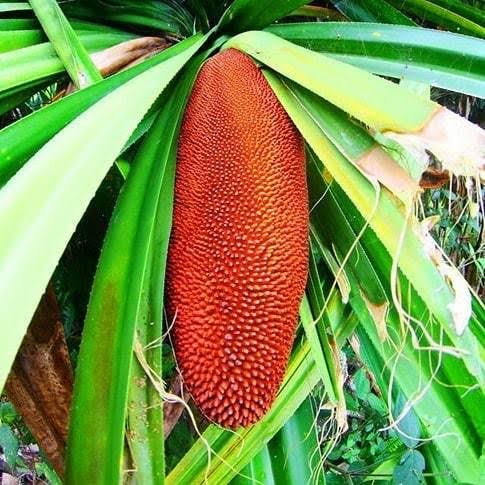
Among the better-known medicinal plants in Papua New Guinea is Pandanus conoideus, a member of the Pandanaceae family. The plant is widely known as Buah Merah, meaning “red fruit,” in Indonesian Papua, while the name marita is commonly associated with the fruit in Papua New Guinea.
The species occurs across New Guinea and has long been valued as a food and cultural resource. Recent research from Papua New Guinea also describes marita as a native crop with cultural and economic importance in local communities. (sciencedirect.com)
Botanical Characteristics
Pandanus conoideus is a tropical pandan characterized by its conspicuous elongated fruit. Mature fruits may develop deep red, reddish-brown, or other color variations depending on the cultivar. The fruit consists of many smaller units joined together into a large structure known botanically as a syncarp.
Studies of Papuan cultivars show considerable variation in fruit size, color, and other physical characteristics. The plant can occur from lower elevations into mountainous environments, illustrating its adaptability within New Guinea’s diverse tropical landscapes. (biodiversitywarriors.kehati.or.id)
The broader Pandanus group is particularly significant in New Guinea. Species within the genus are cultivated and used for food, fibers, and other practical purposes, making pandan plants important components of both tropical ecosystems and human landscapes. (powo.science.kew.org)
Cultural Importance
Buah Merah is more than an unusual tropical fruit. Papuan communities have developed knowledge for recognizing, classifying, growing, and using different forms of the plant. Research has documented how communities distinguish cultivars according to characteristics such as fruit size, seed size, and color. (ejournal.uncen.ac.id)
Its long association with food preparation and local traditions makes Pandanus conoideus an important example of how biodiversity and cultural knowledge can develop together.
Research Interest
Buah Merah has also attracted scientific interest because researchers can examine its botanical characteristics, pigments, chemical composition, genetic diversity, and potential uses as a natural product resource.
For example, laboratory research has identified numerous carotenoid pigments responsible for the fruit’s distinctive coloration. Such findings help scientists understand the chemistry of the plant, but they should not be interpreted as proof that the fruit prevents or treats disease. (sciencedirect.com)
Ginger-Related Plants (Zingiberaceae Family)
The ginger family, Zingiberaceae, includes aromatic tropical herbs such as Zingiber and Alpinia. Members of this family are typically perennial plants with underground stems known as rhizomes. Many also contain aromatic oils that give their leaves, stems, or rhizomes distinctive scents. (powo.science.kew.org)
Ethnobotanical surveys in Papua New Guinea have recorded Zingiber and Alpinia species among plants recognized in traditional community practices. Ginger itself has also been documented as an ingredient in traditional botanical preparations in parts of the Eastern Highlands. These records describe cultural use rather than confirming medical effectiveness. (pmc.ncbi.nlm.nih.gov)
Turmeric-Related Plants (Curcuma Species)
Curcuma belongs to the same Zingiberaceae family and includes tropical plants that grow from underground rhizomes. Turmeric, Curcuma longa, is one familiar member of the genus and has been introduced into New Guinea, where ethnobotanical surveys have documented its presence in local gardens and traditional plant practices. (powo.science.kew.org)
The importance of Curcuma in this context is botanical as well as cultural. Its rhizomatous growth, tropical adaptation, pigmentation, and long history of human cultivation make the genus useful for understanding relationships between plants, agriculture, and traditional knowledge across tropical regions.
Piper Species
The genus Piper includes tropical plants commonly associated with warm, humid environments. Several species are climbing or scrambling plants that form part of forest and cultivated landscapes.
Piper also appears frequently in Papua New Guinea ethnobotanical records. An East Sepik survey, for example, found Piper among the more commonly recorded genera in interviews concerning traditional plant knowledge. Another study from the Eastern Highlands documented Piper gibbilimbum as an ingredient used in traditional preparations. (pmc.ncbi.nlm.nih.gov)
These records demonstrate the cultural relevance of the genus without implying that every Piper species has the same properties or traditional applications.
Sago Palm (Metroxylon sagu)
Not every culturally important plant in discussions of Papua’s botanical heritage is primarily associated with traditional medicinal practices. The sago palm (Metroxylon sagu) is a good example.
Sago is one of New Guinea’s most important plant resources. The palm grows extensively in lowland swamp forests, and starch obtained from its stem has traditionally served as a major food source for many lowland communities. Its leaves also provide materials used for purposes such as thatching and construction. (kew.org)
Including sago alongside traditional herbal plants highlights a broader point: Indigenous plant knowledge is interconnected. Food plants, forest materials, aromatic herbs, culturally valued species, and traditionally used botanical resources all form part of the relationship between communities and their environment.
How Indigenous Communities Preserve Plant Knowledge
The survival of traditional plant knowledge depends on more than documenting the names of species. It also involves preserving the cultural relationships, landscapes, languages, and practical experiences through which communities understand local flora.
Across New Guinea, researchers have documented thousands of plant uses associated with Indigenous knowledge, although many communities and plant traditions remain insufficiently studied. This makes community participation especially important when traditional botanical knowledge is recorded or discussed. (png-data.sprep.org)
Traditional Ecological Knowledge
Traditional ecological knowledge refers to knowledge developed through long-term interaction with local environments. In Papua New Guinea, this can include recognizing plant habitats, observing seasonal changes, understanding local ecosystems, and knowing where particular useful species are traditionally found.
Such knowledge is often practical and closely connected with everyday activities. Forests, gardens, riversides, wetlands, and mountain environments can each contain different plant resources, requiring communities to understand how local landscapes change across seasons and elevations.
Traditional knowledge may also include community practices concerning when and where natural resources are gathered. These practices differ between cultural groups, so there is no single system that represents all Papua New Guinea communities.
Ethnobotanical documentation can help record this knowledge, but responsible research also needs to recognize its cultural ownership. Research programs associated with the University of Papua New Guinea, for example, have used guidelines intended to acknowledge source communities and address intellectual-property and benefit-sharing considerations when documenting traditional plant knowledge. (pmc.ncbi.nlm.nih.gov)
Cultural Importance of Plant Conservation
Protecting plant diversity is closely connected with preserving cultural heritage. When forest habitats change or particular species become difficult to find, communities may lose not only biological resources but also opportunities to pass related knowledge to younger generations.
Research on New Guinea’s useful plants has noted that traditional knowledge remains incompletely documented. Changes in lifestyles and the transmission of knowledge between generations can create additional challenges for maintaining local botanical traditions. (png-data.sprep.org)
Plant conservation can therefore serve two connected purposes: maintaining tropical biodiversity and helping protect the cultural knowledge associated with that biodiversity.
Community involvement is especially important in Papua New Guinea, where customary landownership plays a major role in natural-resource management. Current conservation programs increasingly incorporate community-led approaches in which Indigenous landowners participate in decisions about forests and other resources. (fao.org)
For medicinal plants in Papua New Guinea, conservation is therefore not simply about protecting individual species. It also involves maintaining healthy ecosystems and respecting the communities whose traditional ecological knowledge has developed alongside those landscapes for generations.
Scientific Research on Papua New Guinea Medicinal Plants
Scientific interest in medicinal plants in Papua New Guinea extends beyond their history of traditional use. Researchers study these plants to document botanical diversity, understand relationships between communities and local flora, identify species accurately, and examine the chemical characteristics of tropical plants.
This work brings together several fields, including ethnobotany, plant taxonomy, ecology, phytochemistry, and natural product research. Importantly, scientific investigation of a plant does not automatically establish a medical benefit. Research may simply describe a species, document its traditional context, or identify compounds that deserve further study.
Ethnobotanical Studies
Ethnobotanical research examines the relationships between people and plants. In Papua New Guinea, this field is particularly valuable because the country’s cultural and linguistic diversity has produced many different systems of plant knowledge.
Studies conducted in areas such as the Eastern Highlands, East Sepik, Bougainville, and New Britain have documented plants recognized by individual communities. Researchers have found substantial differences between locations, even when communities live relatively close to one another. The same species may have different local names, cultural associations, or traditional uses, while plants important in one area may be less significant in another. (pmc.ncbi.nlm.nih.gov)
Careful botanical identification is an important part of this process. In some University of Papua New Guinea ethnobotanical surveys, researchers and trained students collected plant specimens with community guidance. The specimens were photographed, preserved, assigned reference numbers, and deposited in a herbarium so their botanical identity could be checked and referenced later. Information from surveys has also contributed to a traditional medicines database documenting plant knowledge from different parts of the country. (pmc.ncbi.nlm.nih.gov)
This approach is important because a local plant name does not always correspond neatly to a single scientific species. Voucher specimens, botanical descriptions, and taxonomic identification allow researchers to connect cultural information with a clearly identified plant.
Ethnobotanical documentation can therefore help preserve valuable records of traditional plant knowledge while also revealing the remarkable diversity of relationships between Papua New Guinea’s communities and their environments.
Natural Product Research
Natural product research approaches plants from another perspective. Instead of focusing primarily on cultural use, researchers may investigate their physical and chemical characteristics.
Plants naturally produce a wide variety of substances. Scientists can separate and identify these compounds using laboratory methods, study their chemical structures, and compare them with substances found in related species. This area of research is often described as phytochemistry when the emphasis is on chemicals produced by plants.
Papua New Guinea has attracted natural product researchers partly because of its exceptional biological diversity. Research programs have connected botanical surveys and accurate species identification with laboratory investigation of collected plant materials. Collaborative projects have also emphasized the importance of working with Papua New Guinean institutions and addressing issues surrounding traditional knowledge and biological resources. (pubmed.ncbi.nlm.nih.gov)
The discovery of an interesting compound, however, is only an early stage of scientific investigation. Finding a particular chemical in a plant does not by itself demonstrate that the plant has a proven health effect. Laboratory observations, botanical documentation, and established clinical evidence are different levels of research and should not be treated as interchangeable.
For this reason, scientific study of Papua New Guinea herbal plants is most accurately presented as an exploration of botanical diversity and natural chemistry. Such research may contribute knowledge relevant to areas such as plant science, agriculture, food ingredients, cosmetics, conservation, or other forms of natural product development without making assumptions about medical effectiveness.
When conducted responsibly, ethnobotany and natural product research can complement one another. Ethnobotany helps document relationships between people and plants, while botanical and chemical research provides additional ways to understand the species themselves. Together, these fields demonstrate why Papua New Guinea remains an important region for studying tropical flora and the knowledge systems connected with it.

Challenges in Protecting Medicinal Plants in Papua New Guinea
Papua New Guinea still contains extensive tropical forests and exceptionally rich biodiversity, but these landscapes face growing environmental pressures. Protecting medicinal plants in Papua New Guinea therefore involves more than safeguarding individual species. It also requires attention to the forests, wetlands, gardens, and community-managed landscapes where traditional plant knowledge has developed.
Conservation is particularly connected with local communities because customary landowners play a central role in managing much of the country’s natural environment. Community participation is consequently becoming an important part of biodiversity conservation and sustainable resource management initiatives. (fao.org)
Threats to Plant Biodiversity
Habitat change is one of the main challenges facing Papua New Guinea’s botanical diversity. Forest landscapes can be affected by logging, agricultural expansion, mining, infrastructure development, and other forms of land-use change. Climate change and unsustainable resource use can place additional pressure on ecosystems. (fao.org)
When natural habitats are altered, the effects can extend beyond large trees or well-known wildlife. Smaller herbs, climbing plants, palms, shrubs, and other species may also depend on specific forest conditions.
This matters for traditional botanical resources because some plants are associated with particular elevations, soil conditions, forest types, or moisture levels. A change in habitat can therefore influence which plants remain accessible to nearby communities.
Another challenge is the gradual loss of traditional knowledge. Plant knowledge is often maintained through languages, practical experience, and communication between generations. If these cultural pathways weaken, information about plant names, habitats, harvesting traditions, and local significance may become more difficult to preserve.
For this reason, biodiversity loss and knowledge loss can be closely connected. Protecting indigenous flora can help maintain the landscapes in which traditional ecological knowledge continues to have meaning.
Importance of Sustainable Cultivation
Sustainable cultivation can complement the conservation of wild plant populations. When appropriate species can be grown in gardens, agroforestry systems, or other managed areas, cultivation may reduce dependence on repeated collection from natural habitats.
This does not mean that every wild plant should be moved into commercial cultivation. Some species have specialized ecological requirements, while others may have cultural meanings connected specifically with particular landscapes. Botanical identification, ecological understanding, and community involvement remain important.
For plants suitable for cultivation, responsible approaches can include maintaining species diversity, avoiding unnecessary habitat clearing, and integrating useful plants into existing agricultural or agroforestry landscapes.
Papua New Guinea conservation programs are increasingly emphasizing community-led management alongside sustainable livelihood opportunities. Recent initiatives have included community conservation areas, agroforestry, sustainable agriculture, and locally managed approaches intended to combine biodiversity protection with community needs. (fao.org)
This approach is especially relevant to tropical botanical resources. Sustainable use is most meaningful when it considers not only how much plant material can be obtained, but also where it comes from, how the ecosystem is affected, and whether local communities participate in decisions concerning the resource.
Protecting traditional medicinal plants in Papua New Guinea ultimately depends on maintaining this balance. Cultivation, habitat conservation, and community stewardship can work together to help preserve both botanical diversity and the cultural knowledge associated with it.
The Future of Papua New Guinea Herbal Resources
The future of Papua New Guinea’s botanical resources will depend on how conservation, traditional knowledge, local participation, and responsible development are balanced. The country’s tropical flora offers opportunities for botanical research and plant-based industries, but long-term value is closely connected with maintaining the ecosystems from which these resources originate.
Recent conservation initiatives in Papua New Guinea increasingly emphasize community-led management and sustainable livelihoods alongside biodiversity protection. In 2026, for example, new programs in the Highlands brought Indigenous Peoples and local communities into the management of important forest ecosystems. (fao.org)
Sustainable Herbal Industry
A sustainable herbal industry begins with understanding where botanical materials come from and how their collection affects both ecosystems and communities.
For Papua New Guinea herbal plants, responsible development can involve ethical sourcing, reliable botanical identification, careful cultivation, transparent supply chains, and meaningful participation by local communities. These principles are particularly important when commercial products are connected with plants that have long-standing cultural significance.
Cultivation can provide one possible pathway for suitable species. Growing botanical resources within gardens, farms, or agroforestry systems may help create a more predictable supply while reducing pressure on wild populations. Papua New Guinea already has projects aimed at combining agricultural production with biodiversity conservation, including sustainable production landscapes in the Eastern and Western Highlands. (fao.org)
Community involvement is equally important. Traditional plant knowledge cannot simply be separated from the people who have maintained it. Responsible botanical development should recognize local knowledge, customary relationships with land, and community participation when plant resources move from traditional settings into research or commercial supply chains.
This is especially relevant in Papua New Guinea, where customary land tenure has a major influence on natural-resource management. FAO reports that approximately 97 percent of the country’s land is under customary tenure, making local landowners central participants in many conservation decisions. (fao.org)
A sustainable herbal industry therefore does not have to depend on extracting as much material as possible. A stronger long-term approach is to treat plants as renewable biological resources whose value depends on healthy ecosystems, responsible cultivation, accurate botanical knowledge, and relationships with the communities connected to them.
Botanical Conservation
Conserving forests is essential to maintaining the diversity behind medicinal plants in Papua New Guinea. Rainforest ecosystems contain not only well-known useful species but also countless trees, vines, palms, shrubs, fungi, and tropical herbs that contribute to complex ecological relationships.
Habitat protection can also preserve possibilities for future botanical study. A species that appears ordinary today may later become important for understanding ecology, plant chemistry, agriculture, food resources, or other areas of natural product research.
Current conservation efforts illustrate the growing emphasis on connecting biodiversity protection with community stewardship. A major initiative approved in 2026, for example, aims to support Indigenous Peoples and local communities in conserving approximately 700,000 hectares of critical ecosystems across Enga, Chimbu, and Jiwaka provinces. (fao.org)
Community-led approaches are particularly relevant because conservation is more durable when local people participate in decisions about landscapes they know and manage. Projects in Papua New Guinea have incorporated activities such as conservation-area management, sustainable agriculture, agroforestry, livelihood development, and local natural-resource governance. (fao.org)
The future of Papua’s herbal resources is therefore closely linked with the future of its forests and cultural knowledge. Protecting biodiversity while supporting responsible botanical development can help ensure that tropical plant resources remain part of Papua New Guinea’s natural and cultural heritage for future generations.
Frequently Asked Questions About Medicinal Plants in Papua New Guinea
What are medicinal plants in Papua New Guinea?
Medicinal plants in Papua New Guinea generally refers to plant species that have been traditionally recognized or used within local community practices. The term covers a diverse range of tropical flora rather than one specific botanical group.
Ethnobotanical surveys have documented many such plants across different parts of the country, with traditions varying substantially between communities. Examples include ginger-related plants, Piper species, tropical herbs, trees, and other locally valued botanical resources. (pmc.ncbi.nlm.nih.gov)
Their inclusion in traditional knowledge should not be interpreted as proof of a particular medical effect. From an educational perspective, these plants are especially valuable for understanding ethnobotany, cultural heritage, and Papua New Guinea’s botanical diversity.
What is the most famous traditional plant from Papua?
One of the most recognizable Papuan botanical resources is Buah Merah (Pandanus conoideus), also commonly associated with the name marita in Papua New Guinea.
The distinctive pandan produces elongated fruits that can develop striking reddish colors. It has traditionally been valued as a food and cultural resource in New Guinea and is an important example of the close relationship between local communities and tropical plants.
Rather than viewing Buah Merah solely through a medicinal lens, it is more useful to understand it as part of a broader botanical heritage that includes food traditions, plant cultivation, cultural knowledge, and modern scientific interest in tropical plant characteristics.
Are Papua New Guinea medicinal plants scientifically studied?
Yes. Researchers have studied medicinal plants in Papua New Guinea through fields such as ethnobotany, taxonomy, phytochemistry, and natural product research.
Ethnobotanical projects coordinated through the University of Papua New Guinea have documented traditional plant knowledge in regions including the Eastern Highlands, East Sepik, and Bougainville. Some surveys have also collected voucher specimens for botanical identification and herbarium records. (pmc.ncbi.nlm.nih.gov)
However, scientific study can mean many different things. A plant may be researched to establish its identity, document its traditional use, examine its ecology, or analyze its chemical composition. None of these steps alone demonstrates a proven medical effect.
For this reason, traditional use and scientific evidence should be described separately.
Why are medicinal plants important to Indigenous communities?
Plants can carry cultural importance because they are connected with generations of knowledge about local forests, gardens, seasons, and landscapes.
Ethnobotanical research in Papua New Guinea shows that plant traditions can vary even between different communities and language groups. This diversity makes traditional plant knowledge an important part of cultural heritage rather than a single standardized system practiced throughout the country. (pmc.ncbi.nlm.nih.gov)
Knowledge may include local plant names, identification methods, habitats, harvesting traditions, food uses, ceremonial roles, and other community practices. Preserving this knowledge can therefore support both cultural documentation and a greater understanding of Papua New Guinea’s indigenous flora.
The importance of these plants ultimately extends beyond any individual species. They illustrate how people, biodiversity, and cultural traditions have developed together within one of the world’s remarkable tropical environments.
Conclusion
Papua New Guinea is home to remarkable botanical diversity shaped by tropical rainforests, mountain environments, wetlands, and long-established relationships between people and plants. This diversity has supported generations of traditional plant knowledge across many Indigenous communities.
Medicinal plants in Papua New Guinea are best understood not simply as individual herbal resources, but as part of a broader cultural and ecological system. Plants such as Pandanus conoideus, ginger-related species, Curcuma, Piper, and other tropical flora illustrate how botanical identity, traditional knowledge, food traditions, and local landscapes can be closely connected.
Modern ethnobotanical and natural product research adds another layer of understanding by documenting species, examining plant characteristics, and studying their chemical composition. However, traditional use should remain clearly distinguished from scientifically established medical evidence.
The long-term value of Papua New Guinea’s botanical resources will depend on conservation, sustainable harvesting, responsible cultivation, and respect for Indigenous knowledge. Protecting forests and supporting community participation can help preserve both plant diversity and the cultural knowledge associated with it.
Papua herbal products can represent one pathway for bringing tropical botanical resources into wider markets, provided development is based on accurate plant identification, ethical sourcing, ecological responsibility, and respect for cultural heritage. In this way, the future of Papua New Guinea’s herbal resources can remain connected to the landscapes and communities that have sustained them for generations.
If you’re looking for Papua herbal products, start with a trusted source. Experience authentic, high-quality red fruit products at Cahya Red Fruit Papua New Guinea! We offer a wide variety of items besides Red Fruit Papua New Guinea — including Papua ant nest and Papua kebar grass. Check out our herbal wellness product in our website!