Introduction
Papua New Guinea plants represent one of the richest collections of tropical flora in the world. Papua New Guinea occupies the eastern part of the island of New Guinea, a region internationally recognized for remarkable plant diversity. Research coordinated by the Royal Botanic Gardens, Kew has identified New Guinea as the world’s most floristically diverse island, with ecosystems ranging from mangroves and lowland rainforest to montane forests and alpine environments. (kew.org)
This botanical richness is closely connected to the region’s tropical climate and varied landscape. Warm lowlands, humid rainforests, wetlands, river systems, and cooler mountain environments create very different growing conditions within a relatively concentrated geographic area. These habitats support an impressive mixture of native trees, palms, orchids, climbing plants, ferns, herbs, and many other forms of vegetation.
The diversity of Papua New Guinea plants also makes the region important beyond its scenery. Its flora attracts the attention of botanists, conservation researchers, nature enthusiasts, horticultural communities, and industries interested in responsibly sourced tropical botanical resources.
For local communities, plants can carry additional cultural significance. Different species have long been connected with food, agriculture, building materials, crafts, customary practices, and knowledge passed between generations. Exploring this flora therefore means looking not only at unusual species, but also at the ecological relationships and cultural traditions that have developed around them.
Why Papua New Guinea Has Exceptional Plant Diversity
The extraordinary variety of Papua New Guinea plants is closely connected to geography. Tropical conditions alone do not explain the richness of the country’s flora; elevation, rainfall, geology, and habitat isolation all create opportunities for different plant communities to develop.
Geographic Conditions Supporting Plant Growth
Papua New Guinea lies close to the equator, giving most of the country a tropical climate. Lowland areas generally remain warm throughout the year, while temperatures become cooler as elevation increases. Rainfall patterns also vary according to altitude, exposure, and seasonal winds. These differences create numerous ecological zones within the same country. (dfa.gov.pg)
Along the coast, mangroves and other plants adapted to wet or brackish conditions are common. Moving inland, extensive lowland rainforest supports dense layers of trees and smaller vegetation. At higher elevations, these forests gradually change into montane and cloud forests, where tree ferns, conifers, orchids, mosses, and other moisture-loving plants can occur. Wetlands, river valleys, grasslands, and high mountain environments add further habitat diversity. (dfa.gov.pg)
Papua New Guinea as a Biodiversity Region
Papua New Guinea forms the eastern portion of the larger island of New Guinea. A major scientific checklist of the whole island documented 13,634 vascular plant species, with about 68% considered endemic to New Guinea. Researchers consequently identified New Guinea as the most floristically diverse island currently known. (kew.org)
This remarkable endemism is partly associated with geographic isolation, varied terrain, and a complex geological history. Mountain ranges and separated habitats can restrict plant populations, allowing distinct species to develop over long periods.
New Guinea also occupies a biologically interesting position between Southeast Asia, Australia, and the Pacific. As a result, its flora cannot simply be treated as an extension of Southeast Asian tropical vegetation. It combines regional botanical influences with a particularly large number of plants that evolved within New Guinea itself. (kew.org)
From lowland rainforest to alpine vegetation, this combination of climate, elevation, isolation, and geological complexity helps explain why Papua New Guinea contains such an unusually rich botanical landscape.
Categories of Papua New Guinea Plants
The plants of Papua New Guinea range from towering rainforest trees to palms, orchids, ferns, herbs, and specialized species adapted to wetlands or mountain environments. Looking at these plants by category makes it easier to understand how different forms of vegetation contribute to the country’s broader tropical ecosystem.
Native Tropical Trees
Trees form much of the physical structure of Papua New Guinea’s forests. In lowland rainforest, large canopy species compete for sunlight while creating shade and habitat beneath them. Their trunks, branches, roots, fallen leaves, and surrounding vegetation also contribute to the layered structure that makes tropical forests so biologically complex.
Some native trees are additionally important to local communities as sources of timber and materials, giving them ecological as well as cultural significance.
Merbau Tree (Intsia bijuga)
Merbau, scientifically known as Intsia bijuga, is a tropical tree in the legume family Fabaceae. In Papua New Guinea, the tree is also widely known as kwila. Botanical records show that its natural distribution extends across a broad region from parts of the western Indian Ocean and tropical Asia to New Guinea and islands of the western Pacific. It primarily occurs in wet tropical environments. (powo.science.kew.org)
In New Guinea forests, merbau can develop into a substantial canopy tree, sometimes with noticeable buttresses around the base of the trunk. These large trees become part of the structural framework of lowland forests and can provide growing surfaces and surrounding habitat for other rainforest organisms. (pngplants.org)
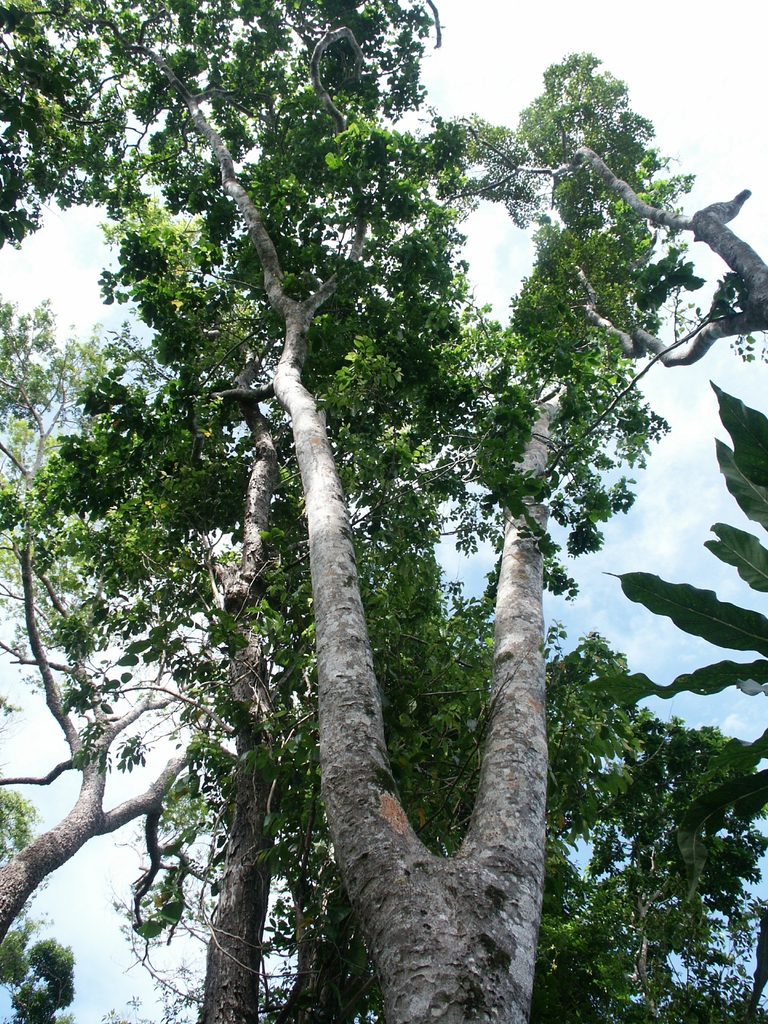
Merbau is also well known for its timber. Its wood has been used for construction, furniture, tools, carving, and other forms of woodworking in regions where the tree naturally occurs. In parts of New Guinea, this practical value is accompanied by local social and cultural significance. (etd.repository.ugm.ac.id)
This combination of ecological and material importance also illustrates why responsible forest management matters. A valuable native tree is not simply a source of raw material; while standing in the forest, it remains part of a much larger living ecosystem.
Kauri Tree (Agathis Species)
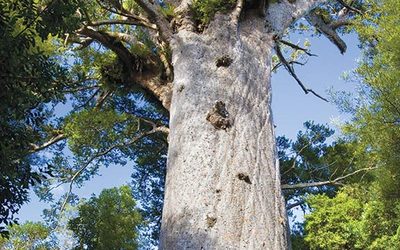
Kauri trees belong to the genus Agathis in the Araucariaceae family, a group of evergreen conifers distributed from Malesia through parts of the southwest Pacific and New Zealand. Kew records indicate that two Agathis species occur naturally in New Guinea and its associated island region. (powo.science.kew.org)
One example is Agathis labillardierei, whose native range is New Guinea and which is associated primarily with wet tropical environments. Another, Agathis robusta, has a native range extending from Papua New Guinea and the Bismarck Archipelago to eastern Queensland in Australia. (powo.science.kew.org)
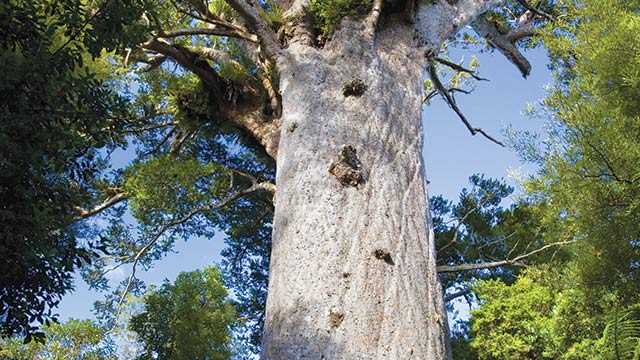
Kauri trees stand apart visually from many flowering rainforest trees because they are conifers. Their tall evergreen form adds another layer to the botanical diversity of New Guinea forests and demonstrates that tropical rainforest vegetation is not composed only of broad-leaved flowering trees.
Together, merbau and kauri show how Papua New Guinea plants include very different botanical lineages. Each has adapted to tropical forest conditions while contributing in its own way to forest structure, biodiversity, and the relationship between people and native plant resources.
Papua Herbal Plants and Traditional Botanical Resources
Plant knowledge in Papua New Guinea is closely connected with food, agriculture, materials, and traditions passed between generations. Many species that attract attention today as botanical resources have been familiar to local communities for much longer.
The phrase medicinal plants in papua new guinea is sometimes used broadly in ethnobotanical discussions. In this article, however, the focus remains on plant identity, traditional cultural roles, food uses, and botanical significance rather than claims about treating or preventing health conditions.
Buah Merah Plant (Pandanus conoideus)
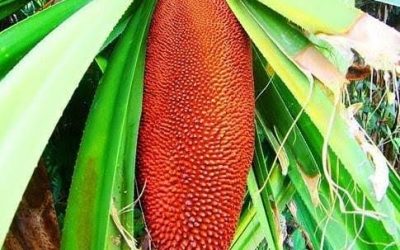
Buah merah, scientifically known as Pandanus conoideus, belongs to the Pandanaceae family. In Papua New Guinea it is also commonly associated with the name marita, while “buah merah,” meaning red fruit, is widely used in Indonesian Papua.
Kew records Pandanus conoideus as a species native from Maluku through New Guinea and into parts of the western Pacific. It grows primarily in wet tropical environments, making it well suited to the humid landscapes found across much of New Guinea. (powo.science.kew.org)
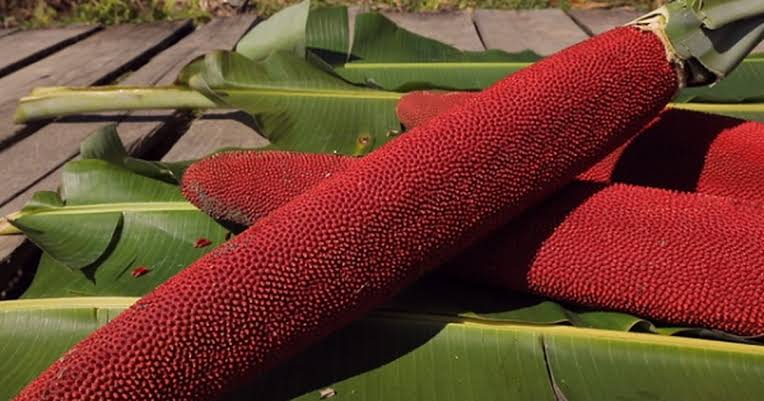
Its most recognizable feature is its unusual fruit. The fruit develops as an elongated, roughly cylindrical structure composed of many individual fruit units and can mature into striking shades of red or red-orange. Research on Pandanus conoideus has also documented long, deeply colored fruits and its established use as a food resource within Papuan communities. (sciencedirect.com)
Rather than being simply a wild curiosity, marita has cultural and practical value. Recent research from Papua New Guinea describes it as a native crop connected with food, customary exchange, local income, and cultural activities. These roles help explain growing interest in the plant as a tropical agricultural and botanical resource. (pnguotjournals.unitech.ac.pg)
For readers exploring Papua New Guinea plants, buah merah is particularly interesting because it demonstrates how one species can have botanical, agricultural, and cultural importance at the same time.
Sago Palm (Metroxylon sagu)
Another important plant is the sago palm, Metroxylon sagu. It belongs to the palm family, Arecaceae, and is native from Maluku to New Guinea. Kew describes it as a robust palm of wet tropical environments that can reach substantial heights and develop very large leaves. (powo.science.kew.org)
Sago palms are especially associated with moist lowland landscapes. Their ability to grow in wet environments has made them an important component of plant-based food systems in parts of New Guinea where swampy conditions may be unsuitable for many conventional crops.
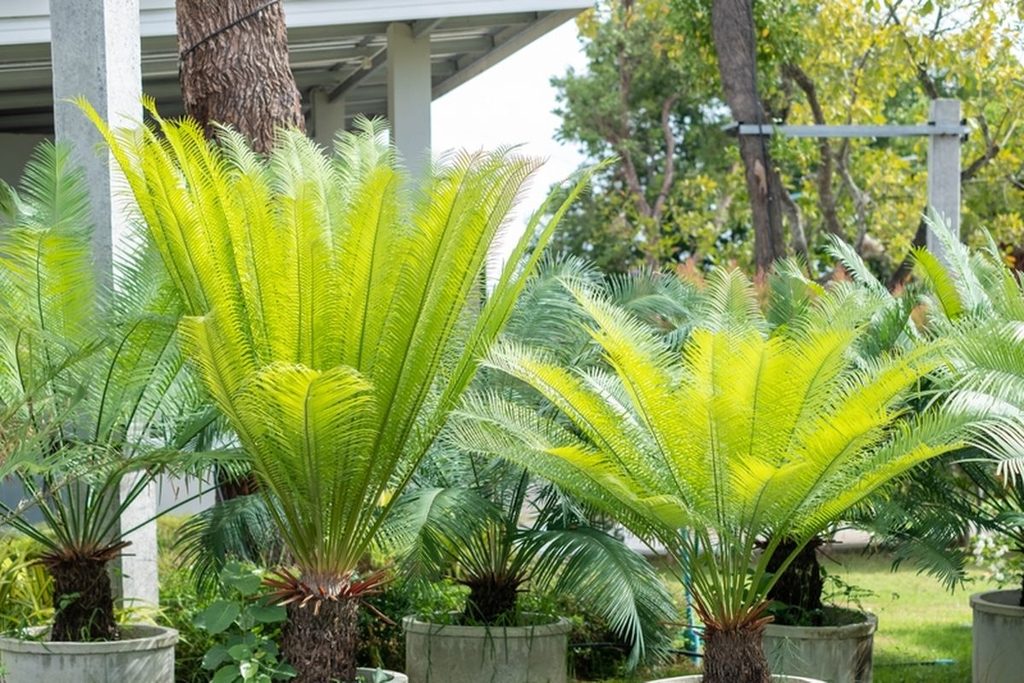
The starch obtained from the palm has long been an important food resource in several lowland areas of Papua New Guinea. Ethnographic research from the Sepik region, for example, documents sago as both a staple or supplementary food and a plant connected with wider aspects of community life. Its leaves and other plant materials can also have practical uses. (agris.fao.org)
Sago therefore represents more than another tropical palm. It illustrates how local vegetation, landscape conditions, food traditions, and cultural knowledge can develop together over generations. Together with buah merah, it shows why traditional botanical resources are an essential part of understanding the wider diversity of Papua New Guinea.
Papua Native Orchids and Ornamental Plants
Orchids and other unusual tropical species add another dimension to the diversity of Papua New Guinea plants. Many grow as epiphytes on trees, while others occupy forest floors, mountain habitats, or other specialized environments. Their unusual shapes and growth habits have also made New Guinea flora interesting to horticulturists and botanical collections.
People searching for a papua plant indoor may encounter orchids and tropical pitcher plants, although wild species should not automatically be considered ordinary houseplants. Their environmental requirements vary considerably, and conservation and legal sourcing should always be considered when unusual native plants enter horticultural collections.
Black Orchid Papua: An Important Botanical Distinction
The name “black orchid” is often associated with Coelogyne pandurata, an orchid recognized for green flowers with dramatically dark markings on the lip.
However, there is an important geographic distinction. Kew’s Plants of the World Online records the natural range of Coelogyne pandurata as Borneo, Malaya, the Philippines, and Sumatra—not Papua New Guinea or the island of New Guinea. (powo.science.kew.org)

For this reason, describing Coelogyne pandurata specifically as a native “Papua black orchid” can be misleading. New Guinea certainly has exceptional orchid diversity, but its native orchids include many different species that should be identified by their correct botanical names and distributions.
Dendrobium Orchids
Dendrobium is one of the important orchid groups represented in New Guinea. Many members of this genus are epiphytes, meaning they grow on other plants for physical support without functioning as parasites.
Several Dendrobium species are specifically recorded from Papua New Guinea. For example, Dendrobium engae, Dendrobium contextum, and Dendrobium limpidum are documented as native to New Guinea, with their ranges including Papua New Guinea. (powo.science.kew.org)
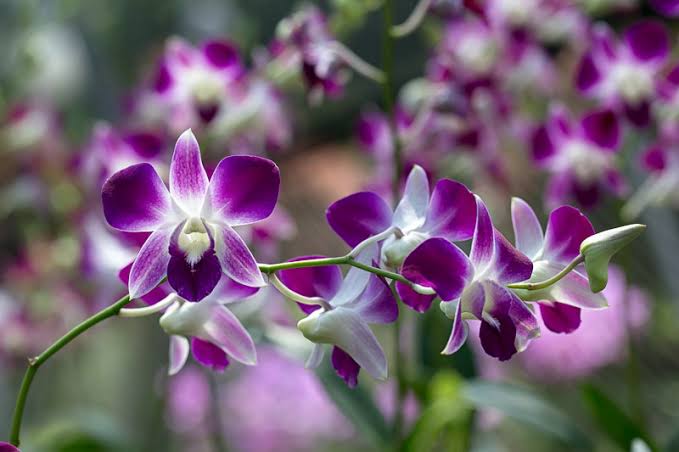
Their ornamental appeal comes from the remarkable diversity of flower forms, colors, and plant structures found across the genus. At the same time, their ecological value is more important than appearance alone. In their natural habitats, orchids form part of complex forest communities and depend on specific environmental relationships for successful growth and reproduction.
Nepenthes: Tropical Pitcher Plants
Another striking group found in the wider New Guinea region is Nepenthes, commonly known as tropical pitcher plants. Some New Guinea species include Nepenthes papuana and Nepenthes paniculata. Both are naturally associated with wet tropical environments. (powo.science.kew.org)
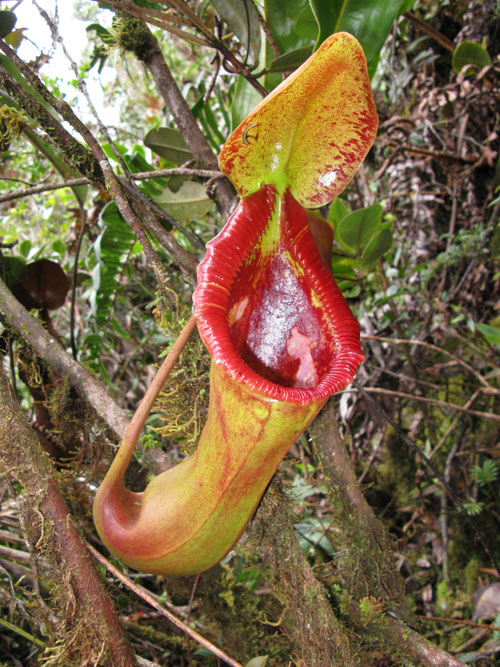
Nepenthes plants are carnivorous. Their characteristic pitchers are modified plant structures that function as traps, allowing the plants to obtain additional nutrients from captured organisms. This adaptation is particularly useful in environments where certain soil nutrients are limited. (kew.org)
Orchids and pitcher plants therefore illustrate an important feature of Papua’s botanical diversity: unusual appearance often reflects equally unusual ecological adaptation. Their value lies not only in their ornamental potential, but also in what they reveal about the highly specialized ecosystems of New Guinea.
Unique Characteristics of Papua New Guinea Plants
The remarkable variety of Papua New Guinea plants is not only about the number of species present. It is also reflected in the ways plants have adapted to environments ranging from humid lowland rainforest to cool mountain forests and high-elevation grasslands.
Adaptation to Tropical Environments
Plants growing in tropical forests must respond to abundant moisture, intense competition for sunlight, and very different conditions between the forest floor and canopy.
Tall rainforest trees compete by extending their crowns toward available light, creating the layered canopy typical of tropical forests. Beneath them, smaller trees, ferns, herbs, climbing plants, and young seedlings occupy environments where considerably less sunlight reaches the ground.
Root structure can also reflect rainforest conditions. Some large tropical trees develop broad buttress-like roots that provide additional physical support near the soil surface. Epiphytic plants take a different approach: instead of growing directly in soil, they establish themselves on trunks and branches, allowing them to occupy brighter parts of the forest without drawing nutrients directly from the host tree.
New Guinea’s landscape makes these adaptations especially varied. Its ecosystems include mangroves, lowland rainforest, montane forest, and alpine grasslands, meaning plants encounter dramatically different temperatures, moisture conditions, soils, and elevations across the island. (kew.org)
Endemic Species Characteristics
A plant is considered endemic when its natural distribution is restricted to a particular geographic region. New Guinea has an exceptionally high level of plant endemism.
A comprehensive botanical checklist documented 13,634 vascular plant species across the island of New Guinea, of which approximately 68% were considered endemic to the island. This figure refers to New Guinea as a whole rather than Papua New Guinea alone, an important distinction when discussing regional botanical statistics. (kew.org)
Several factors help explain this unusual concentration of distinctive flora. New Guinea is a large tropical island positioned between Southeast Asia, Australia, and the Pacific. It also has highly varied terrain and an exceptionally complex geological history. Mountains, valleys, islands, and other separated habitats can isolate plant populations over long periods, contributing to the development of distinct species. (kew.org)
Because endemic plants occur naturally within limited geographic ranges, their continued survival is closely connected to the condition of their native habitats. Protecting the variety of forests and other ecosystems across Papua New Guinea therefore helps preserve botanical diversity that may occur nowhere else on Earth.
Traditional Uses of Plants in Papua New Guinea Culture
For many communities, plants are closely connected with everyday life, food production, shelter, crafts, and cultural traditions. This relationship extends beyond individual species. Knowledge about where plants grow, when they can be harvested, and how different materials can be used has often been passed between generations.
Because Papua New Guinea contains hundreds of cultural and language groups, these traditions are not identical across the country. The importance and use of a particular plant can vary substantially between regions and communities.
Food Sources
Plants form the foundation of many traditional food systems in Papua New Guinea. Important crops include sweet potato, taro, yam, banana, and sago, although their relative importance varies according to climate, elevation, and local growing conditions. Wild and semi-cultivated plants can also supplement garden crops with fruits, nuts, vegetables, and other foods. (fao.org)
Sago provides a particularly clear example of the relationship between environment and food culture. The palm thrives in wet lowland areas, and starch obtained from its trunk has traditionally been an important food in several coastal and wetland communities. In some areas, sago can complement other crops or provide an alternative food source when garden harvests are limited. (agris.fao.org)
Materials and Daily Life
Useful plants are not limited to food crops. Forest vegetation has historically supplied communities with timber, leaves, fibers, canes, and other natural materials.
Palms demonstrate this versatility particularly well. In New Guinea, palm leaves and related materials have been used for roofing and walls, while different plant parts can serve purposes ranging from food preparation to household construction. Sago palm leaves, for example, have traditionally been used for thatching, while other parts of the plant can be incorporated into practical objects. (fao.org)
Wood, bamboo, rattan, pandanus, and other plant resources can likewise become parts of houses, tools, containers, woven objects, and traditional crafts. Their uses illustrate how knowledge of local vegetation can be closely integrated with daily activities.
Traditional Botanical Knowledge
Indigenous botanical knowledge develops through long-term observation of landscapes and plant resources. Communities may distinguish plants according to characteristics such as habitat, seasonality, appearance, food value, material properties, or customary importance.
This knowledge is valuable cultural heritage, but it should be represented carefully. Traditional plant practices can differ between communities and should not automatically be interpreted as scientifically established properties or universal instructions for using a species.
Responsible documentation therefore means recognizing the communities connected to that knowledge, preserving cultural context, and avoiding claims that go beyond available evidence. Seen in this way, the traditional use of Papua New Guinea plants provides insight not only into individual species, but also into the long relationship between people and the landscapes around them.
Economic Potential of Papua New Guinea Plants
Papua New Guinea’s botanical wealth can have economic value when plant resources are managed carefully and benefits are connected with sustainable agriculture, local knowledge, and responsible supply chains. This potential does not depend only on extracting wild plants. Cultivation, processing, horticulture, and value-added botanical products can also create ways to use plant resources while reducing pressure on natural forests.
Herbal and Natural Product Industry
International interest in plant-based ingredients has created opportunities for tropical botanical resources to be studied and developed for uses such as foods, spices, fragrances, cosmetics, crafts, and other natural products.
Papua New Guinea already has a long history of using plant materials as food and everyday resources. FAO documentation has identified fruits, nuts, vegetables, bamboo, rattan, orchids, and various other plant materials among the country’s non-wood forest resources. (fao.org)
For a modern botanical industry, however, the value of a plant is not determined simply by whether it grows naturally in Papua New Guinea. Accurate botanical identification, consistent cultivation, appropriate processing, traceability, respect for traditional knowledge, and compliance with relevant regulations are also important.
This is particularly relevant to Papua herbal products and other natural-product categories. Botanical resources can be introduced through their origin, traditional context, physical characteristics, or ingredient applications without suggesting that they diagnose, prevent, or treat disease.
Ornamental Plant Market
The extraordinary appearance of New Guinea orchids, ferns, palms, and other tropical plants also gives some species horticultural and ornamental value.
Commercial cultivation can provide a more conservation-friendly route than uncontrolled collection from natural habitats. Propagating suitable ornamental species in managed nurseries allows growers to produce plants without relying continually on wild populations.
This distinction is especially important for unusual or geographically restricted species. A plant may be attractive to collectors, but rarity should not become a reason for removing it from the forest. Legal origin, propagation methods, and conservation status therefore matter alongside appearance.
Sustainable Plant Cultivation
There is an important difference between wild harvesting and cultivation. Wild harvesting removes plant material directly from naturally occurring populations, while cultivation produces plants in managed gardens, farms, agroforestry systems, or nurseries.
Neither approach is automatically sustainable. Harvesting from the wild must take account of regeneration and habitat conditions, while cultivation should consider land use, soil, water, biodiversity, and the needs of local communities.
FAO’s current work in Papua New Guinea reflects this broader approach, emphasizing sustainable natural-resource management, resilient agriculture, and production landscapes that balance agricultural activity with ecosystem conservation. (fao.org) (fao.org)
For tropical botanical resources, long-term economic potential is therefore closely linked to stewardship. Cultivation, responsible sourcing, and thoughtful value addition can create opportunities while helping ensure that the forests producing this remarkable botanical diversity remain functioning ecosystems.
Challenges in Protecting Papua New Guinea Flora
The richness of Papua New Guinea plants is closely tied to the survival of the forests, wetlands, mountain ecosystems, and other habitats where those species naturally occur. Although the country still contains extensive tropical forests, its biodiversity faces pressures from changes in land use and resource development.
Conservation is particularly complex because Papua New Guinea combines exceptional biological diversity with communities that depend directly on land and natural resources. Effective protection therefore needs to consider ecosystems and local livelihoods together rather than treating them as separate issues.
Habitat Loss
Forest conversion and degradation are among the major challenges affecting Papua New Guinea’s terrestrial biodiversity. National biodiversity planning documents have identified pressures including logging, agricultural expansion, mining, overexploitation of natural resources, introduced species, and climate change. (cbd.int)
These pressures do not affect every part of the country equally. A road, plantation, mine, or logging operation may directly alter one area while also making previously remote forest more accessible to further development. As habitats become fragmented or changed, plants with narrow natural distributions can be particularly vulnerable because suitable growing environments may exist only within limited areas.
The issue remains current. In 2026, FAO and Papua New Guinea’s Conservation and Environment Protection Authority highlighted increasing pressure on major forest landscapes from logging, large-scale agriculture, mining, oil and gas development, and other extractive activities. Their conservation work in Gulf and Western Provinces focuses on maintaining extensive areas of primary and intact tropical forest. (fao.org)
Conservation Challenges
Protecting flora involves more than identifying a few rare species. Scientists first need reliable information about what species exist, where they grow, how widespread they are, and how their populations are changing.
That task is especially demanding in Papua New Guinea. The country’s biodiversity strategy has noted that its flora remains incompletely inventoried, with some plants known from very limited botanical collections. (cbd.int) As a result, discussions about endangered plants in papua new guinea should recognize that conservation knowledge continues to develop as botanical surveys and species assessments improve.
Habitat conservation is therefore essential. Protecting forests can preserve entire communities of trees, orchids, ferns, palms, climbing plants, and other organisms simultaneously rather than focusing on a single species in isolation.
Local participation is equally important. About 97% of land in Papua New Guinea is under customary tenure, making Indigenous communities and customary landowners central participants in natural-resource management. (fao.org) Current conservation initiatives increasingly reflect this reality. In June 2026, for example, a new project was approved to support Indigenous Peoples and local communities in conserving 700,000 hectares of critical ecosystems across Enga, Chimbu, and Jiwaka provinces. (fao.org)
Long-term protection of Papua New Guinea’s flora therefore depends on a combination of botanical research, habitat protection, sustainable resource management, and meaningful community involvement. Conservation works best when native biodiversity remains valuable as a living part of the landscape rather than becoming valuable only after it has been removed.
Why Papua New Guinea Plants Matter Globally
The significance of Papua New Guinea plants extends far beyond the country’s borders. Together with the flora of Indonesian New Guinea, they form part of the most plant-diverse island ecosystem currently documented by science. This makes the region important for understanding tropical biodiversity, plant evolution, conservation, and the relationships between people and natural landscapes.
Contribution to Global Biodiversity
New Guinea contains 13,634 documented vascular plant species, and approximately 68% are endemic to the island. Its ecosystems range from mangroves and extensive lowland rainforest to montane forest and alpine grasslands. (kew.org)
Such diversity matters globally because endemic species represent biological heritage that cannot simply be replaced by plants growing elsewhere. When a species is naturally restricted to New Guinea, protecting its habitat contributes directly to preserving global plant diversity.
The island’s forests also have broader environmental significance. Kew notes that understanding and protecting New Guinea’s extensive forests is important for retaining the carbon stored within these ecosystems, in addition to maintaining their exceptional biological richness. (kew.org)
Opportunities for Botanical Research
New Guinea remains an important area for botanical discovery and documentation. Even major groups continue to receive detailed scientific attention. A recent international project, for example, documented all 250 known palm species occurring across New Guinea, showing how research continues to refine understanding of the island’s flora. (kew.org)
Reliable plant inventories are valuable for more than naming species. They help researchers study plant distribution, evolutionary relationships, ecosystem change, and conservation priorities. The comprehensive New Guinea plant checklist was specifically developed to provide a stronger foundation for future botanical research and conservation planning. (kew.org)
Cultural Heritage Value
Plants are also connected with cultural heritage. In Papua New Guinea, customary land ownership and community relationships with forests remain particularly important. Around 97% of land is held under customary tenure, meaning Indigenous communities and customary landowners have a central role in how many forest landscapes are used and managed. (fao.org)
Food plants, timber species, fibers, palms, and other botanical resources can therefore carry knowledge and traditions developed through generations of interaction with local environments. Preserving botanical diversity can also help preserve the landscapes in which this knowledge continues to exist.
Potential for Sustainable Natural Products
Papua New Guinea’s flora can also support carefully managed agriculture and botanical industries. Native and locally cultivated plants may provide ingredients, foods, ornamental materials, fibers, or other natural resources when their production is environmentally and socially responsible.
The strongest long-term potential lies in approaches that combine economic use with sustainable cultivation and forest conservation. Current national and international programs in Papua New Guinea similarly emphasize sustainable agriculture, responsible forest management, and biodiversity protection rather than treating natural resources as unlimited supplies. (fao.org)
Ultimately, the global importance of Papua New Guinea’s flora comes from several qualities at once: exceptional biological diversity, high endemism, scientific value, cultural relationships, and opportunities for responsible plant-based development. Preserving that combination allows these botanical resources to remain valuable both within Papua New Guinea and to the wider world.
Frequently Asked Questions About Papua New Guinea Plants
What plants are native to Papua New Guinea?
Papua New Guinea supports an exceptionally broad range of native vegetation, including tropical rainforest trees, palms, orchids, pandanus plants, ferns, and carnivorous pitcher plants.
Examples include Pandanus conoideus, commonly associated with buah merah or marita, which is native across New Guinea and other parts of the western Pacific. (powo.science.kew.org) The country also has native orchids such as Dendrobium limpidum, whose recorded native range is Papua New Guinea. (powo.science.kew.org)
Sago palms, native forest trees, Nepenthes pitcher plants, and numerous other species further contribute to the diversity of Papua New Guinea plants.
Common plant names can sometimes create confusion, especially online. For example, someone searching for golden papua plant scientific name should first establish which particular plant is being called “golden Papua,” because that phrase is not a standardized botanical species name. Scientific identification is more reliable when it is based on a clearly identified plant rather than an informal common name.
Why are Papua New Guinea plants unique?
Their uniqueness comes from a combination of tropical climate, complex geology, geographic isolation, and dramatic differences in elevation.
Papua New Guinea contains habitats ranging from humid lowland forests and wetlands to montane environments. Mountains, valleys, and isolated habitats can separate plant populations for long periods, helping distinctive forms and species develop.
This process is reflected in the high level of endemism across New Guinea. Many species naturally occur on the island and nowhere else, making its flora particularly significant for global biodiversity.
What is the most famous plant from Papua?
There is no single objectively “most famous” plant because Papua and New Guinea contain thousands of species with very different cultural, ecological, and horticultural importance.
However, buah merah (Pandanus conoideus) is one of the better-known botanical resources associated with Papua and the wider New Guinea region. Its distinctive elongated red fruit and long-standing role in local food traditions make it particularly recognizable. Kew records the species as native to New Guinea as well as several surrounding island regions. (powo.science.kew.org)
Sago palm, orchids, pandanus species, and tropical pitcher plants are also important examples of the region’s distinctive flora.
Are Papua New Guinea plants used traditionally?
Yes. Many plants have long-standing roles in local communities, although practices differ considerably between regions and cultural groups.
Traditional uses include food production, house construction, thatching, weaving, woodworking, tools, crafts, and other aspects of daily life. Plants such as sago and pandanus demonstrate particularly close relationships between local environments and traditional food systems.
Some species are also associated with traditional botanical knowledge. Such knowledge is best understood within its cultural context rather than treated as universal health advice. Documenting it responsibly can help preserve an important part of Papua New Guinea’s cultural heritage while respecting the communities from which that knowledge originates.
Conclusion
Papua New Guinea plants represent an extraordinary part of the world’s tropical biodiversity. From towering rainforest trees and sago palms to orchids, pandanus species, and tropical pitcher plants, the country’s flora reflects a remarkable combination of climate, geography, isolation, and ecological adaptation.
These plants are valuable for more than their appearance. Native species help support forest ecosystems, while many plants are also connected with food traditions, materials, agriculture, local knowledge, and cultural heritage. At the same time, Papua New Guinea’s high level of endemism makes habitat protection especially important, because some species have naturally limited distributions and cannot simply be replaced by plants from other tropical regions.
The future value of this botanical diversity depends on how it is managed. Sustainable cultivation, responsible sourcing, conservation-minded horticulture, careful botanical research, and respect for customary landowners can all help balance economic opportunities with the need to protect natural ecosystems.
Papua herbal products are one example of how tropical botanical resources may be introduced to wider audiences through their origin, cultural context, and natural characteristics. The most responsible approach is to present these resources accurately, avoid exaggerated claims, and support practices that respect both biodiversity and the communities connected to it.
By understanding Papua New Guinea’s flora as an ecological, cultural, and botanical resource rather than simply a source of raw materials, readers can better appreciate why this region remains one of the world’s most significant landscapes for plant diversity.