Endangered plants in Papua New Guinea represent some of the most valuable botanical resources in one of the world’s most diverse tropical regions. Papua New Guinea occupies the eastern part of New Guinea, an island recognized for exceptional plant richness, varied landscapes, and extensive tropical ecosystems.
Botanical research has documented more than 13,600 vascular plant species across New Guinea, with about 68% considered endemic to the island. Researchers describe New Guinea as the most floristically diverse island known worldwide, with habitats ranging from coastal mangroves and lowland rainforests to montane forests and high-elevation grasslands.
This diversity gives native plants an important ecological role. Forest vegetation provides habitat for wildlife, contributes to soil stability, supports natural forest regeneration, and forms part of complex relationships between plants, pollinators, fungi, and other organisms. Many plants are also closely connected with local livelihoods, traditional ecological knowledge, and long-established relationships between communities and surrounding forests.
However, plant species with restricted distributions or specialized habitat requirements can be particularly sensitive to environmental disturbance. Habitat loss, forest fragmentation, unsustainable collection, and other changes may place some native species under conservation pressure.
Understanding endangered plants in Papua New Guinea therefore involves more than identifying rare species. It also means examining their habitats, ecological importance, cultural connections, and the conservation approaches that can help maintain Papua New Guinea’s remarkable botanical diversity for the future.
Why Papua New Guinea Has Unique Plant Biodiversity
Papua New Guinea forms part of New Guinea, the world’s largest tropical island and one of the most botanically diverse places on Earth. Its combination of tropical climate, rugged mountains, extensive forests, river systems, wetlands, and coastal environments creates many different habitats within a relatively concentrated geographic area.
These environmental differences allow a remarkable range of tropical plant species to grow under very different conditions. They also help explain why discussions about endangered plants in Papua New Guinea are closely connected with habitat conservation. Protecting individual species often depends on maintaining the particular ecosystems in which those plants naturally occur.
Geography Creates Exceptional Plant Diversity
Papua New Guinea occupies the eastern portion of the island of New Guinea and includes numerous offshore islands. Across the wider New Guinea region, elevation changes dramatically from coastal areas and lowland plains to high mountain environments. These variations create distinct ecological zones where different groups of plants can develop.
Lowland rainforests are among the most prominent ecosystems. Warm temperatures and abundant rainfall support dense vegetation containing trees, palms, climbing plants, ferns, orchids, and many other plant groups. Papua New Guinea government information notes that primary lowland rainforest occurs extensively up to elevations of approximately 1,000 metres in many areas.
At higher elevations, lowland vegetation gradually changes into montane and highland forests. Cooler temperatures, differences in rainfall, soil conditions, and greater exposure can favor plants adapted to specific mountain environments. Botanical surveys in Papua New Guinea have documented substantial plant diversity across both lowland and montane rainforest habitats.
The country also contains wetlands, river valleys, mangrove environments, and other coastal ecosystems. Along parts of the coast, for example, mangrove vegetation occupies areas influenced by saltwater and tidal conditions. Farther inland, freshwater wetlands and river systems create additional habitats for specialized vegetation.
This ecological variety is significant because tropical plants are not distributed evenly across the landscape. A species adapted to a cool mountain forest may not survive naturally in a hot coastal lowland, while plants associated with wetlands may depend on very different soil and water conditions.
As a result, conserving Papua New Guinea rainforest plants requires attention to entire landscapes rather than forests as a single uniform habitat.
High Number of Endemic Plant Species
An endemic plant is a species that naturally occurs within a particular geographic region and nowhere else in the wild. Endemism is especially important in New Guinea because geographic isolation, mountain barriers, varied climates, and diverse habitats have allowed many plant populations to develop independently over long periods.
A major botanical assessment published in Nature documented 13,634 known vascular plant species across New Guinea and its surrounding islands. Approximately 68% were considered endemic to the region. The researchers concluded that New Guinea has the richest known island flora in the world.
Geographic isolation helps explain part of this botanical diversity. Mountain ranges can separate plant populations, while islands, valleys, and specialized habitats can further limit their natural distribution. Over time, isolated populations may develop into distinct species adapted to local environmental conditions.
However, a restricted distribution can also create conservation challenges. A plant that grows across a large geographic area may have many separate populations. In contrast, an endemic species confined to one mountain range, forest type, or small region may have fewer alternative habitats if its original environment changes.
This does not mean that every endemic plant is endangered. Conservation status depends on factors such as population size, geographic range, habitat condition, observed decline, and documented threats. Nevertheless, limited distribution can make some endemic plants more sensitive to habitat loss, forest fragmentation, or other environmental pressures.
For this reason, protecting New Guinea biodiversity involves conserving not only well-known plants but also the diverse habitats that support less familiar endemic species. Maintaining connected forests and other natural ecosystems helps preserve the ecological conditions in which Papua New Guinea’s distinctive flora developed.
Examples of Endangered Plants in Papua New Guinea
When discussing endangered plants in Papua New Guinea, conservation status needs to be considered at the species level. Some native plants are formally classified as threatened, while others remain relatively widespread but face pressures in particular habitats or populations. In addition, many Papua New Guinea plants have not been studied as thoroughly as species from better-surveyed regions.
The following plants represent important examples of native flora associated with conservation, habitat protection, sustainable use, and the preservation of New Guinea’s botanical diversity.
Rare Papua Orchid Species
Orchids are one of the most remarkable components of New Guinea biodiversity. Royal Botanic Gardens, Kew estimates that New Guinea contains around 2,800 orchid species, approximately 90% of which are endemic to the island. Kew also notes that many species are known from very few botanical collections, illustrating how much remains to be learned about their distribution.
Genera such as Dendrobium, Bulbophyllum, and Coelogyne occur within the region. Many orchids grow as epiphytes on trees, while others occupy the forest floor or specialized mountain environments. Their survival can depend on suitable moisture, forest structure, pollinators, and relationships with fungi involved in seed germination.
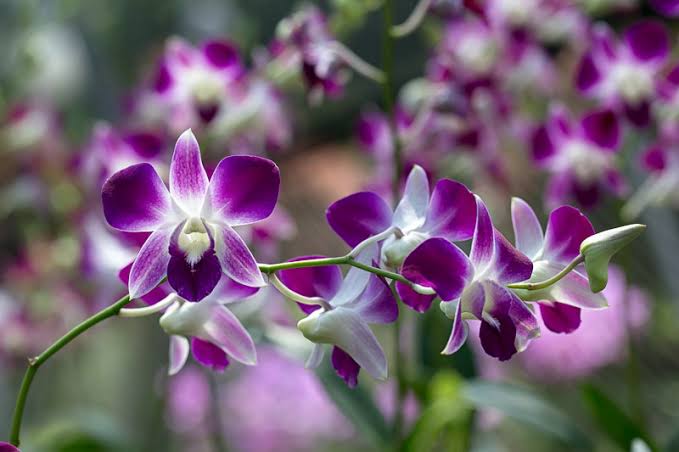
Restricted ranges can make certain orchids particularly sensitive to habitat disturbance. One example is Bulbophyllum nocturnum, a species known from New Britain in Papua New Guinea. Kew records its native range as the Bismarck Archipelago and identifies it as potentially threatened in an extinction-risk prediction assessment.
Plant collection is another conservation consideration. Most orchids are covered by international CITES trade controls, although inclusion in CITES does not automatically mean that a species is endangered. The system is intended to help ensure that international trade does not threaten wild populations.
For rare orchids, protecting intact forests and encouraging legally sourced, responsibly propagated plants can reduce unnecessary pressure on wild populations.
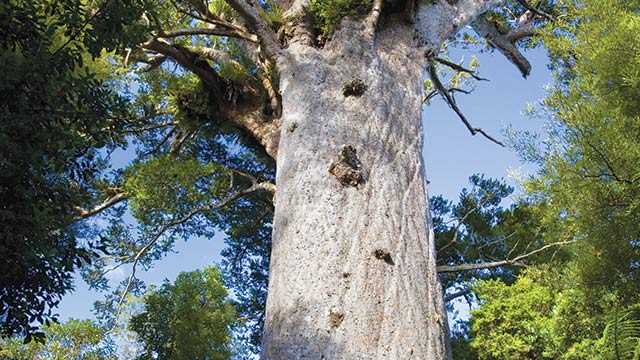
Kauri Trees (Agathis Species)
Kauri trees belong to the ancient conifer family Araucariaceae. Unlike the flowering trees that dominate many tropical forests, Agathis species are gymnosperms with an evolutionary history extending far into the past.
Several members of this group occur in New Guinea. Agathis robusta, for example, is native from Papua New Guinea and the Bismarck Archipelago to eastern Queensland. It grows primarily in wet tropical environments and can become a large forest tree.
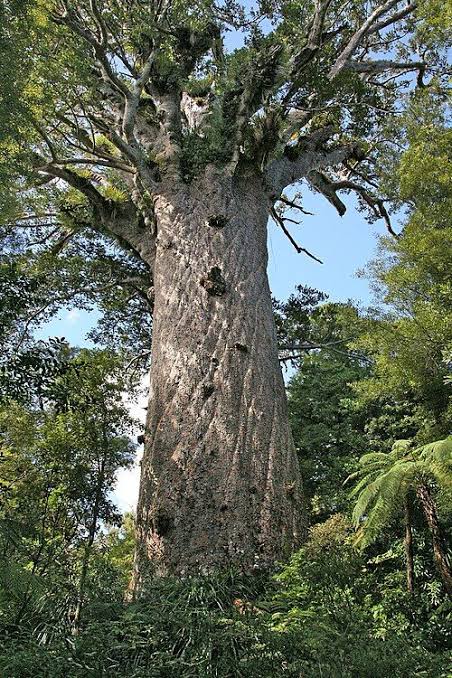
Large trees contribute to forest structure by creating vertical habitat, storing substantial woody biomass, and influencing the conditions experienced by smaller plants beneath the canopy. Because mature forest trees can take many years to replace, sustainable forestry and the retention of healthy forest populations are important considerations.
Not every Papua New Guinea kauri is endangered. Agathis robusta, for example, is currently recorded as Least Concern in IUCN-linked data presented by Kew. Other Agathis species can have different conservation assessments.
This distinction illustrates why plant conservation should be based on individual species assessments rather than assuming that an entire plant group has the same conservation status.
Merbau Tree (Intsia bijuga)
Intsia bijuga, commonly known as merbau in parts of its range, is a tropical hardwood tree belonging to the legume family Fabaceae. Its natural distribution extends widely from parts of the western Indian Ocean through tropical Asia to New Guinea and the western Pacific.
In rainforest ecosystems, mature trees form part of the larger forest structure and provide habitat within complex tropical plant communities. However, merbau is also valued for its durable timber.
Where harvesting removes large mature trees faster than populations can regenerate, forest structure and local population density can be affected. Roads and other access created during forest development may also contribute to habitat fragmentation.
For this reason, merbau conservation is closely linked with sustainable forestry, responsible timber sourcing, regeneration, and the maintenance of natural forest habitat. Its broad geographic distribution should not be confused with an absence of local conservation pressures; conditions can vary considerably between populations.
Nepenthes Species
Tropical pitcher plants of the genus Nepenthes are among the most distinctive plants found in the New Guinea region. Instead of relying only on roots for nutrients, these carnivorous plants produce modified leaves that form pitcher-shaped traps capable of capturing small organisms.
Different Nepenthes species occupy habitats ranging from humid forests to mountain environments. Their specialized ecology means that changes in moisture, vegetation, soils, or surrounding habitat can be important for species with narrow environmental requirements.
Conservation status varies considerably across the genus. For example, Kew records Nepenthes neoguineensis, a New Guinea species, as Least Concern, demonstrating that the presence of an unusual adaptation does not itself mean a plant is endangered. Other pitcher plants with much narrower distributions can face greater conservation concerns.
International trade in most Nepenthes species is regulated under CITES Appendix II, while a small number of species elsewhere in the genus receive the stricter Appendix I listing. Again, CITES listing regulates international trade and should not be interpreted as an identical conservation classification for every species.
Habitat protection and responsible propagation are therefore important parts of conserving rare pitcher Papua plants without placing additional collection pressure on wild populations.
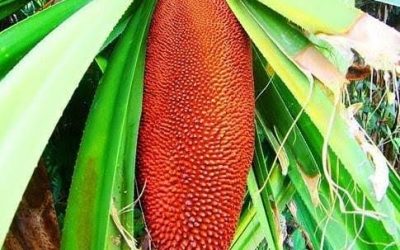
Buah Merah (Pandanus conoideus)
Pandanus conoideus, commonly called marita in Papua New Guinea and buah merah in parts of Indonesian Papua, offers a different perspective on plant conservation. Rather than being primarily known as a rare wild species, it is closely associated with traditional agriculture and cultural plant knowledge.
Kew records Pandanus conoideus as native to New Guinea and several surrounding island groups, where it grows in wet tropical environments. In Papua New Guinea, research describes marita as a culturally and economically significant plant with multiple locally recognized forms and cultivars.
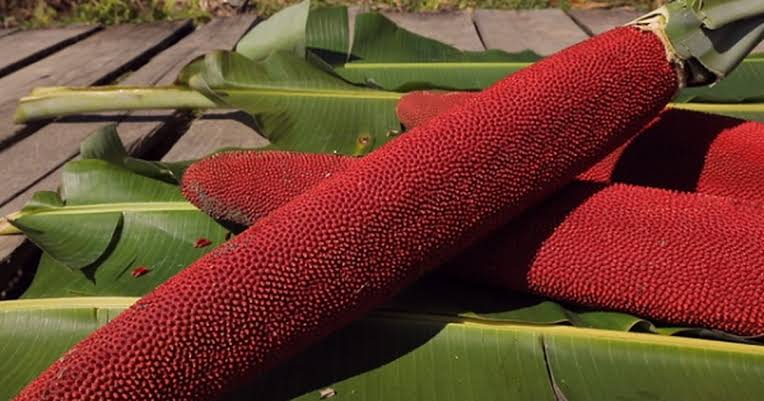
Its importance to conservation therefore lies partly in genetic diversity. Traditional varieties maintained by communities can represent valuable plant genetic resources. If agricultural landscapes become dominated by only a small number of cultivars, less commonly grown varieties and their distinctive characteristics may gradually disappear.
Sustainable cultivation can help maintain this diversity while reducing pressure to obtain plant material from unmanaged wild sources. Preserving locally adapted varieties also supports the continuation of traditional ecological knowledge associated with planting, selecting, harvesting, and managing native crops.
Buah merah shows that native plant protection is not limited to preventing extinction. Conservation can also involve maintaining traditional cultivated diversity, local knowledge, and long-standing relationships between people and Papua’s botanical resources.
Why Are Plants Becoming Endangered in Papua New Guinea?
The pressures affecting endangered plants in Papua New Guinea are not the same for every species or location. A plant with a wide distribution may tolerate some environmental change, while an endemic species restricted to a single mountain, island, or forest type may be much more sensitive.
Conservation concerns generally become greater when several pressures occur together. Habitat loss can reduce the area available to a species, fragmentation can separate populations, collection can remove plants from the wild, and environmental changes can alter the specialized conditions some species require.
Habitat Loss
Habitat loss is one of the most significant challenges for Papua New Guinea’s terrestrial biodiversity. Forests can be changed through commercial logging, agricultural expansion, mining, settlement growth, and associated infrastructure development.
Papua New Guinea’s Fifth National Report to the Convention on Biological Diversity identified commercial logging, subsistence agriculture, commercial agriculture, mining, fire, and climate change among the important direct drivers of biodiversity loss. The report also highlighted forest fragmentation and changes in forest structure as conservation concerns.
For plants, habitat destruction does not simply mean losing individual trees or shrubs. It can change the entire environment around them. Clearing or heavily modifying a rainforest may alter shade, humidity, soil conditions, drainage, and the availability of trees used by epiphytic plants such as many orchids.
Forest fragmentation can create additional challenges. When a continuous forest is divided into smaller patches, plant populations may become separated from one another. Forest edges can also experience different light, temperature, wind, and moisture conditions from the interior.
Species with narrow geographic ranges can be especially sensitive because suitable habitat may already be limited. Protecting remaining natural vegetation and considering biodiversity when land is developed are therefore important parts of native plant protection.
Unsustainable Plant Collection
Some attractive, unusual, or commercially valuable plants may also face pressure when specimens are removed from the wild faster than populations can naturally recover.
Orchids provide a useful example. International trade in the orchid family is extensively regulated under CITES, and the Convention continues to examine the conservation effects of wild harvesting on Appendix II orchid taxa.
This does not mean that all plant collection in Papua New Guinea is illegal or environmentally damaging. Nor does CITES listing automatically indicate that a plant is endangered. The conservation concern arises when rare or slow-reproducing species are collected unsustainably, particularly when they have small wild populations or very restricted distributions.
Removing mature plants can have a greater effect on species that grow slowly, reproduce irregularly, or depend on highly specialized habitat conditions. For this reason, responsible propagation and sustainable cultivation can provide alternatives to taking vulnerable plants directly from natural habitats.
Legal sourcing is also important for internationally traded plants. CITES records distinguish regulated trade in listed species, while illegal trade is not fully represented in official annual trade statistics.
Climate and Environmental Changes
Plant communities are also influenced by changes in temperature, rainfall, moisture, fire patterns, and other environmental conditions. These changes may be particularly important for specialized plants that occupy narrow ecological zones.
Mountain ecosystems provide a clear example. Papua New Guinea’s national biodiversity reporting has identified high-altitude and cloud-forest environments as potentially vulnerable to climate change. These forests contain distinctive plant communities adapted to cool, moist conditions, and species occurring near mountain summits have limited higher ground available if suitable climate zones shift upward.
Changes in cloud cover and moisture can also affect plants that depend on consistently humid conditions. The same principle applies elsewhere: wetland plants depend on suitable water regimes, coastal vegetation is influenced by changing shoreline conditions, and rainforest species may respond to changes in temperature, rainfall, or disturbance patterns.
Environmental change does not affect every species in the same way, and predicting individual plant responses can be difficult. However, maintaining large, connected, and diverse habitats can give plant populations more opportunities to persist as local conditions change.
Ultimately, the decline of threatened plants is rarely explained by one factor alone. Habitat protection, sustainable resource use, responsible plant collection, and biodiversity monitoring all contribute to reducing pressure on Papua New Guinea’s native flora.
Importance of Protecting Papua New Guinea’s Endangered Plants
Protecting endangered plants in Papua New Guinea is important because plant conservation supports much more than individual species. Plants form the foundation of terrestrial ecosystems, contribute to genetic diversity, and are closely connected with the cultural knowledge of communities across New Guinea.
With thousands of vascular plant species and a high level of endemism, New Guinea represents a globally significant centre of botanical diversity. Conservation efforts can therefore help maintain ecological relationships that have developed across the island’s forests, mountains, wetlands, and coastal environments.
Maintaining Ecosystem Balance
Plants create the physical structure of many ecosystems. Large rainforest trees form canopies and provide growing surfaces for orchids, ferns, mosses, and climbing plants. Smaller vegetation covers the forest floor, while roots help hold soil in place and vegetation influences the movement of water through the landscape.
Plant communities also provide food and habitat for insects, birds, mammals, and many other organisms. Flowers can support pollinators, fruits and seeds provide food, and mature trees can offer nesting or sheltering sites.
These relationships mean that protecting a threatened plant can sometimes contribute to conserving a much wider ecological community.
Maintaining diverse vegetation is particularly valuable in forests where species interact in complicated ways. A rainforest is not simply a collection of separate trees. It is a connected ecosystem in which canopy structure, moisture, soils, microorganisms, fungi, animals, and plants influence one another.
For this reason, ecosystem protection often provides a broader conservation benefit than focusing only on isolated individual plants. Preserving healthy habitats gives many species the environmental conditions they need to reproduce and maintain their populations naturally.
Preserving Genetic Diversity
Every plant species contains genetic variation that has developed through adaptation, reproduction, and long-term environmental change. Populations growing in different valleys, mountains, islands, or climatic conditions may also contain locally distinctive characteristics.
Protecting this genetic diversity is an important part of plant conservation.
When a species loses populations, some of its genetic variation may disappear as well. Maintaining multiple healthy populations can therefore preserve a broader range of biological characteristics within a species.
Genetic resources are also valuable for botanical research. Scientists use living plants, seeds, herbarium specimens, and genetic information to study relationships between species, understand their distributions, document previously unknown diversity, and improve conservation planning.
The importance of this work is especially clear in New Guinea, where botanical research continues to expand scientific knowledge. The first expert-verified checklist of New Guinea’s vascular flora documented 13,634 species and found that approximately 68% were endemic to the region. Researchers also emphasized that improved botanical documentation can support future research and conservation decisions.
Conservation of cultivated native plants matters as well. Traditional varieties maintained by farmers can contribute to genetic diversity, making sustainable cultivation and the preservation of locally adapted plant varieties complementary parts of biodiversity protection.
Protecting Cultural Heritage
Papua New Guinea’s plants are also closely connected with cultural heritage. Communities have developed detailed knowledge of surrounding forests, gardens, and useful plant species through generations of observation and experience.
Research into indigenous knowledge across New Guinea has documented extensive relationships between people, useful plants, and different ecosystems. Such knowledge can include plant identification, cultivation practices, seasonal observations, harvesting traditions, and ways of managing local landscapes.
Protecting plant diversity can therefore help preserve the ecological context in which traditional plant knowledge exists. When locally important species, traditional varieties, or natural habitats disappear, knowledge connected with them may also become more difficult to maintain and pass between generations.
At the same time, conservation works best when local knowledge is treated respectfully rather than simply extracted as information. Indigenous communities can hold detailed understanding of particular landscapes developed through long-term relationships with their environments.
Protecting Papua New Guinea’s native flora is therefore both an ecological and cultural responsibility. Conserving species, genetic resources, habitats, and traditional plant diversity helps keep the country’s extraordinary botanical heritage available for continued study, responsible use, and future generations.
Conservation Efforts for Endangered Plants in Papua New Guinea
Conserving endangered plants in Papua New Guinea requires a combination of habitat protection, scientific research, plant documentation, and responsible management of native species. Because much of the country’s biological diversity occurs within natural forests and other complex ecosystems, conservation efforts frequently focus on protecting habitats rather than individual plants alone.
Government agencies, research institutions, local communities, conservation organizations, and botanical facilities can each contribute different forms of knowledge and protection. Together, these approaches help improve understanding of where plants occur, which populations may be under pressure, and what conservation measures are appropriate.
Protected Forest Areas
Protected areas are an important part of Papua New Guinea’s biodiversity strategy. They can conserve forests, wetlands, mountain environments, and other habitats while providing space for native plant populations to continue natural ecological processes.
Papua New Guinea’s Protected Areas Policy Implementation Plan 2018–2028 provides a national framework for strengthening protected-area management. The plan recognizes the close relationship between natural ecosystems, biodiversity, communities, culture, and sustainable resource management. It also emphasizes the involvement of resource-owning communities alongside government agencies and other organizations.
This community dimension is particularly relevant in Papua New Guinea, where conservation cannot always be approached simply by separating people from natural landscapes. Effective protection can involve cooperation with customary landowners and consideration of existing relationships between communities and forests.
Protected areas can benefit plants by reducing some forms of habitat conversion and maintaining larger areas of natural vegetation. They may also protect ecological relationships that individual species depend on, including forest structure, pollinators, seed dispersers, soils, and water systems.
However, creating a protected area does not automatically guarantee that every species within it is secure. Long-term conservation also depends on management, monitoring, local participation, and an understanding of how habitats change over time.
Botanical Research and Plant Documentation
Before a plant can be effectively conserved, researchers need reliable information about what species exists, where it grows, and how widely it is distributed.
Herbaria play an important role in this process. A herbarium preserves carefully documented plant specimens that researchers can use for identification, taxonomy, distribution studies, and comparisons between historical and modern collections.
The Papua New Guinea National Herbarium in Lae, part of the Papua New Guinea Forest Research Institute, is involved in documenting the country’s flora. The Plants of Papua New Guinea database has also brought together herbarium information from PNG and major Australian collections, making records more accessible for research. These records can assist with mapping plant distributions, studying areas of endemism, examining ecological preferences, and supporting environmental management.
Field surveys are equally important because significant botanical gaps remain. The Papuan Plants Project has reported that plant-collection density has historically been low across large portions of Papua New Guinea. Surveys in less-documented regions have therefore helped researchers collect herbarium specimens, record geographic ranges, photograph plants, and identify species that may be new to science.
Better documentation does not automatically determine whether a plant is threatened, but it provides essential evidence for future conservation assessments and biodiversity monitoring.
Sustainable Cultivation Programs
Conservation can also take place outside natural habitats. Botanical gardens, nurseries, research collections, and community cultivation can help maintain selected native plants under managed conditions.
Port Moresby Nature Park, which developed from the former National Botanical Gardens, maintains a substantial collection of native plants and orchids. Its botanical collections provide opportunities for conservation education and for displaying Papua New Guinea’s plant diversity outside wild habitats.
Responsible cultivation can be particularly useful for plants that attract collectors. When legally and sustainably propagated plants are available, cultivation can provide an alternative to removing specimens from natural populations.
For traditionally cultivated species such as Pandanus conoideus, sustainable cultivation can serve another purpose: maintaining locally adapted varieties and associated plant knowledge. Seed preservation, living collections, nurseries, and careful propagation can similarly complement habitat conservation for appropriate species.
These approaches should not be viewed as substitutes for protecting natural ecosystems. A plant growing in a garden does not preserve the complete network of organisms and environmental conditions found in its original habitat. Instead, in-situ conservation—protecting species where they naturally grow—and ex-situ conservation, such as botanical collections and seed preservation, can work together.
Ultimately, successful plant conservation in Papua New Guinea depends on combining protected biodiversity, reliable scientific documentation, responsible cultivation, and local participation. Such approaches provide a stronger foundation for protecting rare flora while allowing conservation strategies to respond to the different needs of individual species and ecosystems.
How People Can Help Protect Papua New Guinea Plants
Protecting Papua New Guinea’s plant diversity is not limited to scientists, conservation organizations, or government agencies. Consumers, gardeners, travelers, businesses, and communities can also influence how native plants and forest resources are used.
For people interested in endangered plants in Papua New Guinea, responsible choices usually begin with understanding where plant materials come from and whether their collection or production places unnecessary pressure on wild populations.
Choose Sustainably Sourced Plant Products
Wood, decorative plants, botanical materials, and other forest products can originate from very different production systems. Choosing products with clear sourcing information can encourage more responsible use of natural resources.
For timber and other forest materials, sustainable forestry practices aim to reduce unnecessary habitat damage and allow forests to continue providing ecological functions. For cultivated plants, nursery propagation can reduce the need to collect specimens directly from natural habitats.
Consumers do not need specialist botanical knowledge to make better choices. Asking basic questions about origin, cultivation, and legal sourcing can help create demand for products produced with greater consideration for biodiversity.
Avoid Supporting Illegal or Unsustainable Plant Trade
Rare orchids, pitcher plants, and other unusual tropical species can attract collectors. Problems arise when plants are removed from wild populations without appropriate permission or in quantities that populations cannot naturally replace.
People buying unusual plants should therefore favor reputable nurseries and legally propagated specimens rather than plants of uncertain origin.
This approach is especially important for species covered by international wildlife-trade regulations. Documentation requirements vary according to species and circumstances, but transparent sourcing helps distinguish responsible cultivation from potentially damaging collection.
Avoiding questionable wild-collected plants is a simple way to reduce pressure on vulnerable plant populations.
Learn About Native Biodiversity
Awareness is another practical form of conservation support.
Learning to recognize Papua New Guinea rainforest plants, endemic species, orchids, conifers, and other native flora can help people better understand why particular habitats matter. Botanical gardens, herbarium collections, educational programs, field guides, and biodiversity databases can make this information more accessible.
Education is particularly valuable because conservation is not only about well-known species. Many less familiar plants contribute to forest structure and ecological relationships but receive little public attention.
Understanding the difference between a rare plant, an endemic plant, and a formally threatened species also encourages more accurate discussion of conservation issues.
Support Conservation and Research Initiatives
Plant conservation depends heavily on reliable information. Field surveys, herbarium research, habitat monitoring, restoration projects, and community-based conservation can all improve understanding of Papua New Guinea’s flora.
People can support this work by following credible conservation organizations, participating in appropriate educational programs, or supporting projects that clearly explain how they protect habitats and involve local communities.
Community participation is especially important in Papua New Guinea because many natural areas are closely connected with customary land ownership and long-established local relationships with forests. Conservation initiatives are generally stronger when local knowledge and community priorities are included rather than treated as separate from biodiversity protection.
Small actions alone cannot address every conservation challenge. However, responsible purchasing, legal plant sourcing, biodiversity education, and support for credible conservation work can collectively contribute to the long-term protection of Papua New Guinea’s native flora.
Frequently Asked Questions About Endangered Plants in Papua New Guinea
What are some endangered plants in Papua New Guinea?
Examples of plants associated with conservation concern in Papua New Guinea include certain rare orchids and some narrowly distributed tropical species. Important native plant groups also include Agathis trees, merbau (Intsia bijuga), and Nepenthes pitcher plants.
However, conservation status varies by species. It would be inaccurate to describe every orchid, Agathis, merbau, or Nepenthes species in Papua New Guinea as endangered. Some have relatively secure populations, while others have restricted distributions or require further study.
This distinction is particularly important for orchids. New Guinea is estimated to contain around 2,800 orchid species, approximately 90% of which are endemic to the island, yet many species remain poorly documented.
Why are plants endangered in Papua New Guinea?
Plants can become threatened when their populations decline, their habitats become smaller or fragmented, or environmental conditions change beyond what specialized species can tolerate.
Important pressures can include habitat loss, forest conversion, infrastructure development, unsustainable collection, and broader environmental change. Species with very small geographic ranges may be particularly vulnerable because they have fewer alternative habitats available if their existing environment is disturbed.
Collection can also be relevant for desirable ornamental plants. Orchids and most Nepenthes species are covered by CITES international trade controls, although CITES listing should not be interpreted as meaning that every listed species is endangered.
Are Papua New Guinea plants protected?
Papua New Guinea uses several approaches to plant and biodiversity conservation, including protected areas, habitat conservation, botanical research, community involvement, and controls applying to internationally traded species.
Protection varies according to the plant, location, land-management system, and applicable regulations. International mechanisms such as CITES also regulate trade in certain plant groups, including orchids and pitcher plants.
Scientific documentation is another important form of conservation support. New Guinea has more than 13,000 documented vascular plant species, but researchers note that knowledge of many plants is still incomplete. Better surveys and species records can help identify conservation priorities more accurately.
Why is plant conservation important?
Plant conservation helps protect biodiversity and the ecological systems that depend on vegetation. Native plants contribute to forest structure, wildlife habitat, soil stability, and the complex biological relationships found within tropical ecosystems.
Conservation also preserves genetic diversity and botanical information that can support future scientific research. This is especially significant in New Guinea, which has been identified as the most floristically diverse island currently known to science.
In Papua New Guinea, plants also form part of long-standing relationships between communities and their environments. Protecting native flora therefore helps maintain not only natural ecosystems but also the landscapes and plant diversity connected with local ecological knowledge and cultural traditions.
Conclusion
Papua New Guinea contains extraordinary botanical diversity shaped by tropical rainforests, mountain environments, wetlands, coastal ecosystems, and long periods of geographic isolation. Its native flora includes thousands of species, many of which occur nowhere else in the world.
Protecting endangered plants in Papua New Guinea therefore involves more than focusing on a small number of rare species. Effective conservation also means maintaining healthy habitats, documenting poorly known plants, protecting genetic diversity, encouraging responsible resource use, and recognizing the important relationship between local communities and their surrounding landscapes.
Rare orchids, Agathis trees, merbau, Nepenthes pitcher plants, and culturally significant plants such as Pandanus conoideus demonstrate the variety of conservation considerations found across the region. Some species face significant threats, while others remain more secure but still depend on healthy ecosystems and responsible management.
Protected areas, botanical research, sustainable forestry, biodiversity monitoring, responsible propagation, and community participation can all contribute to long-term plant conservation. Just as importantly, accurate information helps distinguish genuinely threatened species from plants that are simply rare, endemic, or unusual.
Sustainable cultivation of Papua botanical resources can also support biodiversity protection when it reduces unnecessary pressure on wild populations and maintains locally important plant varieties. By combining habitat conservation with responsible use, Papua New Guinea can continue to protect its remarkable plant heritage while allowing native botanical resources to be valued in ways that respect the ecosystems from which they come.
If you’re looking for Papua herbal products, start with a trusted source. Experience authentic, high-quality red fruit products at Cahya Red Fruit Papua New Guinea! We offer a wide variety of items besides Red Fruit Papua New Guinea — including Papua ant nest and Papua kebar grass. Check out our herbal wellness product in our website!