Understanding the golden papua plant scientific name is an important first step toward identifying the plant accurately. Common plant names often develop through local languages, gardening traditions, nursery trade, or regional usage, which means the same name may sometimes be applied to more than one closely resembling plant.
Available botanical references suggest that the plant sold or described as Golden Papua is most closely associated with Polyscias fruticosa, a tropical shrub or small tree in the Araliaceae family. The species is recognized by Kew Science as an accepted botanical name, with New Guinea included within its documented geographical range. However, horticultural use of the word “Papua” is not completely consistent, and related Polyscias plants may occasionally appear under similar common names. (powo.science.kew.org)
This distinction shows why scientific identification matters. A botanical name provides a more precise reference than a regional or commercial name and allows researchers, growers, conservationists, and plant enthusiasts to discuss the same species with less confusion.
Exploring the golden papua plant scientific name therefore involves more than simply attaching a Latin name to a familiar plant. It also opens a useful window into plant taxonomy, physical characteristics, tropical habitats, traditional naming practices, and the remarkable botanical diversity associated with New Guinea and the wider Papuan region.
What Is the Golden Papua Plant?
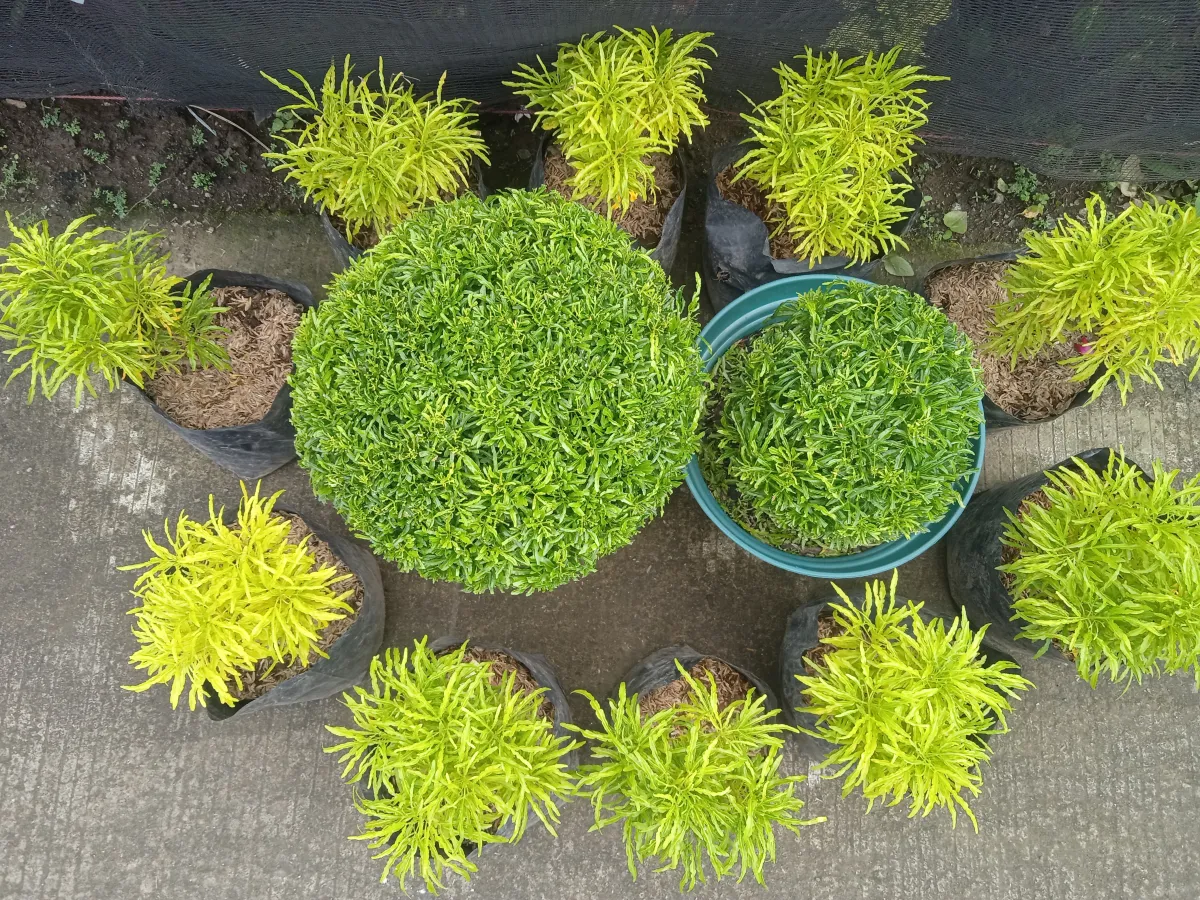
The Golden Papua plant is a tropical ornamental plant name encountered in gardening and plant-trade contexts. Published plant inventories and horticultural listings have associated the name Golden Papua with Polyscias fruticosa, a member of the Araliaceae family. However, “Golden Papua” is a common or commercial name rather than a formally standardized botanical name, so the name should not be used alone to confirm a plant’s species. (pitambari.com)
This distinction is especially important when researching the golden papua plant scientific name. Common names can change between countries, communities, nurseries, and languages. In some cases, the same common name is used for several unrelated plants, while a single species can have numerous common names. Kew notes that this variability is one of the main reasons scientific names are preferred when precise plant identification is required. (kew.org)
Understanding the Common Name “Golden Papua Plant”
Plant common names usually develop through everyday use rather than formal taxonomic rules. They may describe a plant’s appearance, place of cultivation, local tradition, or commercial identity. As a result, words such as “golden” or “Papua” in a horticultural name do not automatically establish the plant’s botanical classification or geographic origin.
For Golden Papua, available records provide evidence that the name has been applied to Polyscias fruticosa. At the same time, plant marketplaces also use “Papua” for other Polyscias plants, including Polyscias guilfoylei. This illustrates why identification based only on a nursery label or local name can be uncertain. (shopee.ph)
Traditional and regional names still have considerable cultural value. They can reveal how communities recognize, distinguish, and interact with plants. In ethnobotanical study, these names may provide useful information about local plant knowledge. Botanical science complements that knowledge by connecting a locally recognized plant with a standardized taxonomic identity.
Why Scientific Names Matter in Plant Identification
Scientific names create a more consistent way to identify plants across languages and regions. Instead of relying on a name that may change from one community to another, botanists can refer to a recognized species using the same scientific designation.
Accurate scientific naming is particularly useful for:
- Botanical research, because researchers need to know whether they are studying the same species.
- Plant conservation, where identifying individual species is essential for documenting plant diversity and distribution.
- Herbarium collections, which preserve reference specimens used for comparison and identification.
- International communication, allowing botanists and plant enthusiasts from different countries to discuss a species more precisely.
Scientific naming is not completely static. Taxonomists sometimes revise names when new evidence changes their understanding of relationships among plants. Authoritative databases therefore maintain accepted names alongside older synonyms. Kew’s World Checklist of Vascular Plants, for example, records accepted plant names and more than one million synonyms so researchers can connect different names referring to the same taxa. (kew.org)
For this reason, determining the scientific name of Golden Papua plant requires more than translating its common name into Latin. The identification should be supported by botanical references and, where possible, by observable characteristics of the actual plant.
Golden Papua Plant Scientific Name and Classification
Identifying the golden papua plant scientific name requires some care because “Golden Papua” is not a standardized scientific designation. Available horticultural usage associates the name with Polyscias fruticosa, but common or commercial plant names can vary between sellers and regions. For that reason, Polyscias fruticosa is best understood here as the botanical identification associated with the Golden Papua name rather than assuming that every plant carrying this label is automatically the same species.
Kew Science currently recognizes Polyscias fruticosa (L.) Harms as an accepted species. It belongs to the family Araliaceae and the order Apiales. Kew also records New Guinea among the areas associated with its native or cultigen range and describes the species as a shrub or tree of wet tropical environments. (powo.science.kew.org)
Botanical Name Explanation
The botanical classification associated with Golden Papua can be summarized as follows:
| Taxonomic Rank | Classification |
| Kingdom | Plantae |
| Division/Phylum | Streptophyta |
| Class | Equisetopsida |
| Subclass | Magnoliidae |
| Order | Apiales |
| Family | Araliaceae |
| Genus | Polyscias |
| Species | Polyscias fruticosa |
This hierarchy moves from broad groups of plants toward the individual species. Classification systems can differ slightly in how intermediate ranks such as division, phylum, class, or subclass are presented, but Kew places Polyscias fruticosa within Plantae, Streptophyta, Apiales, Araliaceae, and Polyscias. (powo.science.kew.org)
The scientific name follows the binomial naming system used in modern botanical nomenclature. A binomial contains two principal parts: the genus name and the specific epithet. In Polyscias fruticosa, Polyscias is the genus, while fruticosa is the specific epithet. Together, they identify the species.
This two-part system became standardized through the work of Swedish botanist Carl Linnaeus in the eighteenth century. His Species Plantarum, published in 1753, became a major starting point for modern botanical nomenclature. Today, scientific plant names are governed by internationally agreed rules, allowing botanists in different regions to communicate using a shared naming framework. (naturalhistory2.si.edu)
The name itself also carries descriptive meaning. The genus Polyscias refers to the plant’s abundant or “many-shaded” foliage, while the species epithet fruticosa refers to its shrub-like growth habit. (nparks.gov.sg)
The authorship written after the scientific name—(L.) Harms—provides additional taxonomic history. The species was originally described under another genus, while Hermann Harms later published the combination Polyscias fruticosa in 1894. The International Plant Names Index records the earlier name Panax fruticosus L. as its basionym, or original name on which the later combination was based. (ipni.org)
Plant Family and Related Species
Polyscias fruticosa belongs to Araliaceae, the botanical family that also contains other species of Polyscias. Members of this family are distributed widely across tropical and other regions and include plants with a variety of shrub and tree forms.
Within the genus, Polyscias fruticosa can be compared with species such as Polyscias guilfoylei, another tropical ornamental plant that may appear under similar regional or commercial naming practices. Their shared genus indicates a botanical relationship, but they remain separate species and should not be treated as interchangeable names.
This is especially relevant when investigating the golden papua plant scientific name. Similar foliage, shared genus names, and inconsistent nursery labels can make visual or name-based identification unreliable. A scientific name becomes most useful when it is supported by characteristics such as leaf arrangement, growth habit, flowers, fruits, and, when necessary, comparison with authenticated botanical specimens.
The distinction also demonstrates why plant taxonomy extends beyond naming alone. Classification places a species within a network of botanical relationships, helping researchers compare related plants and document the diversity found across tropical regions, including New Guinea.
Physical Characteristics of the Golden Papua Plant
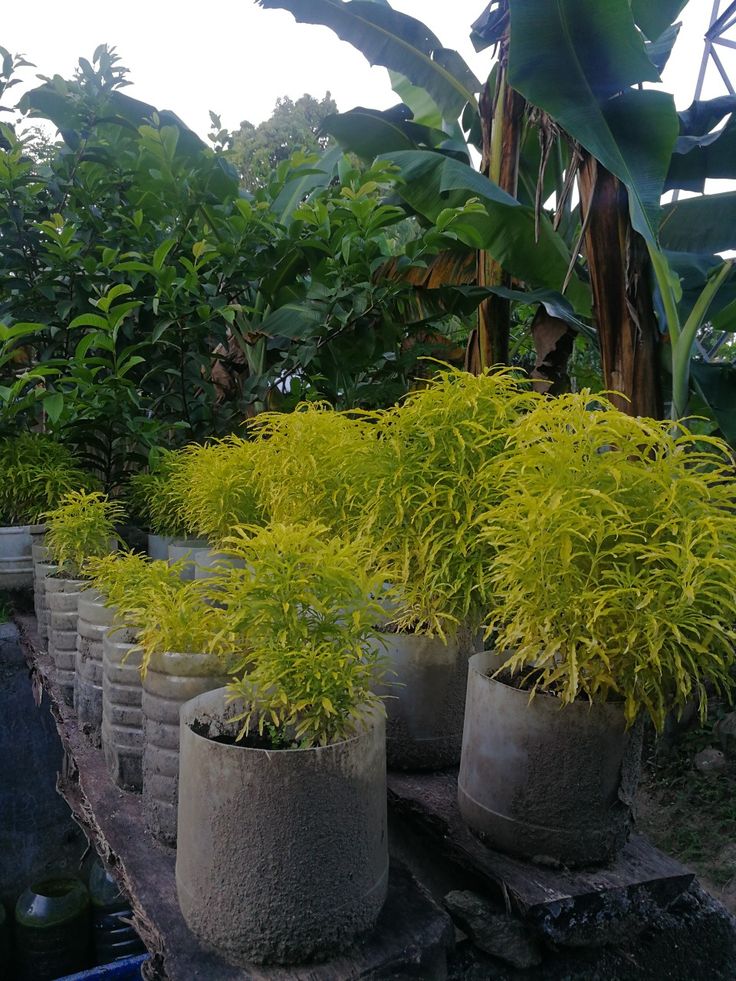
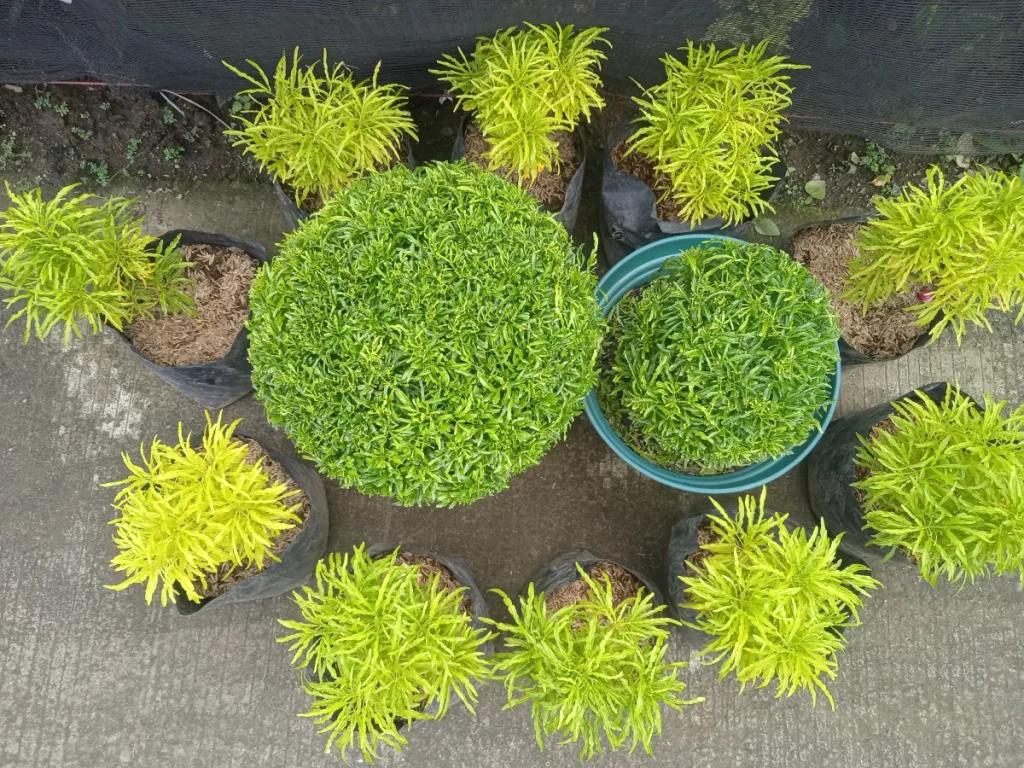
When the Golden Papua name refers to Polyscias fruticosa, its physical features are especially useful for botanical identification. The species grows as an evergreen shrub or small tree and is particularly recognizable for its finely divided foliage. Because commercial plant names can vary, these characteristics should be considered alongside the scientific name rather than relying on the “Golden Papua” label alone.
Leaf Characteristics
The leaves of Polyscias fruticosa are among its most distinctive features. They are compound and usually divided several times, creating a dense, finely textured appearance. Botanical descriptions classify them as three- to five-pinnate, meaning that the main leaf is repeatedly divided into progressively smaller sections. (nparks.gov.sg)
Individual leaflets are generally narrow or lance-shaped, with pointed tips and noticeably toothed or deeply cut margins. The foliage is typically green and may have a glossy surface. Flora of China also records variation in the leaves, including occasional variegation. (nparks.gov.sg)
This elaborate leaf structure helps distinguish P. fruticosa from tropical plants with broad, simple leaves. However, leaf appearance can vary according to cultivar, plant age, and growing conditions, so foliage alone is not always enough for definitive identification.
Flowers and Fruits
The flowers are relatively small and less visually prominent than the foliage. They range from pale yellow or cream to white and occur in branching flower clusters known as panicles of umbels. These clusters usually develop toward the ends of the plant’s branches. (nparks.gov.sg)
Polyscias fruticosa is described botanically as andromonoecious, meaning that male flowers and bisexual flowers can occur on the same individual plant. This reproductive feature is useful to botanists examining the species in detail. (efloras.org)
After flowering, the plant can produce small fleshy fruits known as drupes. They are roughly rounded to oval, somewhat flattened from the sides, and only a few millimeters across. NParks records mature fruits as white. (nparks.gov.sg)
Growth Habit
Polyscias fruticosa has a shrub-like or small-tree growth habit. Botanical references report that mature plants can reach approximately 3–5 meters in height, although actual size depends on environmental conditions and cultivation. (nparks.gov.sg)
The plant is evergreen and adapted to tropical or subtropical conditions. It can grow in sunny to partially shaded environments and is associated with moist but well-drained growing conditions. Its branching form and abundant compound leaves often create a dense, leafy appearance. (nparks.gov.sg)
These features provide practical clues when examining a plant associated with the golden papua plant scientific name. Leaf structure, flowers, fruits, and overall growth habit can all contribute to identification, especially when they are compared with reliable botanical descriptions rather than common names alone.
Natural Habitat of the Golden Papua Plant
When the Golden Papua plant is identified as Polyscias fruticosa, its distribution fits within a broad wet-tropical setting. Kew Science describes the species as a shrub or tree that grows primarily in the wet tropical biome and records New Guinea as part of its accepted geographical range. (powo.science.kew.org)
Understanding this habitat is useful when examining the golden papua plant scientific name, because geographic distribution can provide supporting evidence for botanical identification. Location alone, however, cannot confirm a species. New Guinea contains thousands of plant species occupying environments from coastal forests to high mountain ecosystems.
Papua Tropical Ecosystem
New Guinea, which includes Indonesian Papua in the west and Papua New Guinea in the east, has exceptionally varied tropical landscapes. Kew describes the island as supporting a mosaic of mangroves, lowland rainforest, montane forest, and high-elevation grassland. This environmental variety contributes to its extraordinary plant diversity. (kew.org)
Much of the island experiences a humid tropical climate. According to Kew, many parts of New Guinea receive approximately 2,500–4,500 millimeters of rainfall annually, although rainfall patterns vary considerably and some southern lowland areas have a more noticeable dry season. (kew.org)
Polyscias fruticosa is specifically categorized as a wet-tropical plant rather than being tied by current botanical databases to every ecosystem found across Papua. In cultivation, NParks describes it as tolerating full sun to semi-shade, moderate watering, and moist but well-drained soils. These requirements are consistent with a plant adapted to warm environments where moisture is regularly available without permanently saturated root conditions. (nparks.gov.sg)
Soil conditions across New Guinea itself are highly variable because of differences in geology, elevation, rainfall, and vegetation. It would therefore be misleading to describe a single “Papua soil type” as the natural substrate of Golden Papua. For botanical identification, verified distribution and documented habitat are more reliable than assuming the plant requires one particular regional soil.
Distribution Area
Kew’s Plants of the World Online records Polyscias fruticosa across a geographical range extending from Central Malesia toward the southwestern Pacific. Its listed distribution includes:
- New Guinea
- the Bismarck Archipelago
- Maluku
- Sulawesi
- Queensland
- New Caledonia
- Vanuatu
Kew describes the species’ native status more precisely as that of a cultigen, reflecting a plant whose long history of cultivation can make its original wild distribution difficult to reconstruct with certainty. (powo.science.kew.org)
This detail is important. The presence of P. fruticosa in New Guinea supports its association with Papuan tropical flora, but it does not mean the species occurs exclusively in Papua or is necessarily endemic to the island.
The genus Polyscias has a much broader tropical distribution, extending from tropical Africa through parts of Asia and into the Pacific. Kew’s Trees of New Guinea treatment reports at least 25 Polyscias species in New Guinea and notes that members of the genus occur in both primary and secondary habitats across a wide elevation range. (powo.science.kew.org)
The wider botanical setting is especially significant because New Guinea is considered the world’s most floristically diverse island. An authoritative checklist reported 13,634 plant species, with approximately 68% occurring nowhere else. Its flora includes particularly rich groups of orchids, trees, and tree ferns alongside many other tropical plant lineages. (kew.org)
Against this background, the plant associated with the golden papua plant scientific name is best viewed as one component of a much larger and highly diverse tropical flora. Its documented connection with New Guinea is botanically meaningful, but careful identification remains necessary because the region contains numerous related and visually similar plant species.
Role of Golden Papua Plant in Biodiversity
The plant associated with the golden papua plant scientific name, Polyscias fruticosa, belongs to the broader tropical vegetation of New Guinea and neighboring regions. Kew records it as a shrub or tree of the wet tropical biome, while NParks lists New Guinea among its distribution areas. These records place the species within a region noted for exceptionally rich plant diversity. (powo.science.kew.org)
Its ecological importance is best understood as part of this wider plant community. There is limited published information describing specific wildlife relationships or specialized ecosystem functions for P. fruticosa, so claims about particular pollinators, seed dispersers, or ecological services should be made cautiously.
Ecological Importance
Every plant species occupies a place within the vegetation in which it grows. As a perennial shrub or small tree, Polyscias fruticosa contributes to the structural diversity of tropical plant communities. Its foliage, woody growth, flowers, and fruits form part of the biological material produced within those environments.
However, the ecological story of the Golden Papua plant should not be separated from the much larger diversity surrounding it. New Guinea contains 13,634 documented plant species from 1,742 genera and 264 families, according to the first comprehensive checklist of the island’s vascular flora. About 68 percent of those species are endemic, meaning they occur naturally nowhere else. (kew.org)
The island also supports very different vegetation types, including lowland rainforest, mangroves, montane forests, and high-elevation grasslands. Such habitat diversity allows thousands of plant species with different growth forms and ecological requirements to coexist across the region. (kew.org)
In this context, P. fruticosa represents one element of a much broader tropical flora rather than a species that defines Papua’s biodiversity by itself. This perspective is important because biodiversity refers not only to individual plants but also to the variety of species, habitats, and biological relationships found across an ecosystem.
Conservation Importance
Conserving Papua’s native vegetation requires accurate plant identification. Scientists need reliable species names and distribution records to determine which plants occur in particular areas, recognize narrowly distributed species, and monitor changes in vegetation over time.
For Polyscias fruticosa specifically, Kew currently includes a 2024 model-based extinction-risk prediction that categorizes the species as “not threatened” with confident predictive support. This is a modeled prediction rather than the same thing as a formal conservation assessment, so it should not be interpreted as proof that every population or habitat is secure. (powo.science.kew.org)
The broader New Guinea flora presents a more complex conservation picture. Its high level of endemism means habitat change can have particularly significant consequences: when a species exists only within a limited part of New Guinea, loss of that habitat may affect its entire global population. Kew’s botanical conservation work in the region therefore emphasizes identifying areas containing threatened plants, locally endemic species, unusual vegetation, and high concentrations of plant diversity. (kew.org)
Accurate taxonomy supports this work. Distinguishing Polyscias fruticosa from other Polyscias species—or from an unrelated plant carrying a similar commercial name—helps prevent confusion in botanical records. It also demonstrates why researching a common name such as Golden Papua should eventually lead back to verified specimens, scientific names, and documented distributions.
Protecting Papua’s botanical diversity ultimately involves more than conserving a single recognizable plant. It means preserving the varied forests and other habitats that support thousands of plant species, including many found nowhere else on Earth.
Traditional and Cultural Importance of Papua Plants
Papua’s plants are important not only because of their biological diversity but also because of the knowledge, languages, food traditions, crafts, and cultural practices connected with them. For generations, local communities have developed their own ways of recognizing and distinguishing plants according to characteristics such as appearance, habitat, growth form, and practical significance.
The Golden Papua plant can be viewed within this broader relationship between people and tropical vegetation. Although there is currently limited documentation linking Polyscias fruticosa itself to a specific Papuan cultural tradition, the wider flora of New Guinea provides many well-documented examples of how botanical diversity and community knowledge develop together.
Indigenous Knowledge
Ethnobotany studies relationships between people and plants. Rather than focusing only on scientific taxonomy, ethnobotanical research may examine local plant names, traditional classification systems, cultivation practices, foods, materials, crafts, and cultural uses.
Research in Papua shows why this local knowledge matters. A study involving Papuan communities in areas including Arfak-Manokwari, Serui, Cyclops-Jayapura, and Jayawijaya found that communities developed detailed systems for recognizing and classifying varieties of red fruit pandan. Characteristics such as fruit size, seed size, and fruit color were used to distinguish different forms. Researchers also observed similarities between one of these local classification patterns and formal botanical nomenclature. (ejournal.uncen.ac.id)
This demonstrates an important point: traditional names and scientific names do not have to compete with one another. They represent different systems of knowledge. A local name may contain information about how a community recognizes a plant, while its scientific name connects that plant with internationally standardized taxonomy.
Documentation can therefore help preserve both kinds of information. Ideally, ethnobotanical research also respects the communities from which the knowledge originates, including appropriate recognition of local expertise and sensitivity toward knowledge that communities may not wish to share publicly.
Plant knowledge can also change between generations. Research among the Kanume community around Wasur National Park in Papua, for example, documented differences in familiarity with a locally important plant among different age groups. Such findings illustrate why recording plant names, classifications, and cultural relationships can become part of preserving intangible botanical heritage. (journal.ipb.ac.id)
Papua Botanical Heritage
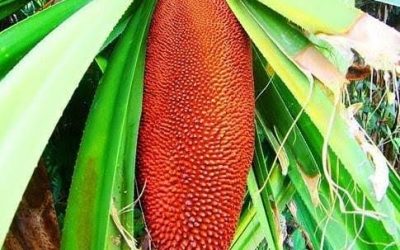
One of the clearest examples of Papua’s relationship with plants is Buah Merah, botanically known as Pandanus conoideus Lam. It provides a useful comparison with the Golden Papua plant because its botanical identity and cultural relationship with New Guinea are much better documented.
Kew Science recognizes Pandanus conoideus as an accepted species in the Pandanaceae family. Its classification includes:
- Family: Pandanaceae
- Genus: Pandanus
- Species: Pandanus conoideus
The species grows primarily in the wet tropical biome, and its documented native distribution includes New Guinea as well as Maluku, the Bismarck Archipelago, the Solomon Islands, Vanuatu, and several other western Pacific areas. (powo.science.kew.org)
In Papua, Buah Merah is particularly notable as a traditional food plant. Ethnobotanical research among the Maybrat community in West Papua records its long-standing cultivation and use as food, including traditional preparation together with other staple ingredients. The plant may also be cultivated for household consumption or exchange, giving it a social and economic role as well as a botanical one. (repository.ipb.ac.id)
Buah Merah is only one example within the much larger Pandanus group. Pandanus species are widespread across New Guinea, and different species have been traditionally used for food, weaving materials, coverings, containers, fibers, and other practical purposes. This diversity demonstrates how plants belonging to the same botanical family can develop very different relationships with communities and environments. (ejournal.uncen.ac.id)
Papua’s botanical heritage extends far beyond pandan plants. New Guinea contains extraordinary diversity among orchids, palms, rainforest trees, ferns, and many other plant groups. Kew notes that more plant species have been documented on New Guinea than on any other island, yet significant parts of its flora remain comparatively poorly studied. (kew.org)
Preserving this heritage therefore involves more than recording scientific species names. It also means documenting how communities recognize plants, maintaining herbarium and field records, studying local naming systems, and respecting knowledge passed between generations. Together, scientific taxonomy and indigenous botanical knowledge can provide a richer picture of Papua’s remarkable plant diversity.
How Scientists Identify Tropical Plants
Identifying tropical plants can be challenging because species-rich environments often contain many plants with similar leaves, growth forms, or common names. Botanists therefore do not normally rely on a single characteristic. Instead, they combine observations of plant structure with taxonomic literature, preserved reference specimens, geographic information, and, when useful, molecular techniques.
This process is particularly relevant when investigating a plant known by a commercial or regional name such as Golden Papua. Since common names are not standardized, confirming the golden papua plant scientific name requires comparison with reliable botanical evidence.
Botanical Identification Methods
One of the oldest and still most important identification methods is morphological observation. Morphology refers to the visible structures and characteristics of a plant.
Botanists may examine features such as:
- Leaf arrangement, shape, margins, and venation
- Stem and branching structure
- Flowers and their individual parts
- Fruit shape and structure
- Seeds
- Growth habit
- Surface features such as hairs, spines, or texture
Flowers and fruits are often particularly informative because reproductive structures can contain characteristics that distinguish species whose leaves otherwise look similar. Kew notes that morphological traits remain central to tropical plant identification even as newer molecular techniques become available. (kew.org)
The next stage may involve taxonomic comparison. Botanists consult identification keys, scientific descriptions, floras, monographs, and databases to compare an unknown specimen with previously described species. Geographic information can also help narrow the possibilities because researchers can examine which species are already documented in a particular region.
A major resource in this work is the herbarium. A herbarium is an organized collection of preserved plant specimens that researchers can examine as botanical references. Kew’s Herbarium, for example, contains around seven million vascular plant specimens arranged for scientific study. These collections preserve information about plant appearance, collection location, flowering or fruiting periods, and variation within and between species. (kew.org)
Especially important are type specimens. These specimens provide the reference point connected with the formal scientific name of a plant. Comparing newly collected material with authenticated specimens can help researchers determine whether they are examining a known species or potentially something different.
Modern researchers can also use DNA-based identification. DNA barcoding examines selected regions of genetic material and compares their sequences with reference data from identified plants. The Smithsonian describes several commonly used regions in plant barcoding, including rbcL, matK, trnH-psbA, and ITS. (naturalhistory.si.edu)
DNA methods are especially useful when visible characteristics are incomplete. A sample may contain only a leaf, fragment, seedling, or other material without the flowers and fruits normally needed for confident morphological identification. Researchers can extract DNA, sequence selected regions, and compare those sequences with reference material. (kew.org)
However, DNA analysis does not make traditional taxonomy unnecessary. Its usefulness depends partly on the quality of reference sequences and the taxonomic identification of specimens already represented in databases. In practice, morphology, herbarium research, geographic information, and molecular evidence can complement one another.
For a plant carrying the Golden Papua name, a careful identification process might therefore begin with its leaf and growth characteristics, continue with comparison against descriptions and herbarium material, and use molecular evidence where greater certainty is needed.
Importance of Accurate Plant Classification
Accurate classification gives researchers a common framework for studying plants. Once a species has been reliably identified, information about its distribution, relationships, ecology, and conservation status can be connected to the correct botanical entity.
This is particularly important in highly diverse tropical regions. If two similar species are mistakenly recorded as one, information about where they occur can become misleading. Likewise, applying different common names to the same species can make botanical records appear more fragmented than they actually are.
Reliable classification supports several areas of plant science. It allows researchers to compare species across regions, organize herbarium collections, document biodiversity, and recognize plants that may have restricted distributions. Kew describes herbarium specimens as an evidence base supporting research in areas including conservation, ecology, and sustainable development. (kew.org)
Taxonomy can also change as scientific knowledge develops. Researchers may discover that plants previously considered one species actually represent several distinct species, or that separately named plants belong to the same taxon. Genetic evidence can also reveal relationships that were difficult to recognize from appearance alone.
For this reason, identifying the golden papua plant scientific name should be understood as a process rather than simply matching a common name with a Latin label. Reliable botanical identification brings together observable characteristics, established taxonomy, documented specimens, geographic records, and, when appropriate, DNA evidence.
This careful approach is especially valuable in New Guinea, where exceptional plant diversity means that visually similar plants can represent very different species. Accurate classification helps ensure that research, conservation records, and discussions of Papua’s botanical heritage are based on clearly identified plants.
Frequently Asked Questions About Golden Papua Plant Scientific Name
What is the golden papua plant scientific name?
The golden papua plant scientific name is most commonly associated in available horticultural references with Polyscias fruticosa (L.) Harms. Kew Science recognizes Polyscias fruticosa as an accepted species in the genus Polyscias and family Araliaceae. (powo.science.kew.org)
However, “Golden Papua” is not a standardized botanical name. It is better understood as a common or commercial plant name, and such names may be used differently by nurseries or communities. For an individual specimen, characteristics such as its leaves, flowers, fruits, and growth habit should be checked before confirming that it is P. fruticosa.
Is the Golden Papua Plant native to Papua?
Polyscias fruticosa has a documented connection with New Guinea. Kew lists New Guinea within its distribution, together with areas such as Maluku, Sulawesi, Queensland, the Bismarck Archipelago, New Caledonia, and Vanuatu. (powo.science.kew.org)
There is an important qualification, however. Kew describes its native range as a cultigen from Central Malesia to the southwestern Pacific. A cultigen is a plant whose history has been strongly influenced by cultivation, which can make its original natural distribution difficult to determine precisely. (powo.science.kew.org)
It is therefore reasonable to describe P. fruticosa as part of the documented New Guinea plant landscape, but it would be too strong to describe it as an exclusively Papuan or New Guinea-endemic species.
What family does the Golden Papua Plant belong to?
When Golden Papua refers to Polyscias fruticosa, the plant belongs to the Araliaceae family and the genus Polyscias. Its broader classification places it within the order Apiales. (powo.science.kew.org)
Araliaceae contains numerous tropical and subtropical shrubs, trees, and other plant forms. Knowing the family helps botanists compare a plant with related species and understand its position within a broader taxonomic group.
The family name alone should not be used to identify an unknown Golden Papua specimen, however. Several related species can share general characteristics, making species-level examination necessary.
Why are scientific names important for plants?
Scientific names provide a standardized system for referring to plants across countries, languages, and local naming traditions. A common name may apply to several plants, while a single species may have many different common names.
Using a scientific name helps connect information about a plant’s:
- Taxonomy and related species
- Documented geographic distribution
- Botanical characteristics
- Herbarium specimens
- Scientific literature
- Conservation records
For example, searching only for “Golden Papua” may produce plants sold under different commercial labels. Searching for Polyscias fruticosa instead allows the reader to consult taxonomic databases that recognize a specific species.
This is ultimately why establishing the golden papua plant scientific name matters. Scientific nomenclature provides a clearer reference point, while common and traditional names remain valuable for understanding how plants are recognized within horticultural and cultural settings.
Conclusion
Understanding the golden papua plant scientific name shows why botanical identification should go beyond common or commercial plant labels. Available horticultural usage associates Golden Papua with Polyscias fruticosa (L.) Harms, an accepted species in the Araliaceae family. Kew Science records the species as a shrub or tree of wet tropical environments, with New Guinea included within its documented distribution. (powo.science.kew.org)
At the same time, “Golden Papua” is not a universally standardized botanical name. This makes characteristics such as leaf structure, flowers, fruits, growth habit, geographic records, and authenticated botanical references important when confirming the identity of an individual plant.
The subject also highlights the much broader importance of Papua and New Guinea as centers of tropical Papua plant diversity. Scientific taxonomy provides a shared system for distinguishing species, while traditional names and indigenous knowledge offer valuable cultural perspectives on how plants are recognized and understood within local communities.
Accurate identification ultimately supports botanical research, biodiversity documentation, conservation, and responsible study of tropical plants. Rather than treating a common name as definitive, examining the golden papua plant scientific name through taxonomy and reliable botanical evidence provides a clearer understanding of the plant and its place within the remarkable flora of New Guinea.
If you’re looking for Papua herbal products, start with a trusted source. Experience authentic, high-quality red fruit products at Cahya Red Fruit Papua New Guinea! We offer a wide variety of items besides Red Fruit Papua New Guinea — including Papua ant nest and Papua kebar grass. Check out our herbal wellness product in our website!