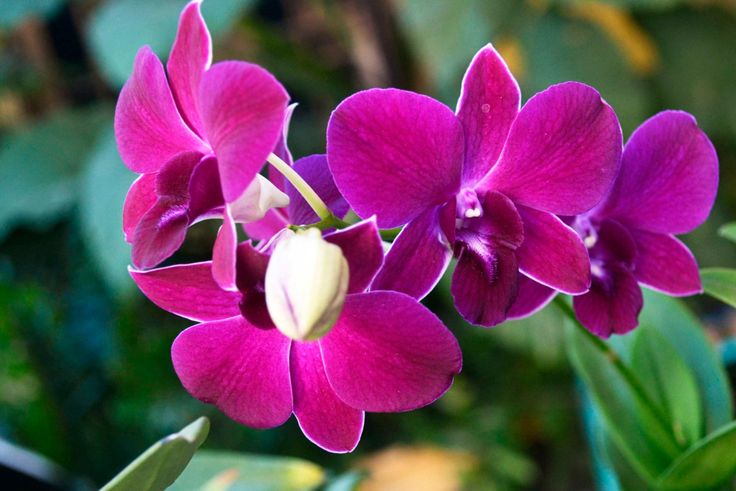
The orchids of Papua New Guinea form one of the most diverse orchid floras on Earth, with native orchids growing from coastal forests and warm tropical lowlands to mountain rainforests, cloud forests, mossy ridges, and high elevation grasslands. Across the wider island of New Guinea, Orchidaceae is the richest recorded plant family, and expert-reviewed botanical work has documented thousands of orchid species, with Bulbophyllum and Dendrobium among the largest genera.
Papua New Guinea occupies the eastern part of New Guinea island, and its orchid diversity reflects a landscape of steep mountains, wet forests, offshore islands, river valleys, limestone areas, and many local microhabitats. Some species are large and colourful, while others are tiny, hidden in moss, or visible only when flowering. Many are epiphytic orchids that grow on tree trunks or branches, while others are terrestrial, lithophytic, leafless, or known more for their foliage than their flowers.
Scientific knowledge is still incomplete. New Guinea orchid specialists note that many species remain poorly known, some herbarium specimens still need study, and new species or new distribution records continue to appear. This guide introduces Papua New Guinea orchids through their geography, growth forms, habitats, major genera, representative species, ecology, identification, conservation, and responsible observation.
Why Papua New Guinea Is an Orchid Diversity Hotspot
Papua New Guinea and the Island of New Guinea
Papua New Guinea is the independent country that occupies the eastern half of New Guinea island. The western half belongs to Indonesia and is often called Indonesian New Guinea, or referred to through provincial names such as Papua, West Papua, Central Papua, Highland Papua, South Papua, and Southwest Papua.
This distinction matters because many botanical books, herbarium records, orchid databases, and scientific papers use the term “New Guinea” for the entire island, not only for Papua New Guinea. A species recorded from New Guinea may occur in Papua New Guinea, Indonesian New Guinea, or both. Some records may also include nearby islands such as New Britain, New Ireland, Manus, Bougainville, the Bismarck Archipelago, the Louisiade Archipelago, or island groups toward the Solomon Islands and northern Australia.
For this reason, country-specific and island-wide figures should not be treated as the same thing. When reading about Papua New Guinea orchids, it is important to ask whether the source is discussing Papua New Guinea as a country, the whole island of New Guinea, or a wider biogeographic region. The expert-verified checklist by Cámara-Leret and colleagues, for example, discusses the flora of New Guinea and surrounding islands, not only Papua New Guinea as a political unit.
Editorial note: every species number, distribution statement, and endemism claim should clearly state whether it refers to Papua New Guinea, Indonesian New Guinea, the entire island of New Guinea, or nearby island regions.
How Many Orchid Species Grow in Papua New Guinea
There is no single permanent number for the orchids of Papua New Guinea, because orchid taxonomy continues to change and some areas remain poorly surveyed. The safest wording is to use terms such as “recorded,” “estimated,” “currently accepted,” or “approximately.”
For the wider New Guinea region, an expert-reviewed inventory published in 2020 recorded 2,856 orchid species in Orchidaceae, making orchids the most species-rich plant family in that checklist. The same study reported that Orchidaceae accounts for about 20% of the recorded vascular flora of Papua New Guinea and about 17% of the recorded vascular flora of Indonesian New Guinea.
Specialist orchid resources also suggest that the final total for New Guinea orchids may be higher than currently documented. The Orchids of New Guinea project notes that it is still difficult to give an exact estimate because new species continue to be described and additional specimens are still being studied; it gives a cautious island-wide estimate of roughly 3,500 to 4,000 species.
Papua New Guinea contains a major share of this orchid biodiversity, but not every orchid known from New Guinea has been recorded inside the country. Some species occur mainly in Indonesian New Guinea, some are known from both sides of the island, and others are found on offshore islands or across a wider Pacific region.
Why Orchid Endemism Is So High
New Guinea has one of the richest island floras known to science. The 2020 expert-verified checklist recorded 13,634 vascular plant species for New Guinea and surrounding islands, with about 68% considered endemic to that region. Orchids are an important part of this wider pattern of plant richness.
Papua New Guinea’s orchid endemism is shaped by geography. The country includes coastal plains, large river systems, isolated valleys, limestone areas, volcanic islands, wet lowland forests, and high mountain ranges such as the Central Range. As elevation changes, temperature, rainfall, cloud cover, soil conditions, and forest structure also change. These differences create many separate habitats where orchid populations may adapt over long periods.
Mountain terrain can isolate orchid populations on ridges, valleys, islands, or single forest blocks. Over time, this isolation may lead to local species that occur only in a narrow area. Some orchids are known from one mountain range, one island, or a small number of collection sites. Others are endemic to the wider island of New Guinea rather than to Papua New Guinea alone.
Native versus endemic: a native orchid grows naturally in a place, but it may also grow naturally elsewhere. An endemic orchid is restricted to a defined region. For example, a species may be native to Papua New Guinea and northern Australia, endemic to New Guinea island, or known only from Papua New Guinea. These categories should not be mixed.
Why Many Species Remain Poorly Known
Many Papua New Guinea orchids remain difficult to study because the landscapes where they grow are often remote, steep, wet, and hard to access. Some mountain forests are far from roads, and botanical collecting has historically been uneven. Areas near towns, mission stations, old collecting routes, research sites, and accessible roads may appear better represented simply because more botanists visited them.
Orchids also create practical challenges for identification. Many species flower only briefly or seasonally. Outside flowering periods, two different orchids may look very similar, especially when only leaves, roots, canes, or pseudobulbs are visible. Some species have tiny flowers that require close examination, while others grow high in the forest canopy and are rarely seen from the ground.
Herbarium specimens can also remain unidentified for years, especially when they lack flowers, complete locality notes, or clear elevation data. Historical labels may use old place names, broad regional descriptions, or incomplete habitat details. In addition, there are relatively few orchid taxonomists compared with the size and complexity of the New Guinea orchid flora.
This is why scientific knowledge of Papua New Guinea orchids should be treated as active and developing. The known flora is already exceptional, but it is not finished.
What Makes a Plant an Orchid
Basic Orchid Flower Structure
Orchids belong to the plant family Orchidaceae, one of the largest flowering plant families known to science. Kew describes orchids as a highly diverse family, with around 28,000 species grouped into roughly 850 genera worldwide. In Papua New Guinea, this global diversity becomes especially visible because orchids appear in many forms, from large-flowered forest epiphytes to tiny plants hidden on mossy bark.
A typical orchid flower has three sepals and three petals. In many orchids, one of the petals is modified into a special structure called the labellum, or orchid lip. This lip often helps guide pollinators toward the centre of the flower. Orchid flowers also have a column, where the male and female reproductive parts are joined into one structure. Instead of loose pollen grains, orchid pollen is commonly grouped into compact packets called pollinia, which can attach to visiting animals during pollination.
Many orchid flowers also show bilateral symmetry, meaning the flower has a left and right side that mirror each other. This shape can make the flower look as if it has a front, back, top, and bottom. For identification, the labellum, column, sepals, petals, and pollinia are often more useful than colour alone.
Suggested original diagram: create a simple orchid anatomy diagram showing the dorsal sepal, lateral sepals, petals, labellum, column, and pollinia. The diagram should be educational rather than decorative, with clean labels and no claim that every orchid flower looks exactly the same.
Orchid Roots, Stems, and Pseudobulbs
Papua New Guinea orchids can also be recognized by their roots, stems, and storage structures. Many epiphytic orchids produce aerial roots that attach to bark, moss, or other surfaces. These roots are not designed to feed from the host tree. Instead, they help the plant stay anchored while interacting with moisture, air, dust, and small amounts of organic material around the plant.
Many orchid roots have a spongy outer layer called velamen. This layer helps the root surface interact with water in the surrounding environment. In wet forests, where rain, mist, and humidity can change throughout the day, roots are an important part of how orchids survive on trunks, branches, rocks, or exposed forest surfaces.
Some orchids also have pseudobulbs, which are swollen stem structures that store water and nutrients. In many Bulbophyllum species, separate pseudobulbs are connected by a creeping rhizome. This gives the plant a chain-like or spreading appearance along bark or rock. In many Dendrobium species, the stems may look more like upright or hanging canes. These cane-shaped stems can carry leaves, flower clusters, or older leaf scars that help with identification.
Growth form is useful because many orchids are not in flower when people see them. A botanist, photographer, or careful nature observer may first notice whether the plant has canes, pseudobulbs, a creeping rhizome, thick aerial roots, or a compact tufted habit. These features do not always confirm the species, but they can help narrow down the genus.
Epiphytic Orchids Are Not Parasites
Many Papua New Guinea orchids are epiphytes. An epiphytic orchid grows on another plant, usually a tree, for physical support. The tree that supports an epiphyte is often called a host tree or phorophyte. This does not mean the orchid is feeding directly from the living tissue of the tree.
In general, epiphytic orchids obtain moisture and nutrients from rain, mist, water running over bark, dust, fallen leaves, decomposing organic matter, and debris trapped around their roots. Educational orchid biology sources describe epiphytes as plants that are harmlessly attached to another plant, with adult epiphytic orchids relying on rainfall and runoff for nutrient uptake.
This distinction is important for Papua New Guinea orchids because forest trees are not simply “supports.” Bark texture, branch angle, moss cover, shade, humidity, and canopy position all influence where an orchid seed may settle and whether the young plant can establish. A rough-barked tree in a misty montane forest may offer a very different orchid microhabitat from a smooth-barked tree in a bright coastal forest.
Orchid Seeds and Mycorrhizal Fungi
Orchid seeds are extremely small and dust-like. A mature seed capsule may release a very large number of tiny seeds, which are carried through the forest by wind. However, most orchid seeds have very limited stored food, so they cannot usually develop on their own in the way many larger seeds can.
In natural conditions, orchid germination normally depends on compatible mycorrhizal fungi. These fungi help the early orchid seedling obtain the resources it needs during its first stages of growth. Orchid pollination biology sources explain that orchid seeds lack endosperm, the nutritive tissue found in many seeds, and that orchid life cycles in natural habitats depend on suitable fungal associations.
This is one reason wild orchids should be understood as part of a whole habitat, not as isolated flowers. Moving a wild orchid from a forest does not recreate its bark surface, fungal partners, humidity, pollinators, shade, host tree, or surrounding microclimate. Conservation therefore requires more than protecting adult plants. It also means protecting the living conditions that allow new orchids to germinate, establish, flower, and reproduce naturally.

Major Orchid Growth Forms in Papua New Guinea
Epiphytic Orchids
Many native orchids in Papua New Guinea are epiphytic orchids. They grow on tree trunks, large branches, small canopy limbs, and sometimes fallen woody surfaces in humid forest environments. Epiphytic orchids are especially diverse in wet lowland rainforest, hill forest, montane forest, and cloud forest, where tree bark, moss, trapped leaf litter, and steady moisture create many small habitats above the ground.
Epiphytes may occur at different levels of the same forest. Some grow low on trunks where shade and humidity are high. Others grow on larger branches in the middle canopy. Some occupy brighter outer branches where light is stronger, air movement is greater, and drying can happen more quickly after rain. This vertical range helps explain why many orchids are difficult to observe from ground level.
Several important New Guinea orchid genera include many epiphytes, such as Dendrobium, Bulbophyllum, Oberonia, and Taeniophyllum. Some have showy flowers, but many are small and easily missed. In canopy habitats, a flowering orchid may be seen only when binoculars, a long camera lens, or a naturally fallen branch reveals it. Fallen branches can sometimes help botanists and photographers notice canopy species, but branches should not be cut, broken, or removed for observation.
Terrestrial Orchids
Terrestrial orchids grow from soil, forest litter, humus, grassland, or other ground-level substrates. In Papua New Guinea, terrestrial orchids can occur in lowland forest openings, shaded rainforest floors, mountain grasslands, mossy forest edges, and disturbed but still vegetated places. They remind us that not all orchids grow on trees.
Genera with terrestrial species include Spathoglottis, Habenaria, Calanthe, Goodyera, Anoectochilus, and related groups. Some terrestrial orchids have underground tubers, rhizomes, or storage organs that allow them to survive seasonal changes. Others may appear above ground mainly during the growing or flowering period, then become much harder to notice later in the year.
Forest floor orchids can be especially difficult to identify outside the flowering season. Leaves may blend into surrounding herbs, ferns, seedlings, and leaf litter. Some terrestrial orchids produce upright flower spikes or racemes that make them easier to see when in bloom. Others are small, greenish, or hidden under low vegetation. For careful observation, photographs of the whole plant, flowers, leaves, habitat, and ground surface are often more useful than one close-up image of a flower.
Lithophytic Orchids
Lithophytic orchids grow on rock surfaces rather than directly in soil or on trees. In Papua New Guinea, lithophytic orchids may occur on limestone cliffs, shaded boulders, rocky river edges, exposed ridges, or mossy rock faces where moisture and organic debris collect in cracks. Their roots may anchor into small pockets of moss, humus, weathered rock, or leaf fragments.
Some orchids are flexible in their growth form. A species may grow as an epiphyte in one habitat and as a lithophyte in another, depending on moisture, shade, elevation, and the surfaces available. This is why growth form should be described carefully. A plant seen on rock is not automatically a rock specialist, and a plant seen on a tree is not automatically restricted to trees.
Lithophytic habitats can be very localized. A limestone wall, karst outcrop, or shaded cliff may support orchids that are absent from nearby forest floor areas. Rock chemistry, drainage, exposure, and the amount of moss or organic matter can all influence which orchids establish there. Because these habitats may be small and sensitive, observation should be non-destructive.
Leafless and Jewel Orchids
Some orchids do not match the popular image of orchids as leafy plants with large colourful flowers. Leafless orchids are a good example. In genera such as Taeniophyllum, many species are nearly or completely leafless. Their flattened green roots perform much of the plant’s photosynthesis, spreading across bark like fine green straps or threads. Flowers are often small and short-lived, so these orchids can be overlooked even in areas where they are present.
Leafless orchids are useful for understanding orchid diversity because they show that orchids are defined by their botanical structure and life cycle, not by showy flowers alone. A person walking through a forest may pass several orchid species without recognizing them as orchids at all.
Jewel orchids are different. They are usually terrestrial forest floor orchids known for attractive patterned leaves rather than large flowers. These plants often grow in shaded, humid conditions where their leaf veins, colours, and textures stand out against dark leaf litter or moss. Jewel orchids should not be treated as one single genus; several genera can include plants with jewel-like foliage, including groups such as Goodyera and Anoectochilus.
For both leafless orchids and jewel orchids, responsible observation is important. Photograph root patterns, leaf patterns, flowers, and habitat without pulling the plant from bark or soil. These orchids may depend on very specific moisture, fungal, and microhabitat conditions that are not visible at first glance.
Orchid Habitats from the Coast to the Mountains
Papua New Guinea’s orchid diversity is closely tied to its landscape. The country includes coastal plains, river systems, swampy forests, limestone areas, offshore islands, hill country, high mountain ranges, and cool cloud forests. As elevation changes, so do temperature, rainfall, wind, light, forest height, moss cover, and humidity. These changes create many orchid habitats within a relatively compact geographic area.
A useful way to understand Papua New Guinea orchids is to imagine a broad habitat profile, beginning at the coast and rising toward the mountains. Some orchids are associated with warm lowlands. Others are more typical of hill forest, montane forest, moss forest, or high elevation grassland. Many species also depend on smaller microhabitats, such as a shaded tree trunk, a mossy branch, a limestone crack, a fallen log, or a humid ravine.
Mangroves, Beach Forests, and Coastal Lowlands
Coastal orchid habitats are shaped by warmth, strong light, seasonal exposure, sea winds, and salt-influenced environments. Orchids do not grow directly in seawater, but some may occur near coastal margins, beach forests, mangrove edges, or lowland vegetation close to the sea. These areas can be hotter, brighter, and more exposed than inland rainforest.
Beach forest and mangrove-margin environments are not the same as deep lowland rainforest. Beach forest may have more open canopies, sandy or well-drained ground, and stronger exposure to wind and sunlight. Mangrove margins may include brackish influence, muddy soils, and trees adapted to tidal conditions. Inland lowland rainforest usually has a taller, more layered canopy and more stable humidity.
Some low elevation orchids, including certain Dendrobium and related genera, can tolerate brighter conditions and periodic dryness better than species from constantly misty mountain forest. Their roots may attach to bark, branches, or exposed woody surfaces where rainwater and organic debris collect. In these habitats, the difference between full sun, filtered light, and deep shade can strongly affect where orchids establish.
Lowland Tropical Rainforest
Lowland tropical rainforest is one of the most important orchid habitats in Papua New Guinea. These forests are warm, humid, and structurally complex. Large trees, layered canopies, lianas, palms, ferns, fallen logs, and shaded forest floors create many surfaces where orchids can grow.
Epiphytic orchids may occur from the base of a trunk to the upper canopy. Some species grow in shaded lower positions where moisture remains longer after rain. Others live higher in the canopy, where light is stronger but drying can happen more quickly. Tree trunks, branches, bark crevices, moss patches, rotting wood, and accumulated leaf litter can all become orchid microhabitats.
Lowland forests can contain both showy orchids and extremely small species. A large-flowered Dendrobium may draw attention when blooming, while a tiny Bulbophyllum, Oberonia, or leafless orchid may be almost invisible without close inspection. Forest floor orchids may grow in humus, leaf litter, or damp shaded soil. Some appear only seasonally, especially when flowering.
Because lowland forests are often biologically rich and accessible compared with high mountain areas, they may face pressure from clearing, agriculture, road building, and settlement expansion. Protecting lowland orchid habitats means protecting entire forest systems, not only individual plants.
Hill and Submontane Forest
Hill and submontane forests form a transition between hot lowland rainforest and cooler montane forest. This zone can be especially rich in orchids because conditions change gradually with elevation. Temperatures may be slightly cooler than the lowlands, mist may become more frequent in some regions, and moss or epiphyte cover may increase on trunks and branches.
Many orchid genera are well represented in these middle elevations. Dendrobium, Bulbophyllum, Coelogyne, Agrostophyllum, Appendicula, and related groups may occur in different forest layers. Some orchids grow on large trunks, while others prefer smaller branches, mossy limbs, rocky slopes, or shaded ravines.
Species turnover can be strong along an elevational gradient. An orchid common at one elevation may disappear a few hundred metres higher or lower, replaced by species better suited to different temperatures, moisture levels, or forest structure. This is why elevation records are valuable for orchid identification and conservation.
Hill and submontane forests also show how orchid diversity depends on microclimate. A cool ravine, a sunlit ridge, a mossy boulder, and a sheltered tree trunk may support different orchid communities even when they are close together.
Montane Moss and Cloud Forest
Montane forest, moss forest, and cloud forest are among the most visually distinctive orchid habitats in Papua New Guinea. These forests occur at higher elevations where temperatures are cooler, clouds are frequent, and mist may move through the trees for long periods. Trunks and branches are often covered with mosses, liverworts, ferns, lichens, and other epiphytes.
For orchids, this environment offers many moist surfaces. Moss-covered branches can trap water and organic material, while constant atmospheric humidity reduces drying stress. Many epiphytic orchids thrive in these conditions, including compact species that grow in dense mats of moss and larger plants that cling to trunks or limbs.
Cloud forest trees are often shorter and more twisted than lowland rainforest trees. Their canopies may be lower, denser, and more exposed to wind. This structure allows orchids to occupy many levels of the forest, from shaded trunks to bright outer branches. In some mountain regions, orchid abundance can be exceptional, and local endemism may be high.
At the same time, cloud forest orchids may be sensitive to small environmental changes. A shift in shade, moisture, wind exposure, or cloud frequency can change the suitability of a branch, ridge, or slope. For this reason, montane orchid conservation depends on protecting intact forest structure and the cool, humid conditions that support it.
Recommended original visual: include a forest profile diagram showing orchids at different canopy heights, such as forest floor terrestrials, trunk epiphytes, branch epiphytes, canopy orchids, and orchids on mossy rocks. The diagram should show habitat position rather than encourage access or removal.
Upper Montane Forest and Alpine Grassland
Above the main montane forest, vegetation becomes shorter and more exposed. Upper montane habitats may include low forest, shrubland, grassland, sedge areas, and open ridges, depending on elevation and local conditions. Nights are cooler, winds may be stronger, and plants face greater exposure than in sheltered rainforest.
Orchids in these high environments are often more compact than many lowland species. Some grow terrestrially in grassland, humus, moss, or open ground. Others may occur on low shrubs, rocks, or sheltered pockets where moisture remains available. Tubers, rhizomes, short stems, or compact growth habits can help orchids survive in exposed habitats.
It is best to use the term “alpine” carefully. Not every high elevation area is alpine. True alpine or subalpine vegetation depends on elevation, climate, and vegetation structure. In Papua New Guinea, some high mountain areas support grassland or shrubland above the main forest, but descriptions should follow the actual habitat rather than use broad labels loosely.
Limestone and Specialized Substrates
Limestone forests, karst landscapes, cliffs, sinkholes, and rocky outcrops create specialized orchid habitats. Limestone can influence drainage, soil chemistry, surface texture, and the way water moves through a landscape. These conditions may favour orchids that are less common in nearby non-limestone forest.
Lithophytic orchids may grow on limestone rocks, shaded cliff faces, boulders, or cracks filled with moss and organic debris. Some epiphytes may also be common in trees rooted in limestone areas, where forest structure and humidity create suitable surfaces above ground. In some cases, an orchid may be associated with a particular substrate, slope, or moisture condition.
Specialized habitats can be small and localized. A single limestone ridge, cave entrance, cliff system, or karst forest patch may support orchids that are absent from surrounding areas. This makes such habitats important for conservation, especially where quarrying, road construction, forest clearing, or other disturbance could alter the rock surface, shade, moisture, or surrounding vegetation.
Across all these habitats, one idea remains central: Papua New Guinea orchids are not only flowers. They are part of living forest systems shaped by elevation, moisture, light, fungi, bark, rock, wind, and time.

The Largest Orchid Genera in New Guinea
When discussing Papua New Guinea orchids, it is helpful to begin with the wider island of New Guinea. In an expert-verified island-wide checklist, Bulbophyllum and Dendrobium were recorded as the two largest vascular plant genera in New Guinea, with 658 and 614 species respectively. This figure refers to New Guinea and surrounding islands in the checklist, not only to Papua New Guinea as a country.
Bulbophyllum
Bulbophyllum is one of the most important orchid genera for understanding New Guinea orchid biodiversity. Many species are epiphytic or lithophytic, growing on bark, branches, mossy trunks, rocks, or cliffs. The genus is often recognized by a creeping or hanging rhizome, distinct or sometimes reduced pseudobulbs, and flowers that may be single, clustered, or arranged along an inflorescence. In many Bulbophyllum species, the labellum is mobile or hinged, which can be an important feature in pollination and identification.
The flowers of Bulbophyllum range from tiny and easily overlooked to large and visually striking. Some species have unusual shapes, colours, movements, or scents. Because many species are separated by small floral details, identification often requires close photographs of the flower from the front, side, and back, along with images of the rhizome, pseudobulbs, leaves, and growth position.
Representative examples include Bulbophyllum papuanum, Bulbophyllum fletcherianum, and Bulbophyllum grandiflorum. These should be treated as examples of the genus, not as a complete species list.
Dendrobium
Dendrobium is another exceptionally species-rich orchid genus in New Guinea. The Orchids of New Guinea database describes it as one of the largest genera there after Bulbophyllum, with many sections represented on the island.
In Papua New Guinea, Dendrobium species may be small and compact, or they may form large cane-like stems. Some grow in warm lowland forest, while others occur in hill, montane, island, or more seasonal habitats. Flower shape, colour, size, and duration vary widely. Some species are known for long-lasting flowers, while others bloom briefly or seasonally.
Useful identification features include cane or pseudobulb shape, leaf arrangement, where the inflorescence emerges, number of flowers, flower colour, labellum shape, and habitat. Elevation is also important. A Dendrobium seen in coastal lowland forest may belong to a different ecological group from one growing in a cool moss forest.
Representative examples include Dendrobium lasianthera, Dendrobium atroviolaceum, Dendrobium spectabile, Dendrobium macrophyllum, Dendrobium discolor, Dendrobium chrysopterum, and Dendrobium normanbyense. These names should be verified carefully before publication, especially when describing distribution, endemism, or conservation status.
Glomera
Glomera is another highly diverse New Guinea orchid genus. Many species are compact epiphytes, often with flowers produced near the ends of stems. The flowers may be small to moderately sized and can require careful examination of floral structure for reliable identification.
The 2020 expert checklist noted that more than 95% of New Guinea species in Glomera and Taeniophyllum were considered endemic to New Guinea. This is an island-wide statement, not a Papua New Guinea-only statement.
Because Glomera flowers can be small and structurally detailed, photographs should include the whole plant, stem tips, inflorescence, flower front, flower side, and habitat.
Taeniophyllum
Taeniophyllum shows how unusual orchids can be. Many species are nearly or completely leafless, with flattened green roots doing much of the plant’s photosynthesis. These orchids often grow tightly against bark, where they can look like green threads, straps, or root mats rather than typical flowering plants.
The Orchids of New Guinea database notes that many New Guinea Taeniophyllum species are poorly known, difficult to spot, and may have short-lived flowers. Research on leafless epiphytic orchids also confirms that aerial roots in Taeniophyllum can be specialized for photosynthesis.
For observers, this genus is a reminder that orchids are not defined by large flowers. Some of the most interesting orchid diversity is small, quiet, and easily missed.
Spathoglottis and Other Terrestrial Genera
Spathoglottis represents a different side of Papua New Guinea orchid diversity. Unlike many canopy orchids, Spathoglottis species are generally terrestrial, growing from soil, humus, grassland, forest edges, or open ground. Their flowers are often carried on upright inflorescences above the leaves.
Spathoglottis papuana is useful as an example of a New Guinea native terrestrial orchid, while Spathoglottis plicata has a wider regional distribution and should not be described as restricted to Papua New Guinea without verification. Other terrestrial genera, including Habenaria, Calanthe, Goodyera, Anoectochilus, and Crepidium, add to the country’s forest floor and grassland orchid diversity.
Phalaenopsis, Paphiopedilum, and Grammatophyllum
Phalaenopsis includes epiphytic orchids, often associated with lowland and hill forest. Phalaenopsis amabilis is native across a wider region that includes Papua New Guinea, parts of Malesia, and northeastern Australia, so it should not be presented as exclusive to Papua New Guinea.
Paphiopedilum species, often called slipper orchids, are recognized by their pouch-shaped labellum. They may be terrestrial or lithophytic and can have restricted distributions. Because slipper orchids can attract collection pressure, public writing should avoid precise locality details for sensitive species.
Grammatophyllum includes large epiphytic orchids, some with substantial pseudobulbs and long flower spikes. As with all genera in this article, distribution should be checked carefully before describing a species as endemic to Papua New Guinea. Some orchids are Papua New Guinea endemics, some are endemic to the wider island of New Guinea, and others extend into Indonesia, Australia, the Solomon Islands, or broader Pacific regions.
Notable Orchids of Papua New Guinea
The following table is not a complete Papua New Guinea orchid species list. It is a practical comparison of selected species that are often useful for explaining orchid diversity, growth form, habitat, and distribution categories. Because orchid names and distributions can change after taxonomic revision, every species should be checked against current botanical databases before final publication, especially Plants of the World Online, specialist orchid databases, herbarium records, and recent taxonomic literature.
| Scientific name | Genus | Growth form | Known habitat | Distribution category | Distinctive feature | Source verification required |
| Dendrobium lasianthera | Dendrobium | Pseudobulbous epiphyte | Wet tropical forest; often discussed in connection with New Guinea river and lowland forest regions | Native to New Guinea; do not describe as Papua New Guinea-only endemic without stronger country-level evidence | Large, colourful flowers; widely recognized as an iconic Papua New Guinea orchid and often called the Sepik blue orchid | POWO accepts the name and gives the native range as New Guinea, not Papua New Guinea only. Verify any “national flower” claim with an official Papua New Guinea government source before using it. |
| Dendrobium atroviolaceum | Dendrobium | Pseudobulbous epiphyte | Wet tropical forest; associated with northern and eastern New Guinea records | Native to northern and eastern New Guinea; not necessarily country-endemic | Cream to pale flowers with contrasting dark markings | POWO accepts the name and gives the range as northern and eastern New Guinea. A conservation status should be checked against the latest IUCN or official assessment before publication. |
| Dendrobium spectabile | Dendrobium | Pseudobulbous epiphyte | Wet tropical forest | Native to a wider region from New Guinea to New Caledonia; not endemic to Papua New Guinea | Strongly twisted, unusual flower segments | POWO gives the native range as New Guinea, Solomon Islands, Vanuatu, and New Caledonia, so it should not be described as a Papua New Guinea endemic. |
| Dendrobium chrysopterum | Dendrobium | Usually treated as an epiphytic Dendrobium in orchid literature | Often associated with submontane or mountain forest in orchid references | Verification needed before assigning a precise category | Bright yellow to orange flowers make it useful for explaining colour diversity in Dendrobium | Confirm accepted name, synonymy, Papua New Guinea distribution, and habitat against POWO, IPNI, Orchids of New Guinea, or herbarium records before final publication. |
| Dendrobium normanbyense | Dendrobium | Pseudobulbous epiphyte | Wet tropical biome; associated with Normanby Island | New Guinea record specifically noted from Normanby Island; do not assume a broad mainland range | Useful example of island-linked orchid distribution | POWO accepts the name and gives the native range as New Guinea, specifically Normanby Island. Verify whether later records extend beyond that island before broadening the range. |
| Bulbophyllum papuanum | Bulbophyllum | Pseudobulbous epiphyte | Wet tropical forest | Native range given as Papua New Guinea | Example of the large Bulbophyllum radiation in New Guinea | POWO accepts the name and describes it as a pseudobulbous epiphyte from Papua New Guinea. |
| Bulbophyllum fletcherianum | Bulbophyllum | Pseudobulbous lithophyte | Wet tropical biome; often associated with rock surfaces or cliffs | Native to New Guinea; not Papua New Guinea-only unless supported by country-specific records | Very large Bulbophyllum that helps show orchids are not always small or delicate | POWO accepts the name and gives the native range as New Guinea, with lithophytic growth. |
| Spathoglottis papuana | Spathoglottis | Terrestrial orchid | Soil, humus, grassland, forest margins, or open terrestrial habitats depending on locality | Commonly treated as native to New Guinea, but country-level distribution should be verified | Useful contrast to epiphytic orchids because it grows from the ground | Verify accepted name, distribution, and habitat using current databases and herbarium records before publication. |
| Phalaenopsis amabilis | Phalaenopsis | Epiphyte | Wet tropical lowland and hill forest | Native across a wider region from Malesia to northeastern Australia; not endemic to Papua New Guinea | White moth-like flowers; useful example of native versus endemic | POWO accepts the name and gives the range as Malesia to northeastern Australia, so it should not be presented as exclusive to Papua New Guinea. |
| Paphiopedilum papuanum | Paphiopedilum | Perennial slipper orchid; often discussed as terrestrial or lithophytic in the slipper orchid group | Wet tropical biome | Native to New Guinea; not automatically Papua New Guinea-only | Pouch-shaped lip typical of slipper orchids | POWO accepts the name and gives the native range as New Guinea. Because slipper orchids can be sensitive to collection pressure, avoid precise locality details. |
This table also shows why distribution wording must be careful. Some orchids are native to Papua New Guinea as part of the wider New Guinea flora. Some are recorded from particular islands, such as Normanby Island. Others extend beyond New Guinea into the Solomon Islands, Vanuatu, New Caledonia, Malesia, or northeastern Australia. A species can be native to Papua New Guinea without being endemic to Papua New Guinea.
For article images, each photograph should be verified separately. A correct caption should include the accepted species name, country, general locality or region, habitat, and photographer or source. A photograph taken in Indonesian New Guinea, a botanical garden, or a cultivated collection should not be presented as a wild Papua New Guinea field record unless the caption clearly explains the context.
Regional Orchid Diversity in Papua New Guinea
Papua New Guinea’s orchid flora is not evenly distributed or evenly studied. Some regions are famous because they have been visited by botanists, photographers, missionaries, naturalists, or researchers for many years. Other areas may be just as important but remain scientifically underdocumented because they are difficult to reach, have limited roads, or have received fewer botanical surveys.
For this reason, regional orchid diversity should be described with care. A well-collected area may look more diverse in databases simply because more specimens and photographs exist. A poorly surveyed mountain range, island, or forest block may contain orchids that are not yet well represented in published records.
Eastern and Western Highlands
The Eastern Highlands and Western Highlands are especially important for understanding montane orchids in Papua New Guinea. These regions include cool high elevation habitats, mountain rainforest, moss forest, forest edges, ridges, valleys, and human-shaped landscapes around towns and roads.
As elevation rises, orchid communities can change quickly. Warm lowland epiphytes may give way to cooler montane species. Moss-covered trunks, humid ravines, cloud-affected slopes, and high rainfall zones can support dense epiphyte communities, including Dendrobium, Bulbophyllum, Coelogyne, Glomera, and many smaller genera. Terrestrial orchids may also appear in forest floor humus, grassland edges, and open mountain habitats.
Accessibility affects what is known. Orchids near Goroka, Mount Hagen, roads, mission areas, and older collecting routes may be better documented than species in less accessible valleys or ridges. This does not mean accessible areas are always the richest; it means they are often better represented in records.
Morobe and the Huon Region
Morobe Province and the Huon region offer a strong example of elevational diversity. The area includes coastal and lowland environments near Lae, inland forests, hill country, and mountain systems. This range of habitats can support many kinds of orchids, from lowland epiphytes to cool montane species.
Historically, parts of Morobe have received botanical attention because of access through Lae, research institutions, roads, and collecting routes. Forest floor orchids such as Habenaria, Calanthe, and related terrestrial genera may occur in suitable shaded or seasonal habitats, while epiphytes can occupy trunks, branches, mossy limbs, and canopy surfaces.
When discussing Morobe orchids, it is useful to distinguish between true biodiversity patterns and collecting history. A region may appear especially rich because it has both real habitat variety and a longer record of scientific observation. Both factors matter.
Sepik and the Torricelli Mountains
The Sepik region and the Torricelli Mountains include lowland forest, river systems, hill forest, and mountain habitats. These environmental transitions can create many orchid niches. Warm lowland species may occur near riverine and rainforest habitats, while different orchid communities can appear as elevation rises into hill and montane forest.
The Sepik area is also closely associated in orchid writing with Dendrobium lasianthera, often called the Sepik blue orchid. This species is widely recognized as an iconic Papua New Guinea orchid, but any claim about official status should be checked against current government or authoritative sources before publication.
The Torricelli Mountains and nearby areas remain important for biodiversity discussions because some habitats are remote or poorly surveyed. Narrowly distributed plants may occur in such landscapes, but writers should avoid treating underdocumented areas as empty, untouched, or unknown to local people. Community knowledge may be deep, place-based, and specific. If cultural information is included, it should be attributed carefully to the relevant community, language group, or source.
Southern Highlands and Lake Kutubu
The Southern Highlands and Lake Kutubu region include wet mountain forests, lake environments, ridges, valleys, and forested slopes. Humid conditions, elevation changes, and complex forest structure can support rich epiphyte communities. Orchids may grow on host trees around forest edges, in mossy mountain habitats, along ravines, or in shaded wet forest.
Lake and forest landscapes can also create local microclimates. Moisture, mist, slope direction, and canopy cover may influence where epiphytes establish. Terrestrial orchids may appear in humus, forest litter, grassland margins, or other suitable ground habitats.
Historical orchid exploration in highland regions shows why elevation and locality data are so important. A label that simply says “Southern Highlands” is much less useful than one that includes approximate elevation, habitat type, and general locality. For sensitive or highly collectable species, however, public articles should avoid exact coordinates.
Milne Bay and the Louisiade Archipelago
Milne Bay Province and the Louisiade Archipelago show the importance of island geography. Islands can support orchid floras that differ from mainland forests because of distance, geology, climate, and habitat history. Lowland forests, hill forests, coastal vegetation, limestone areas, and island ridges may each support different orchid communities.
Some orchids may be restricted to particular islands or island groups, while others are shared with mainland New Guinea or nearby Pacific regions. Dendrobium atroviolaceum and island-associated Dendrobium examples are useful for explaining that Papua New Guinea orchid diversity is not only mainland diversity. Offshore islands are part of the country’s botanical story.
At the same time, not every island orchid is endemic. Some species cross island chains naturally, especially where wind-dispersed seeds, suitable habitats, and long evolutionary histories connect regional floras. Accurate captions and distribution notes should clearly identify whether a plant is from mainland Papua New Guinea, an offshore island, or a wider Pacific range.
New Britain, New Ireland, Manus, and Bougainville
New Britain, New Ireland, Manus, and Bougainville are politically part of Papua New Guinea, but they are not the same as mainland eastern New Guinea. Their orchid floras can include shared New Guinea species, island specialists, and plants with wider Pacific distributions. Geological history, island size, elevation, rainfall, and distance from other landmasses all influence which orchids occur there.
New Britain and New Ireland have forested lowlands, hill country, and mountain areas where epiphytic and terrestrial orchids may occur. Manus has its own island context, while Bougainville sits close to the Solomon Islands region and may share some floral connections with neighbouring Pacific islands.
Writers should be precise when using island examples. An orchid recorded from New Britain should not be called a mainland Papua New Guinea orchid. A species found in Bougainville should not automatically be treated as restricted to Papua New Guinea if it also occurs in nearby island groups. In orchid writing, geography is part of accuracy.
How Orchids Interact with Their Environment
Orchids in Papua New Guinea are part of active forest systems. They depend on trees, bark, moss, fungi, insects, birds, wind, shade, moisture, and elevation. A flower may be the most visible part of an orchid, but the plant’s survival depends on many relationships that are less obvious.
Orchid Relationships with Host Trees
Many epiphytic orchids grow on host trees, also called phorophytes. These trees provide physical support and microhabitat, not food from living tree tissue. In most cases, epiphytic orchids should not be described as parasites. They use bark, branches, forks, and mossy surfaces as places to anchor their roots.
Different parts of the same tree can offer different orchid habitats. The lower trunk may be shaded and humid. Large branches may collect leaf litter, humus, and moss. Outer canopy branches may receive more light, wind, and rain exposure. Branch angle also matters because sloping or horizontal branches can hold more organic debris than smooth vertical surfaces.
Bark texture can influence where orchid seeds and roots establish. Rough bark, cracks, moss, and accumulated forest material may trap moisture and dust-like orchid seeds. Smooth bark may be less suitable for some species, although suitability depends on the orchid, the tree, and the local climate. A living tree in a wet montane forest can support a very different orchid community from a tree in a brighter coastal habitat.
This relationship is best understood as habitat sharing. The orchid benefits from support, light access, moisture, and organic debris. The tree is usually not harmed in the way a parasite would harm a host. Public articles should avoid saying that orchids damage, steal from, or feed on host trees unless discussing a specific documented exception.
Pollination
Orchid pollination is famously diverse. Orchids may use flower colour, scent, shape, texture, nectar, or mimicry to attract visiting animals. Depending on the species, orchid pollinators can include bees, flies, moths, butterflies, beetles, or birds. However, pollination should be described carefully because a pollinator known for one orchid species cannot automatically be assigned to another.
Many orchids package pollen into pollinia. When a suitable visitor enters or touches the flower, pollinia may attach to part of the animal’s body. If that animal later visits another flower of the same species in the right way, the pollinia may be transferred and pollination can occur.
Specialized flower structures can make orchid pollination efficient, but they may also make reproduction more dependent on the presence of particular pollinators or behaviours. A flower may look abundant in the forest, yet successful seed production may still depend on timing, weather, pollinator activity, and suitable nearby plants.
For a general educational article, it is better to explain pollination broadly than to assign exact pollinators to named Papua New Guinea orchids without species-specific evidence. A statement such as “some orchids are pollinated by flies” is safer than claiming a particular Bulbophyllum species is fly-pollinated unless that relationship has been documented.
Seed Dispersal and Establishment
After successful pollination, many orchids form seed capsules. When mature, these capsules split and release numerous tiny seeds. Orchid seeds are often described as dust-like because they are so small and light. Wind can carry them through the forest, across branches, into moss, over rocks, or onto the forest floor.
Producing many seeds does not mean that orchids establish easily. Most seeds fail to become adult plants. For a seed to survive, it must land in a suitable place with the right moisture, shade, surface, microclimate, and fungal partners. Orchid seeds usually contain very little stored food, so early development normally depends on compatible mycorrhizal fungi.
This helps explain why adult orchid abundance can be misleading. A tree with many orchids may look like an easy place for new orchids to grow, but the conditions that allowed those plants to establish may have been very specific. A nearby tree, rock, or forest patch may lack the right bark texture, humidity, fungi, or light.
Seed dispersal also connects orchids across landscapes. Wind can move seeds widely, but successful establishment remains local and selective. The result is a pattern where some orchids have broad potential dispersal but still occur only where habitat conditions are suitable.
Elevation and Microclimate
Elevation strongly influences orchid distribution in Papua New Guinea. As elevation rises, temperature generally becomes cooler, while mist, cloud, rainfall patterns, wind exposure, and forest structure may also change. These shifts affect which orchids can grow in lowland rainforest, hill forest, montane forest, cloud forest, moss forest, or high elevation grassland.
Microclimate can be just as important as broad elevation. A shaded ravine may stay cooler and wetter than a nearby ridge. A moss-covered branch may hold moisture longer than exposed bark. A limestone cliff may drain quickly but offer shaded cracks with trapped organic matter. A forest edge may receive more light and wind than the interior.
Some orchids occupy narrow elevational ranges. Others are more flexible, growing across several habitat zones. For identification, elevation records can help narrow possibilities, especially when paired with photographs of the whole plant, flower, host tree or substrate, and general habitat.
Small changes in moisture, shade, canopy cover, or cloud frequency can alter orchid habitat suitability. This is why forest disturbance may affect orchids even when the plants themselves are not directly removed. Orchids depend on the microclimate around them, not only on the surface where they are attached.
Scientific Study and Orchid Identification
Identifying orchids in Papua New Guinea can be rewarding, but it also requires caution. Many species are closely related, and some differ only in small flower structures that are difficult to see in casual photographs. A bright flower may attract attention, but colour alone is rarely enough for a reliable identification.
Why Photographs Alone May Not Be Enough
A single photograph can sometimes suggest a genus or a likely species, especially when the orchid has a distinctive shape. However, many Papua New Guinea orchids cannot be identified confidently from one image. Closely related species may have similar flower colours, similar growth habits, or overlapping habitats.
Important details may also be hidden. The labellum, column, pollinia, anther cap, sepal shape, petal position, and flower size can all matter. In some genera, such as Bulbophyllum, identification may depend on the position of the pseudobulbs, the length of the rhizome, the shape of the labellum, or whether the inflorescence carries one flower or many. In Dendrobium, the cane shape, leaf arrangement, flower position, and lip structure may be important.
Photographs can also be misleading without scale. A flower may look large in a close-up but be only a few millimetres across. Another may look ordinary from the front but have a distinctive side profile. Leaves, stems, pseudobulbs, roots, and habitat often provide context that a flower-only photograph cannot show.
Some species require comparison with herbarium specimens, type material, taxonomic descriptions, or specialist keys. In difficult cases, microscopic examination may be needed. For this reason, public identification should use careful wording such as “likely,” “possibly,” “appears to be,” or “requires expert confirmation.”
What to Photograph for Identification
Good orchid photography for identification should be non-destructive. The goal is to document the plant without removing it, breaking branches, cutting flowers, digging roots, or damaging the surrounding habitat.
When possible, photograph the entire plant first. This shows growth habit, size, leaf arrangement, stem form, and how the orchid sits on its substrate. Then photograph the host tree, bark, rock, soil, moss, or forest floor where it grows. A plant growing on a mossy branch may have a different ecological meaning from a similar-looking plant growing in open grassland or limestone cracks.
Useful identification images include the front of the flower, side of the flower, back of the flower, labellum, column, inflorescence, leaves, pseudobulbs or canes, aerial roots, and rhizome. Include a scale reference when it can be done safely and respectfully, such as a ruler, finger near but not touching the plant, or another familiar object placed beside the plant without disturbing it.
Field notes are just as important as photographs. Record the province, general locality, approximate elevation, habitat type, date, growth form, and whether the plant was epiphytic, terrestrial, lithophytic, or growing in another way. Notes such as “mossy montane forest,” “lowland riverine forest,” “limestone cliff,” or “shaded forest floor” can help later identification.
For sensitive, rare, or highly collectable orchids, do not publish exact coordinates. A general region is usually enough for educational purposes. Precise locality information can increase the risk of wild collection.
Accepted Names and Synonyms
Orchid names change over time. A species may be moved from one genus to another, combined with another species, separated into several species, or treated under a different accepted name after taxonomic revision. Older books, nursery labels, herbarium sheets, and online photographs may use names that are now considered synonyms.
This does not mean older names are useless. Historical names can help researchers trace literature, compare old collection records, and understand how the species has been interpreted. However, final article text should check accepted botanical names in current databases such as Plants of the World Online, recent taxonomic papers, and specialist orchid resources.
Scientific names should be written in italics when used in article text, such as Dendrobium lasianthera, Bulbophyllum fletcherianum, or Phalaenopsis amabilis. The genus name is capitalized, while the species epithet is lowercase. Taxonomic authority names can be included in specialist writing, but they are not always necessary in a general educational article.
When a name has several synonyms, it may be useful to mention that older sources used different names. This helps readers understand why the same orchid may appear under more than one label in photographs, herbarium records, or botanical references.
Herbarium and Living Collections
Herbaria are essential for orchid science. A herbarium specimen is a preserved plant record, usually with a label that includes information such as locality, collector, date, and habitat. These specimens allow researchers to compare plants across time and geography. They also help confirm whether a species was actually recorded from a certain region.
Type specimens are especially important. A type specimen anchors the application of a scientific name. When taxonomists disagree about the identity of a species, the type material helps clarify what the name originally referred to.
Living collections can also support orchid research and education. Botanical gardens, research nurseries, and documented living collections may help people study flower development, growth form, propagation, and conservation techniques. However, cultivated plants without reliable origin data cannot replace field records. A plant in cultivation may have an uncertain source, an old label, or a name that needs revision.
Historical records should also be read carefully. Some herbarium labels may use older place names, broad locality descriptions, or colonial-era spelling. Others may lack elevation data or detailed habitat notes. These records remain valuable, but they need careful interpretation.
For Papua New Guinea orchids, scientific study works best when photographs, herbarium specimens, accepted names, field notes, local knowledge, and habitat observations are considered together. No single clue tells the whole story.
Cultural Importance of Orchids
Orchids in Papua New Guinea can be appreciated not only as botanical subjects, but also as part of local landscapes, identity, decoration, memory, and place-based knowledge. In a country with hundreds of languages and many distinct communities, plant knowledge is not uniform. One village, clan, island, or language group may understand and name orchids differently from another.
Local plant names may reflect colour, shape, habitat, flowering season, scent, or where the plant is usually found. A name might point to a tree where an orchid often grows, a mountain area where it is seen, or a visual feature that makes it recognizable. These names can be valuable for field observation, especially when used with permission and recorded respectfully.
Orchids may also be valued for their appearance in gardens, village surroundings, local decoration, cultural expression, or regional pride. Some well-known species, such as Dendrobium lasianthera, are often associated with Papua New Guinea in public orchid writing because of their striking flowers and strong visual identity. Still, cultural meaning should not be generalized across the whole country. Papua New Guinea is too diverse for one simple statement such as “orchids mean the same thing to all communities.”
Responsible writing should also recognize that some knowledge is not meant for public use. Sacred, restricted, ceremonial, or community-specific information should not be copied into an article without permission from the people who hold that knowledge. When community knowledge is shared, it should be credited, contextualized, and treated as living knowledge rather than as a decorative detail.
This article does not include medicinal or therapeutic orchid uses. It does not describe orchids as treatments, remedies, or health products. The focus here is botanical, ecological, cultural, and conservation-based: how orchids grow, where they occur, how people may observe them respectfully, and why their habitats matter.
Threats to Wild Orchids
Wild orchids in Papua New Guinea are connected to living forests, rocks, fungi, pollinators, host trees, and local microclimates. When these conditions change, orchids may be affected even if the individual plants are not directly touched. The greatest threats are often habitat-based: changes to forest cover, canopy structure, moisture, shade, and the surfaces where orchids grow.
Habitat Loss and Forest Disturbance
Forest clearing, logging, mining, road expansion, agricultural conversion, and fire can all disturb orchid habitats. For epiphytic orchids, the loss of host trees is especially important. If a tree is cut, the orchids growing on its trunk and branches may also be lost, along with the moss, bark surface, trapped organic matter, and humid microhabitat that supported them.
Disturbance can also affect orchids indirectly. Opening a forest canopy may increase sunlight, wind, and drying. Road construction can fragment forest and change drainage. Mining or quarrying can alter limestone cliffs, rocky slopes, and soil conditions. Agricultural conversion can remove the layered forest structure that supports canopy orchids, forest floor species, and the fungi involved in seed germination.
Protecting an orchid therefore means more than protecting a flower. It means protecting host trees, surrounding vegetation, mycorrhizal fungi, pollinators, bark surfaces, soil conditions, and the shaded or misty microclimate around the plant. A forest that looks green from a distance may still lose sensitive orchid habitats if its canopy, moisture, or structure has changed.
Wild Collection
Showy, rare, unusual, or slow-growing orchids may attract collectors. Removing adult plants from the wild can reduce local reproductive populations, especially when a species is known from only a small area, one island, or a limited elevation range. For orchids with narrow distributions, even small-scale removal may be damaging.
Wild collection is also risky because the visible plant is only one part of a larger ecological system. A wild orchid may depend on a particular bark texture, level of shade, fungal association, moisture pattern, pollinator, or seasonal rhythm. When removed from its habitat, those conditions are usually not recreated. This is one reason transplanted wild orchids may fail even when they looked healthy in the forest.
Public articles should not provide instructions for collecting, packaging, concealing, transporting, selling, or exporting wild orchids. They should also avoid publishing precise locations for highly collectable or sensitive species. A general region, habitat type, or elevation band is often enough for education without increasing collection pressure.
Responsible appreciation means observing orchids where they grow, photographing them carefully, and leaving them in place.
Limited Scientific Information
A major challenge for orchid conservation is limited information. Many species lack current population data. Some are known from old herbarium collections, a small number of field records, or brief descriptions made during earlier botanical work. Others may be present in collections but still need expert revision.
Distribution maps can also be misleading. An empty area on a map does not always mean the orchid is absent. It may mean no one has surveyed the area, or that surveys were done outside the flowering season, or that plants were difficult to identify without flowers. In Papua New Guinea, collecting effort has been uneven across regions, elevations, and islands.
Terms such as “unassessed” or “data deficient” should be read carefully. They do not automatically mean a species is safe, and they do not automatically mean it is threatened. They mean the available evidence is limited or incomplete. For many orchids, especially small, canopy-dwelling, or narrowly distributed species, more careful fieldwork and herbarium study are needed before their conservation status can be understood.
Climate and Elevational Change
Climate-related change is another concern, especially for mountain orchids. Many high elevation orchids grow within narrow bands of temperature, humidity, cloud cover, and forest structure. If rainfall patterns, mist frequency, cloud formation, or temperature conditions shift, suitable habitat may also shift.
Mountain species may be especially sensitive because elevation limits how far they can move. A lowland orchid may have a broad warm habitat zone, but an upper montane orchid restricted to cool, misty ridges may have fewer nearby options if conditions change. Species restricted to mountain summits, isolated ridges, or small islands of habitat may have limited space to shift upward.
These concerns should be described cautiously. It is not appropriate to predict the extinction of a named orchid species without species-specific evidence. A more careful statement is that changes in temperature, rainfall, cloud cover, and forest moisture could alter the habitats that some orchids depend on, especially those with narrow elevational ranges or specialized microhabitats.
Wild orchid conservation in Papua New Guinea depends on keeping whole habitats functional: forests, host trees, rocks, fungi, pollinators, moisture, shade, and the community-managed landscapes that contain them.
Orchid Conservation in Papua New Guinea
Orchid conservation in Papua New Guinea is not only about saving individual flowers. It is about protecting the forests, trees, fungi, pollinators, soils, rocks, rivers, mountains, and community landscapes that allow orchids to survive naturally. Because many orchids depend on specific microhabitats, conservation works best when it protects whole ecosystems.
In Situ Conservation
In situ conservation means protecting orchids in their natural habitats. For Papua New Guinea orchids, this may include lowland rainforest, hill forest, montane forest, moss forest, cloud forest, limestone forest, island forest, riverine forest, and high elevation grassland.
This approach is especially important because orchids often depend on relationships that are difficult to recreate outside the forest. Epiphytic orchids may need suitable host trees, bark surfaces, moss, shade, humidity, and canopy structure. Terrestrial orchids may depend on soil conditions, forest litter, seasonal moisture, and underground fungal partners. Lithophytic orchids may need shaded rocks, limestone cracks, moss, and stable moisture.
Protecting a single orchid plant without protecting its surroundings is rarely enough. A forest canopy that keeps the air humid, a host tree that supports epiphytes, a fungal community that helps seeds germinate, and pollinators that move between flowers are all part of the conservation picture.
In situ conservation can also protect ecological gradients. A mountain landscape may contain lowland forest, hill forest, montane forest, and cloud forest within one broad area. Protecting these connected zones helps conserve orchids that occur at different elevations and may support species that shift flowering, growth, or distribution with changing local conditions.
Monitoring known orchid populations can be useful, but sensitive locations should not be widely publicized. General habitat information is usually enough for education, while exact coordinates for rare or highly collectable species should remain protected.
Community and Customary Land Conservation
Much land in Papua New Guinea is held under customary tenure, which means local landowners and communities are central to long-term conservation. Orchid conservation cannot be separated from the people who live with, manage, name, protect, use, and understand local landscapes.
Community-based conservation should respect local priorities. A forest may be important not only because it contains orchids, but also because it supports water sources, food plants, building materials, cultural places, hunting areas, gardens, stories, and identity. Conservation projects are more likely to be meaningful when they recognize these wider values.
Local knowledge can also improve orchid monitoring. People who live near forests may know when certain flowers appear, which trees support many epiphytes, where mist remains longest, which paths cross different habitats, or which areas have changed over time. This knowledge should be credited and used with permission.
Researchers, photographers, and conservation groups should share results appropriately with local communities. That may include returning photographs, providing plain-language summaries, acknowledging local guides and knowledge holders, and avoiding the extraction of sensitive cultural or ecological information.
Ex Situ Conservation
Ex situ conservation means conserving plants outside their natural habitat. For orchids, this can include botanical garden collections, documented living collections, research nurseries, artificial propagation, tissue culture, seed banking, fungal research, and living gene collections.
These methods can support education and research. A well-documented living collection may help botanists study flower structure, growth patterns, propagation needs, or taxonomic questions. Tissue culture and artificial propagation can reduce pressure on wild populations when they are used responsibly and transparently. Seed and fungal research may also help scientists understand how orchids germinate and establish.
However, ex situ conservation does not replace habitat protection. A plant growing in a garden or nursery cannot preserve the full forest relationship that exists in nature. It does not protect the original host tree, pollinator network, fungal community, soil, elevation, cloud pattern, or surrounding forest. Ex situ work is best seen as support for conservation, not a substitute for it.
Documentation is also important. A living orchid without reliable origin data may be beautiful, but it has limited scientific value. Responsible collections should maintain records of name, origin, source, propagation status, and any relevant permits or institutional documentation.
Responsible Buying and Observation
For most readers, the best way to appreciate Papua New Guinea orchids is through observation, photography, education, and support for habitat conservation. Wild orchids should be left where they grow. A flower photographed in its natural habitat can continue to support pollinators, produce seed, and contribute to the forest ecosystem.
When viewing orchids in the field, avoid pulling plants from bark, digging terrestrial orchids, cutting branches, scraping moss, or moving flowers for a better photograph. Photograph the plant as it is, including its habitat. If a plant is rare, highly collectable, or locally sensitive, avoid sharing exact location details online.
People interested in cultivated orchids should choose transparently propagated plants from reputable sources and avoid sellers who cannot explain plant origin. A plant described vaguely as “wild collected,” “forest fresh,” or “from the mountains” should be treated with caution. Buyers should not assume that an orchid is legal or ethical simply because it is available for sale.
Orchid movement across borders is regulated and can involve national and international rules. This article does not provide legal advice or permit instructions. Anyone considering transport, purchase, export, or import should consult current official authorities and applicable regulations before taking any action.
Responsible orchid appreciation is simple in principle: observe carefully, photograph respectfully, protect habitat, support transparent propagation, and leave wild plants in the wild.

Papua New Guinea Orchids Versus Indonesian Papua Orchids
Papua New Guinea and Indonesian Papua share the same island, but they are not the same geographic or political area. Papua New Guinea occupies the eastern part of New Guinea island. Indonesian New Guinea occupies the western part and includes Indonesian provinces often referred to collectively as Papua or Indonesian Papua.
This distinction is very important in orchid writing. A species found in western New Guinea is not automatically recorded from Papua New Guinea. Likewise, a species photographed in Papua New Guinea should not automatically be described as an Indonesian Papua orchid. The orchid floras overlap because many species ranges cross the island, but the records, laws, research institutions, local communities, and conservation contexts are different.
Places such as Waigeo, the Arfak Mountains, Jayapura, Merauke, and the Bird’s Head Peninsula are in Indonesian New Guinea. Places such as Mount Hagen, Lae, Goroka, Port Moresby, East Sepik, Milne Bay, New Britain, New Ireland, Manus, and Bougainville are in Papua New Guinea. If an orchid photograph or specimen label mentions one of these places, the country and region should be checked before using it as an example.
This is especially important for images. A beautiful orchid photograph from the Arfak Mountains, Waigeo, or the Bird’s Head Peninsula may be relevant to New Guinea orchid diversity, but it should not be captioned as a Papua New Guinea field example. It can be used only if the caption clearly says that the plant was photographed in Indonesian New Guinea and is included for comparison.
Editorial box: Do not use West Papua orchid data as Papua New Guinea data.
If a source gives a record from western New Guinea, Indonesian Papua, West Papua, Waigeo, Arfak, Jayapura, Merauke, or the Bird’s Head Peninsula, present it as Indonesian New Guinea data unless another reliable source confirms the species from Papua New Guinea. If a source says “New Guinea,” check whether it means the entire island or a specific country record.
The safest approach is to use precise wording:
“Recorded from New Guinea” means the species is known from the island region, but the exact country record needs checking.
“Recorded from Papua New Guinea” means the species has a country-level record from Papua New Guinea.
“Recorded from Indonesian New Guinea” means the species is known from the western, Indonesian side of the island.
“Endemic to New Guinea” means the species is restricted to the island region, but not necessarily to Papua New Guinea alone.
“Endemic to Papua New Guinea” should be used only when a reliable, current source confirms that the species is restricted to Papua New Guinea.
This careful wording helps readers understand the difference between Papua New Guinea orchids, Indonesian Papua orchids, and the wider orchid flora of New Guinea island.
Frequently Asked Questions About Orchids of Papua New Guinea
How many orchid species grow in Papua New Guinea?
Exact totals vary because orchid taxonomy and botanical exploration are still incomplete. For the whole island of New Guinea and surrounding islands, an expert-reviewed checklist recorded 2,856 orchid species in Orchidaceae. This number should not be treated as a Papua New Guinea-only total. Papua New Guinea contains a large share of New Guinea’s orchid diversity, but not every orchid recorded from the wider island has been confirmed from the country.
Why does Papua New Guinea have so many orchids?
Papua New Guinea has many orchids because it combines a tropical climate, extensive rainforest, steep mountain systems, offshore islands, varied soils, and a wide elevational range. These conditions create many habitats, from coastal lowlands to cloud forests and high mountain grasslands. Over time, isolated valleys, ridges, islands, and mountain zones have allowed many orchid lineages to diversify.
Are most Papua New Guinea orchids epiphytes?
Many Papua New Guinea orchids are epiphytes, especially in wet forests where trunks, branches, moss, and canopy habitats provide many places for orchids to grow. However, the country also has terrestrial orchids, lithophytic orchids, leafless orchids, jewel orchids, and other growth forms. Not all orchids grow on trees.
Are epiphytic orchids parasites?
No. Epiphytic orchids normally use trees for physical support rather than taking food directly from living tree tissue. They obtain moisture and nutrients from rain, mist, dust, decomposing organic matter, trapped leaf litter, and debris around their roots. The supporting tree is called a host tree or phorophyte, but that does not make the orchid a parasite.
What are the largest orchid genera in New Guinea?
In expert-reviewed island-wide inventories, Bulbophyllum and Dendrobium are the two largest orchid genera recorded from New Guinea. These figures refer to the wider New Guinea region, not only Papua New Guinea as a country. Both genera include many epiphytic species, but their growth forms, flower shapes, habitats, and elevation ranges are highly varied.
Are all Papua New Guinea orchids endemic?
No. Some orchids are endemic to Papua New Guinea, some are endemic to the wider island of New Guinea, and others extend into Indonesian New Guinea, northern Australia, the Solomon Islands, Vanuatu, New Caledonia, or other nearby regions. “Native” and “endemic” do not mean the same thing. A native orchid may grow naturally in Papua New Guinea and also naturally occur elsewhere.
What is the most famous Papua New Guinea orchid?
Dendrobium lasianthera is one of the most widely recognized orchids associated with Papua New Guinea. It is often called the Sepik blue orchid because of its strong connection with New Guinea orchid imagery and the Sepik region in public writing. However, it is better not to call it the official national flower unless that claim is confirmed by a current authoritative Papua New Guinea government source.
Where do orchids grow in Papua New Guinea?
Orchids grow across many Papua New Guinea habitats, including coastal forests, beach forest edges, lowland rainforest, hill forest, submontane forest, montane forest, cloud forest, moss forest, limestone habitats, grassland, forest floor environments, and offshore island ecosystems. Some grow on trees, some grow in soil, and others grow on rocks or cliffs.
Can wild orchids be collected in Papua New Guinea?
Wild orchids should not be removed from forests or natural habitats. Plant collection, trade, export, and transport may be regulated by national and international rules, and requirements can change. This article does not provide legal advice. Readers should observe and photograph orchids responsibly, leave wild plants in place, and consult current official authorities for any rules that may apply.
Can an orchid be identified from one photograph?
Sometimes, but not always. A single flower photograph may suggest a genus or possible species, but reliable identification often needs more information. Useful details include the entire plant, flower front, flower side, flower back, labellum, column, leaves, stems, pseudobulbs, roots, growth form, habitat, general locality, and approximate elevation.
What is the difference between Papua and Papua New Guinea orchids?
Papua New Guinea is an independent country in the eastern part of New Guinea island. Papua often refers to Indonesian provinces in the western part of the island. Their orchid floras overlap, but they are not identical. A species recorded from Indonesian Papua is not automatically confirmed from Papua New Guinea, and a Papua New Guinea orchid photograph should not be captioned as Indonesian Papua unless that is the correct locality.
Are new orchids still being discovered?
Yes. New orchid species, new records, and revised names continue to appear because many areas remain poorly surveyed and numerous herbarium specimens still need expert study. Short flowering periods, remote mountain terrain, small flowers, canopy habitats, and limited taxonomic capacity all contribute to the continuing discovery and revision of Papua New Guinea orchid diversity.
Conclusion
Papua New Guinea supports one of the world’s richest orchid floras. Its orchids grow across an extraordinary range of habitats, from coastal lowlands and tropical rainforest to hill forest, montane moss forest, cloud forest, limestone landscapes, offshore islands, and high elevation grasslands.
This diversity is not only about colourful flowers. Papua New Guinea orchids include epiphytic orchids that grow on trees, terrestrial orchids rooted in soil or forest litter, lithophytic orchids attached to rocks, leafless orchids with photosynthetic roots, and jewel orchids known for patterned foliage. Major genera such as Dendrobium and Bulbophyllum show how varied orchid form, habitat, and flower structure can be across the wider New Guinea region.
Many orchids are endemic or narrowly distributed, but not all are restricted to Papua New Guinea. Some are endemic to the wider island of New Guinea, while others extend into Indonesian New Guinea, northern Australia, the Solomon Islands, or other Pacific regions. Careful wording matters because Papua New Guinea, Indonesian New Guinea, offshore islands, and the wider New Guinea flora are related but not interchangeable.
Scientific knowledge remains active and incomplete. New species, revised names, and new distribution records continue to appear as botanists study forests, herbarium collections, photographs, and field observations. For readers, this makes Papua New Guinea orchids especially fascinating: they are beautiful, complex, and still not fully understood.
Conservation depends on protecting whole habitats, not only individual plants. Orchids rely on host trees, bark surfaces, moss, fungi, pollinators, forest moisture, shade, elevation, and community-managed landscapes. Responsible appreciation should prioritize photography, education, habitat protection, and transparently propagated plants rather than wild collection.
To explore further, read more guides to Papua New Guinea’s tropical plants, forests, biodiversity, geography, and cultural landscapes.